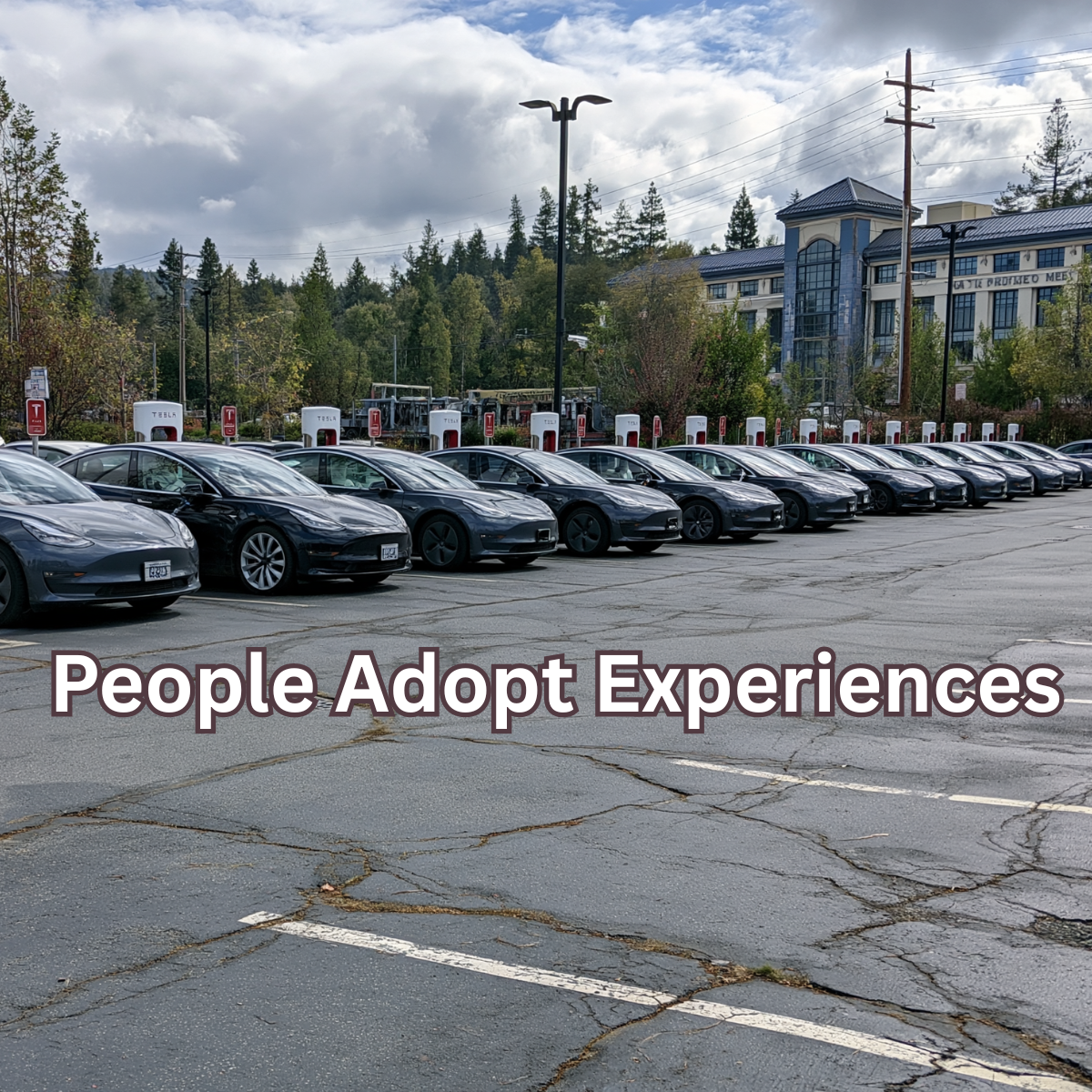
I was driving a non-Tesla electric car across multiple states this weekend, and I kept running into the same problem. The charging stations were inconsistent. Some had plugs that did not fit easily. Some were broken. Some required three different apps to start. The whole experience felt like I was assembling a solution from mismatched parts. Then I thought about Tesla drivers. They pull up, plug in, and the system handles the rest. The difference is not just the car. It is the entire journey.
That difference taught me something. Success does not come from building a great product. It comes from solving the entire process that surrounds it.
The Mistake of Solving Only the Product
Most companies focus on the object. The car. The app. The feature. They build something that works in isolation, then assume the customer will figure out the rest. But customers do not adopt concepts. They adopt complete experiences that reliably solve a problem in the real world.
Tesla did not just build a car. They solved the journey. They thought through the entire chain of events. A driver needs to know where to charge. The station needs to be available. The plug needs to work. The car needs to recognize the charger. The payment needs to happen automatically. The parking angle needs to make sense. The charging speed needs to be predictable. The experience needs to reduce anxiety, not create it.
That is end-to-end thinking. And when you skip any part of it, adoption breaks.
A great idea can fail because one practical step is unreliable. A great design can fail because the surrounding ecosystem is fragmented. A technically superior solution can fail because the user experience creates doubt, friction, or anxiety.
Where Adoption Actually Breaks
I have seen this pattern repeat across industries. A company builds a powerful AI model, but the data is messy, the workflow is unclear, users do not trust the output, permissions are confusing, or the result cannot be integrated into daily operations. Adoption stalls. Not because the model is weak. Because the process around it is broken.
The same thing happens with software. A platform has great features, but onboarding is confusing, implementation is slow, training is inadequate, support is weak, and governance is unclear. Customers never realize the value. They abandon the tool before they ever see what it can do.
It happens with business strategy too. A vision is compelling, but execution depends on disconnected vendors, unclear ownership, or broken handoffs. The vision never becomes practical. It stays an idea.
The Tesla example shows that success often belongs to the company that accepts responsibility for the whole experience, not just the most visible piece of it.
The Questions That Matter
End-to-end thinking forces you to ask different questions. Where does the customer begin? What do they need before they can use the solution? What could go wrong along the way? Where will they hesitate? What supporting infrastructure is required? What happens after the core feature does its job? Who owns the parts of the process that are outside the product itself?
These questions are not glamorous. They do not show up in pitch decks. But they determine whether people actually adopt what you build.
“People do not adopt concepts. They adopt complete experiences that reliably solve a problem in the real world.”
The Larger Lesson
Innovation is not complete when the invention works. Innovation is complete when the user can depend on it without having to become an expert in all the broken pieces around it.
That is the standard. Not whether the product functions. Whether the entire experience functions. Whether the customer can move from need to solution without friction, without doubt, without having to patch together workarounds.
So the next time you build something, do not stop at the product. Map the entire journey. Find the broken handoffs. Fix the parts that create anxiety. Own the experience from beginning to end. That is where adoption happens. That is where success lives.