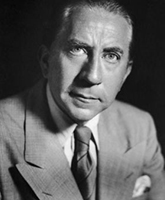
“Buy when everyone is selling, hold until everyone else is buying” – J. Paul Getty
My blog today is partially about J. Paul Getty. I bring him up, not as a hero or anything close, but an example of a product of the Great Depression. He was born in 1892. When he received an inheritance from his father’s estate in 1930, of $500,000, he was 38 years old. He had some initial success with some oil holdings prior to that, but it was this infusion of cash that use used to start making some serious investments. Keep in mind that the devastating affects of the Great depression were still very much at play. The risks that he took during this time, made him the richest man alive in the 1957 edition of Fortune Magazine.
Many people know Getty from his museums in Los Angeles. His family trust has maintained quite the impressive art galleries that are on the top must see list when visiting Southern California. His mother and father, quite the religious people from Minnesota invested in some mineral rights for 1000 acres of land and was able to extract some oil for a decent haul of crude oil. This massed a bit of money for the family, when his father died, his mother took control. That is when the family trust was created, and J. Paul Getty got the remaining amount of his seed money.
Now he was quite the philanderer. I think he had five or more wives and at least as many children. He often made comments that there was no way you could be a successful business man, and a successful married man. Stories around his escapades with women are notorious. The Great Depression and his upbringing taught him to be frugal in every way. One of his wives complained later in life that he was mad at her for not negotiating the price down on a life saving surgery for one of their children. He had a pay phone installed in his house to recover the costs of guests using his phone in his house. The most famous story is when he was forced to negotiate with the mob who had kidnapped one of his grandsons. He ignored them at first, but when they started sending body parts in the mail he reluctantly agreed to a ransom. However, only after, negotiating them down considerably on their initial ask. That amount was 2.2M. Why that number? Because that was the tax deductible limit for a gift at the time. Not making that up, it has been well documented and there was even a movie about it recently.
Getty’s miserly ways are symptomatic of the time. Reminds me very much of my great grandparents. My Grandmother Delsie was this way as well, and she would find a use for just about everything. The concept of a “trash” cans where you threw things away was completely foreign to her. She had a place for everything, not a single thing would be discarded, ever. I remember a jar of rubber bands. I played with left over pieces of wood and metal. I created compost for the garden. Frugality was not a life choice, it was just the way it ways. As we see more and more bad news from economic reports these days as a result of the “COVID” crisis, I cannot help but think of this generation. Here is my point. When things were really bad, certain people, J. Paul Getty included saw opportunity and took advantage of it.
So we have two choices. We can stare this economic depression (that is what it is going to be) down and find the ways to capitalize or we can hide away and take our place in the proverbial soup line. Right now is the time to make that decision, because what we are looking at here is a long term game. We are not going to have a V shaped recover most likely, we are going to have what I am considering a giant wok shaped recovery. As slow and steady decline for a long time, followed by a gradual and steady incline. So what we have to grapple with is this. We need to make the calculated risks and put us in the greatest possible position to capitalize on the slow and steady incline. So we have to 1. Survive and 2. Have enough financial strength to see ourselves through the long steady climb.
Think of it like this. The Great Depression lasted from 1929 through 1941. This was not a single event and was not caused by a single mistake. It was a compounded thing, a series of corrections and over reactions. The recovery was much the same. There was not just 1 New Deal with FDR, there were more like 6 New Deals. The dollar went up and down, inflation went up and down, the stock market also went up and down. This was tumultuous indeed and took a very long time. By all intents and purposes this process was around 15 years or so. I do not want to spell doomsday here, but if the numbers we are seeing, self imposed chaos or not, we could be looking at a slug fest for the next decade at least. That means the 20’s and 30’s for us, will probably be much the same as the 20’s and 30’s for Getty and my Great Grandmother.
Are you kidding me? We are staring down a decade of economic uncertainty? Just when we finally got done with the whole 2008 thing? Yup. Get ready were are in the Sh!t now. Time to double down, fight hard, and rise up out of the ashes to become the tycoons of the next decade. It is time to buy when others are selling.
Guy Reams