If you are unable to pick one thing, you will never be good at anything. This is a statement that I struggle with. Yet, I have spent the better part of five years trying to convince myself. Since I was young, I struggled with this concept. The challenge of wanting to do many things versus focusing on one thing. The answer to this dillema is simple and obvious and requires a leap of faith. A leap that people are rarely willing to take.
The answer in short form is to pick something, focus on it, and get to a result that you can identify. Once you are able to do that, then you can add something else. You must have the discipline not to do so until you are ready. That is the key component that we all fail at, yet is critical. What you select first is the leap of faith.
For years, I struggled with having any discipline at all. No real concrete habit that I could point to that was good. I was excellent at building bad habits, but a good one? Forget it. After thousands of attempts, I would always land in the same place. Develop a great system, identify a few things to work on, put them in place and then fail. My failure was almost always because I started to feel good about myself and then took on too much. Got distracted. Started to try to take over the world, when I could not even take over my own closet. How can you organize the chaotic world around you when your own closet is in shambles?
What I needed was a core foundational habit, one that I could use as a platform. A habit that I could use to focus on my most important objectives first. A habit that would put the concepts that I had the most faith in at the paramount of my day. Despite the fact that I could do nothing else well, what was the one thing that I could build upon?
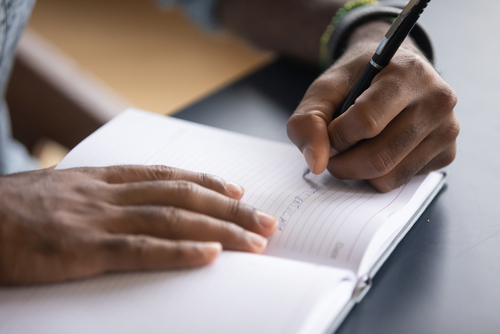
That was when I was fortunate to land on the simple formula for what I call The 365 Commitment. This is nothing new, and not my own idea. I was in a plane the other day, and I saw a man writing in a notebook next to me. I asked him what he was doing and he described the same exact formula. That is the thing. A powerful concept is true, irregardless of how what format it is in.
Wake up every morning and write down the most important thing you need to get done today. Pray and meditate on that thing and then commit to getting it done. Today will be awesome, because at the very least I got this thing done. If you are like me and have struggled to keep many balls in the air, then pick one. This is the one that I picked and finally after decades of trying, I can keep several habits going.
Guy


Interesting, I have found myself doing the same thing.