As today is Thanksgiving, I’ve been contemplating the concept of a gratitude journal. A few years ago, I tried this practice. Every day, I wrote down what I was grateful for. This uplifting habit showed some benefits, especially in reflecting on what I have versus what I don’t. I created a consistent habit out of this practice, but I noticed a change after about 30 – 40 days. The practice lost its novelty and became repetitive. I was going through the motions, and the quality of my gratitude entries declined until I was just scribbling quickly to complete the task.
This example illustrates what I call ‘the repetitious decline.’ If done repeatedly at a high frequency, certain tasks tend to decline in quality if we’re not deliberately pushing ourselves toward a measurable objective. The more habitual the practice becomes, the more likely we are to do the bare minimum to claim it finished.
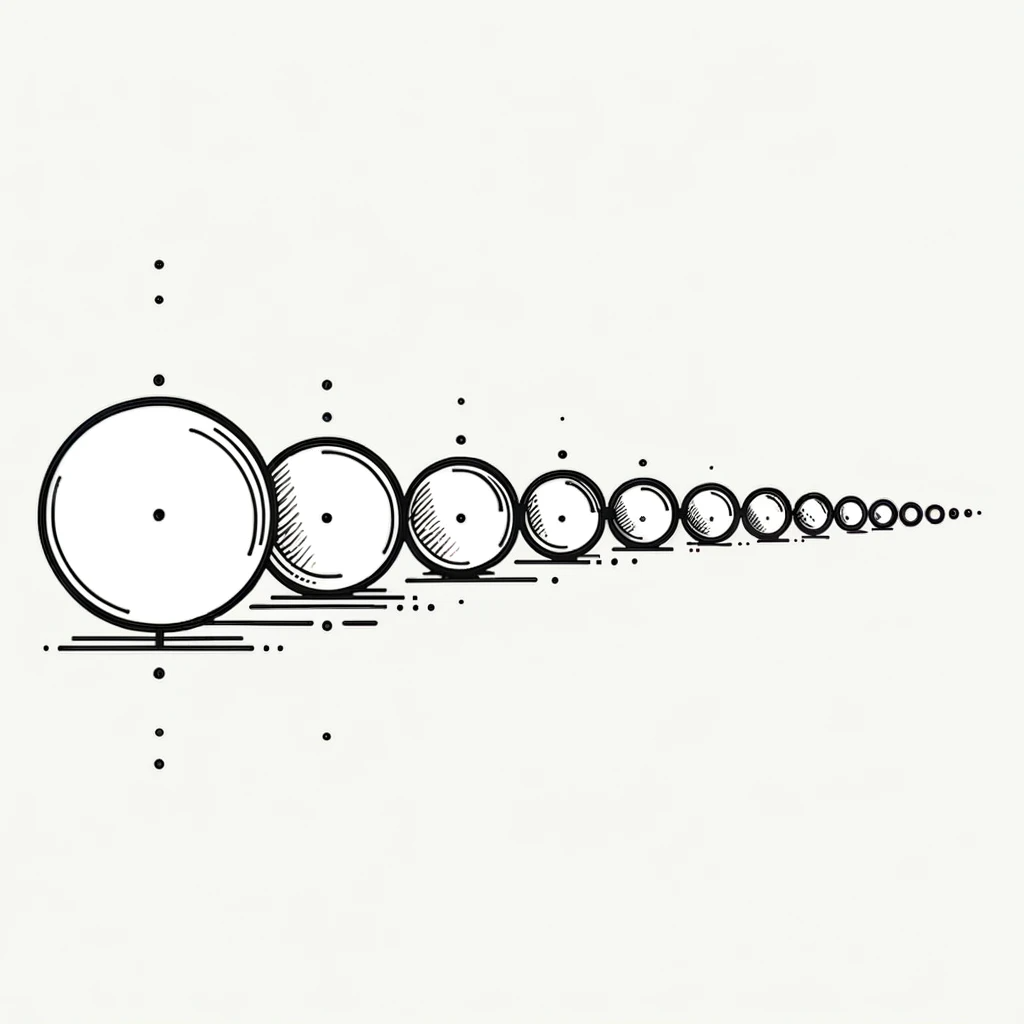
In digital electronics, there’s a concept known as attenuation. As electrons travel down a medium, like copper wire, the signal slowly attenuates until it’s no longer distinguishable enough for a device to interpret the voltage level and convert it into a message. Although not identical, a similar principle operates in our lives. We start out strong, but as we proceed over several days, our strength diminishes until our activity is barely distinguishable from doing nothing. In digital communication, the signal needs repeating. The communication is read and then broadcast at its original strength to continue.
Watch my video on Repetitious Decay, here
The first step in avoiding repetition decline is to incorporate a method of repeating the intent and purpose of what we are doing at periodic intervals. This will strengthen our resolve and reinvigorate our habits with new energy, allowing us to maintain high-quality behavior and achieve the initial desired results.
Another way to avoid this issue is by considering the repetition interval. Daily habits are hard to develop but much easier to maintain. For example, a routine of waking up, running, and going to the gym can become automatic. For some habits, like exercise, this is beneficial. For others, like a gratitude journal, the excitement can wane over time. You may eventually run out of things to write, leading to a decline in the quality of your entries. Thus, such behaviors might be more suited for weekly or monthly engagement.
Increasing the interval is a strategy for improving the quality of behavior repetition. Still, it makes the habit harder to ingrain into our lives. To overcome this, one method is to elevate the status of these less frequent events. For instance, I have a rest day from the gym on Wednesdays for recovery, which is essential in weight training. This creates a gap in my routine, which I fill with a weekly meditation session, termed ‘Med on Wed.’ This approach helps me look forward to the event and ensures I have time allocated for it.
My experience with a gratitude journal was positive, but reflecting weekly improved the quality of my thoughts. So, I’ve designated Sunday mornings for gratitude reflection. Sundays are quieter for me, making it an ideal time for contemplation. As a result, I’ve started to reserve Sundays for weekly habits that benefit from less frequent repetition.
In conclusion, ‘Repetitious Decay’ is an inevitable part of any habitual practice if left unmonitored. The key to sustaining the quality and effectiveness of our habits lies in our ability to periodically rejuvenate their purpose and to strategically consider their frequency. While daily habits form the bedrock of routine, their potency can diminish over time if they become too mechanical. On the other hand, less frequent habits, though challenging to maintain, offer the opportunity for deeper engagement and reflection, thus maintaining their quality and impact.
The essence of maintaining healthy habits is not just in the repetition but in the conscious renewal of their intent and purpose. It’s about finding that delicate balance between routine and renewal. Whether through ‘Med on Wed’ or reflective Sundays, infusing our routines with periodic re-evaluations and adjustments can prevent the decay of their original intent. In essence, the journey of maintaining effective habits is not just about doing but about evolving – constantly adapting our approaches to align with our changing selves and circumstances.
As we continue our individual journeys, let us remember that the decay of habits is not an end but an opportunity to rekindle, reassess, and redefine the value they bring to our lives.