

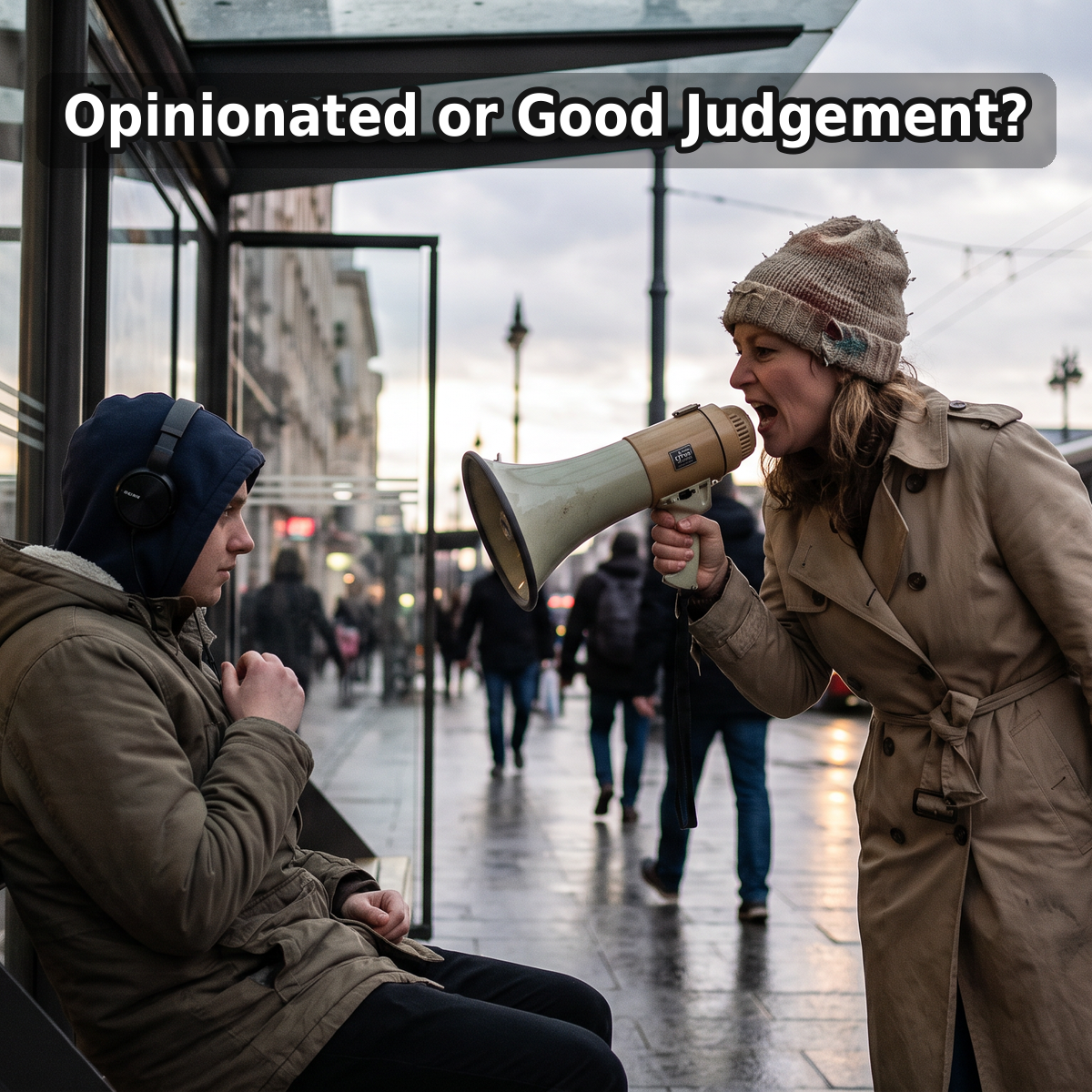
Day 359 – Opinionated or Good Judgement?
The distinction between having an opinion and being opinionated lies in how strongly and frequently one expresses their views, and their openness to others’ perspectives. While strong opinions can be admired when backed by expertise, constant and forceful expression across various topics can be perceived as arrogance or exhausting. The key to being seen as having good judgment rather than being opinionated is to deliver opinions appropriately and remain open to new evidence.

Day 358 – We Remember Legend
This article explores the concept of legend versus history, arguing that legends are what people choose to remember and retell over generations. Using the story of Noah’s Ark as an example, it discusses how historical events can become exaggerated and imbued with cultural meaning, posing the question of what makes a legend meaningful enough to endure. The author also reflects on personal and family legends, and contemplates what actions in their own life might become legendary for future generations.

Day 357 – Curiosity is Cheap
This article explores the challenges introverts face with draining conversations and offers a solution: embracing curiosity. By shifting from feeling the need to “perform” in conversations to simply being curious and asking questions, the perceived energy cost of interactions can be significantly reduced, fostering better relationships.

Day 356 – Anger Caused by Friction
The author explores the emotion of aggravation, defining it as a low form of anger caused by friction. They propose an escalation pattern for anger, starting from friction and leading to full-blown anger. The core idea is that aggravation arises when one repeatedly spends attention on something they believe doesn’t deserve it.

Day 355 – The Canary Principle
The canary principle, originating from coal mining, involves testing changes on a small scale before full implementation. This concept applies to software development and personal life, encouraging small, reversible experiments to reduce the cost of learning when uncertainty is unavoidable.
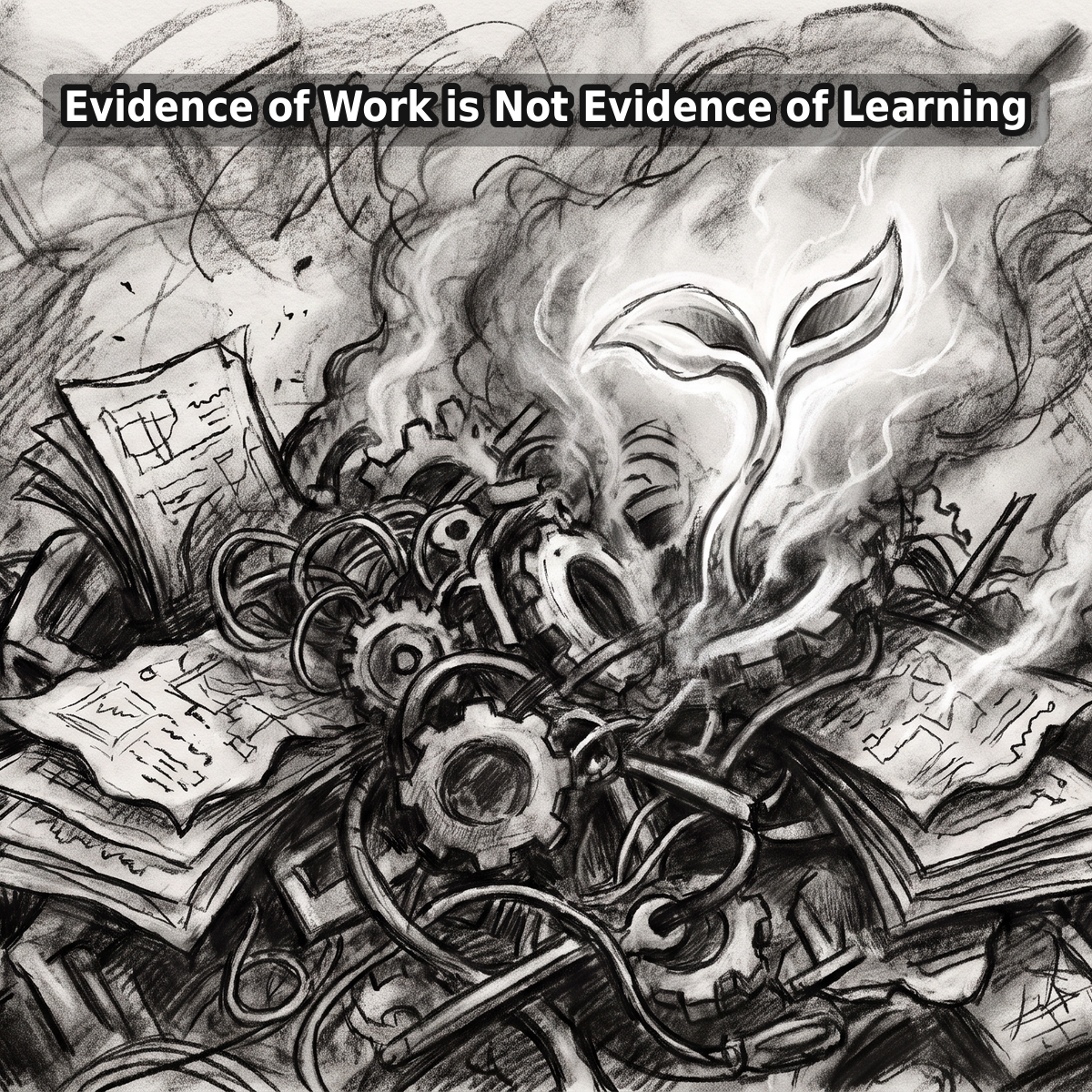
Day 354 – Evidence of Work is Not Evidence of Learning
This article argues that AI has exposed a fundamental flaw in modern education: the substitution of “evidence of work” for “evidence of learning.” It highlights how schools have increasingly focused on quantifiable outputs like completed worksheets and assignments, which AI can now easily generate without genuine understanding. The author contends that AI’s proliferation forces education to return to its core purpose—actual teaching and fostering cognitive development—rather than merely verifying compliance.

Day 353 – les Lumières
Immanuel Kant’s 1784 essay, “What is enlightenment?” marked the end of an era, much like we might be at the cusp of a new one today. The Enlightenment, characterized by reason and a departure from superstition, was known as *les Lumières* by the French and *Aufklärung* by the Germans. We are now entering an “Age of Knowledge” where access to information is ubiquitous, shifting the focus from acquiring knowledge to exercising judgment.

Day 352 – Habits are Foundation
This article discusses the importance of developing habits for personal transformation. It emphasizes that consistent, small habits lead to inevitable success and reduce reliance on motivation or discipline. The key is to engage in the principal action related to your desired outcome every day, as repetition is the best way to fix behavior.
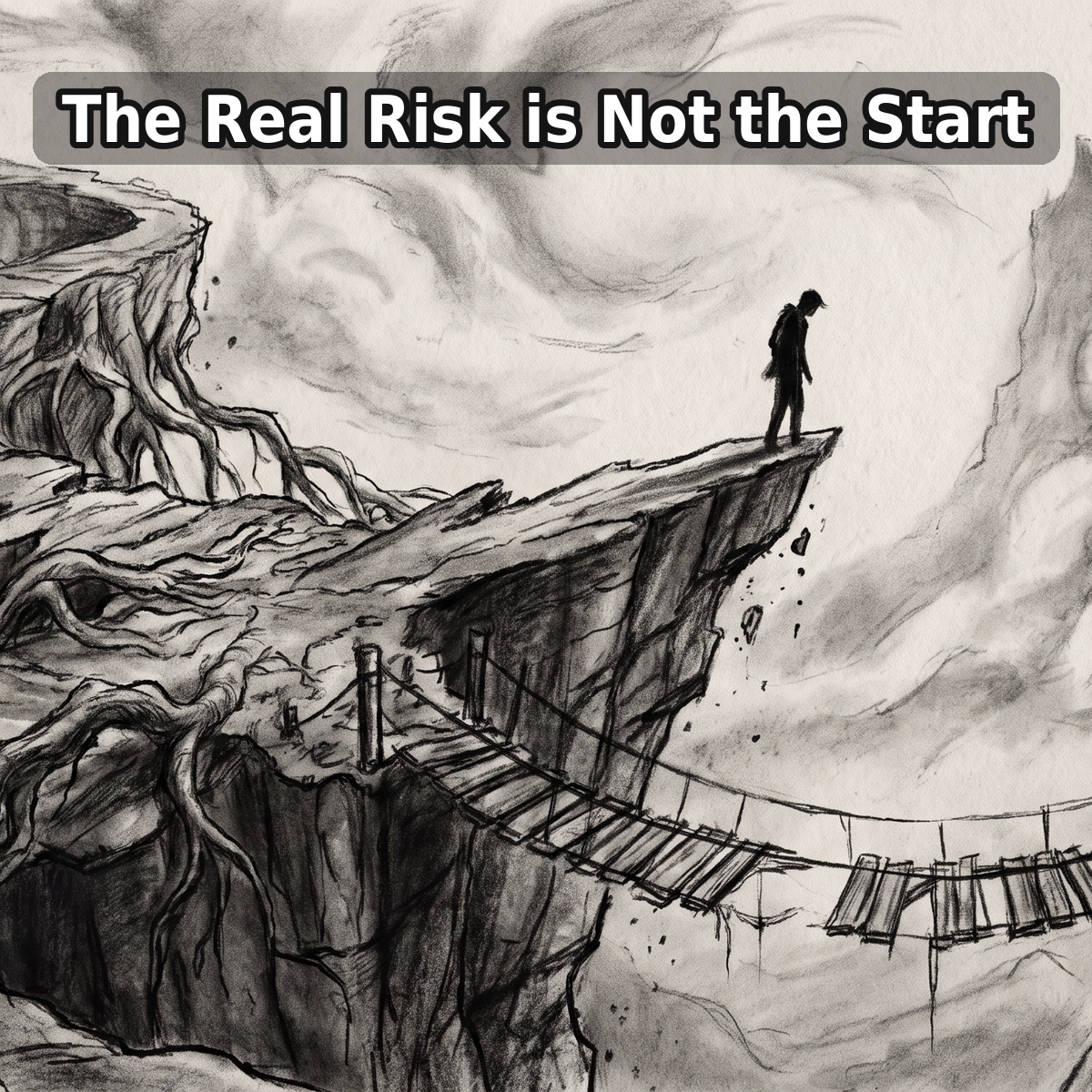
Day 351 – The Real Risk is Not the Start
Many people fear starting new initiatives due to the perceived risk of initial failure. However, the beginning often offers easy gains and quick successes. The real challenge arises after these initial successes, when progress plateaus and requires significantly more effort, skill, or a change in strategy.

Day 350 – Learning to Triangulate
The article explains the concept of triangulation, drawing parallels between its use in surveying and navigation to its application in evaluating information. It emphasizes the importance of cross-referencing multiple independent sources to determine truth, especially in an age of misinformation and AI-generated content. The author argues that accepting information at face value is no longer viable and that triangulation should become a default reaction.
What People Are Saying