My grandmother gave me this small book recently written by an author here is Southwestern Colorado. I read through the book and was fascinated about how this author and a team of investigators would try to unravel some interesting mysteries of early Colorado history. The main story was of Alfred Packer, knows as the Colorado Cannibal. Reportedly, he survived on the bodies of some travelling companions that had died trying to cross the rugged San Juan mountain range. There was a lot of suspicion regarding his changing stories when he arrived in Gunnison area after the Spring temperatures started to rise.
They did a lot of site investigation digging up small objects where the bodies were recovered. Piecing things together, using modern scientific equipment and reading through trial testimony they started to put together a more accurate picture of what might have happened.
In a weird coincidence, after reading through the book, I ran into the author in the grocery store. I guess that is life in a small midwestern town. Anyway, we had fun talking about the stories that small objects can really tell. Just look around your life now, you have inevitably collected an object two of significance. I have a small poker chip that my company gave away at a golf tournament several years ago. It was the last event that company would ever do. A small pocket held rosary that someone gave me at my Grandfather’s funeral. An old notebook that I kept in my teenage years is gathering dust next to a U.S. History book that was given to me as a gift from one of my favorite college professors. I could go on and on.
Eventually we will pass on, and these objects that have so much meaning to us will be left for another to deal with. Some will rise to simulacra and become a family heirloom, others will get tossed into a refuse pile and make the way through the waste management process. These objects serve as external memory triggers for us, helping us recount stories from our past.
I do not think we talk about them enough. They are the way people remember. You should take a child around the house and point out every object, how you got it, why you keep it. The simple and the mundane, the inspirational and the emotional. You will be surprised at how much you take for granted, and how much would be lost from memory if you dis not do your part in telling the story.
Guy Reams
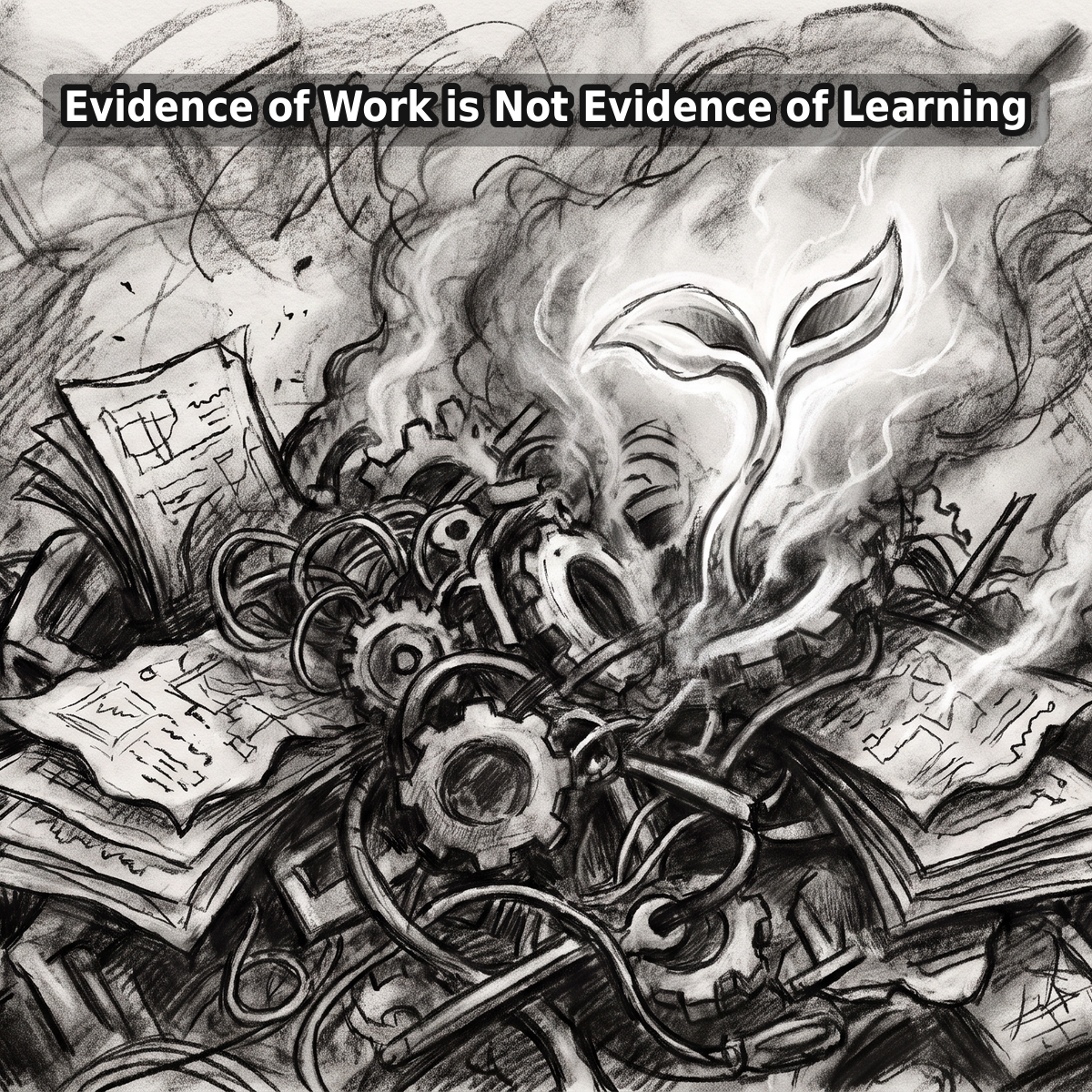
Day 354 – Evidence of Work is Not Evidence of Learning
This article argues that AI has exposed a fundamental flaw in modern education: the substitution of “evidence of work” for “evidence of learning.” It highlights how schools have increasingly focused on quantifiable outputs like completed worksheets and assignments, which AI can now easily generate without genuine understanding. The author contends that AI’s proliferation forces education to return to its core purpose—actual teaching and fostering cognitive development—rather than merely verifying compliance.