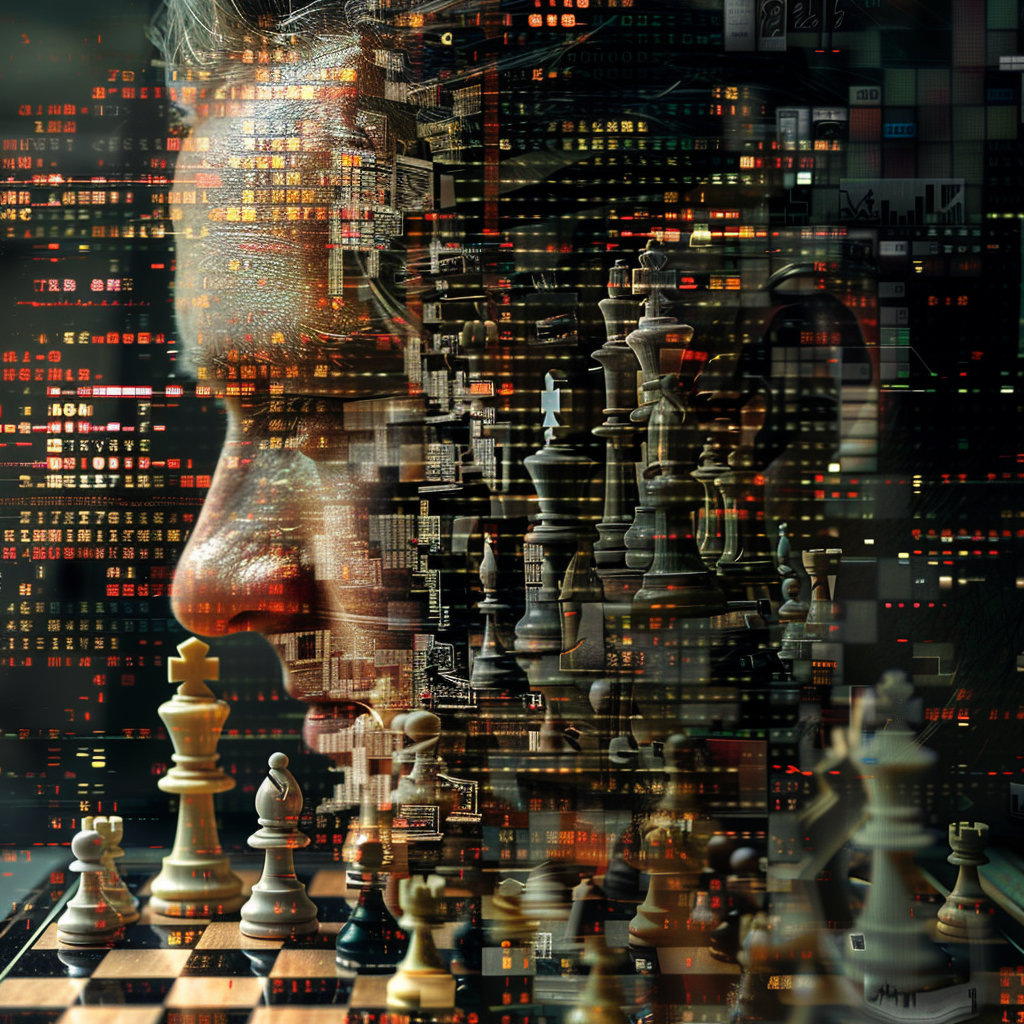
This morning, as I was reviewing a chess game at The Temecula Chess Club, it occurred to me that people, when combined, produce superior results. There has often been a debate in the computer science profession if open-sourced software would provide the best outcome in the long run. Of course, privately sourced, commercial software manufacturers have an incentive to be biased toward licensed software subscriptions with full support packages! However, I was loading a chess engine this morning on my PC to play through a game as it was happening. I chose to download the latest copy of StockFish for this purpose.
For those of you who do not know, developing chess engines has been a long-time tradition in the computer science world. This was always, and still is, a favorite project to take on due to the complexity and interesting discoveries that have been made in rapid and intelligent decision tree processing. There has been more than one breakthrough in this realm brought on by a quest to find a better way to hunt through and seek the best option in the limited sphere of the 64 squares of a chess board. StockFish is currently the best chess engine available in many categories and has been the winner for the most part in computer-against-computer competitions. StockFish is an open-source project, and its distributions are free for the public to use and, more importantly, contribute to.
We need to go no further when considering which is better at this juncture. The open-source project has produced better results by a wide margin compared to commercial alternatives. There have been times when a new innovation will push a commercial engine to the top. Still, once the large community of developers understands and figures out the algorithms involved, StockFish rises to the top again. Using this example of chess engine software, we can make a convincing claim that when people work together in a large community, they tend to produce better results than a smaller more focused group.
Just how good is StockFish? Most people have no reference point for this. So let me explain just how awesome of an intelligent decision making process that has been developed over the last few decades. When I was a young, chess computers could not compete with the best players in the world. That has changed.
I will not dive into the nuance of the rating systems used by FIDE or USCF, the two largest chess organizations in the world, but let me provide a perspective. Chess uses a rating system that produces an ELO rating. This rating is a way to determine how likely a player is to win against another player. For example, currently, the highest-rated chess player in the world is Magnus Carlsen. His current standard chess rating is 2831. He is considered the top of the “Super-GMs”, or Super Grandmasters. In order to become a Grandmaster at Chess, you have to achieve a minimum rating of 2500. To put this in perspective, it would be generally expected that a 2831-rated player would win against a 2500-rated player 99.7% of the time. Most beginners who have been playing and studying chess consistently for about a year can geta rating of at least 1200. This should provide some perspective on just how “good” the best chess players in the world are.
Stockfish is rated 3632 in 2024.
At full strength, the best human in the world has a 0% chance of winning against Stockfish. If they play really well, they might have a chance for a draw—a .0000000005% chance of a draw. So, I conclude that the collective minds of many humans working in concert toward a common purpose will always outperform our best individual efforts.
Now, if we could figure out how to work together more often…