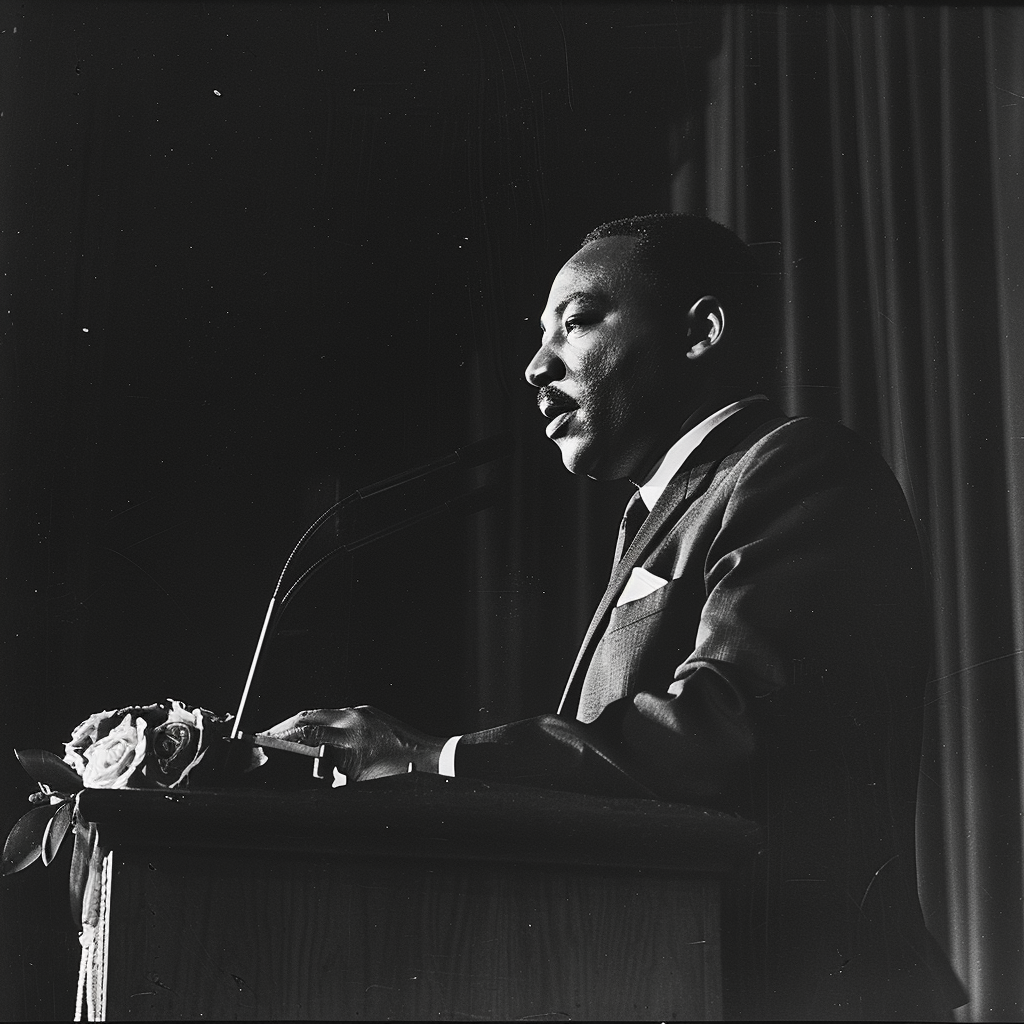
When I was a child, I was fascinated by the spoken word. I loved hearing from great orators. I would analyze and think about their word selection, tone, and emphasis. I also greatly considered their use of pauses and other non-verbal messaging. I would go on to get my first degree in Argumentation in Rhetoric because I was keenly interested in the power of the spoken word. Rhetoric, in the purest sense, is that which is delivered to an audience by a speaker who hopes to influence or persuade them to action. As I have reviewed and collected over the years what I consider to be the greatest speeches – I have come to the conclusion this is truly an art form.
Artists spend years training, refining, and perfecting their craft. They get better as they get older, as they gain experience, and as they have more emotion that spills into their work. The same is true for the speaker. The most moving and most influential people to ever stand behind a microphone have been those who have born the scars from many attempts. Rejection, persecution, stumbling and stammering their way to the speech that we all remember the most. Just like the piece of delicate artwork that somehow survives the creator’s death, the one speech that is now remembered for generations survives as a final testament.
When I was in high school, I memorized and could recite every word of Martin Luther King Jr.’s “I Have a Dream” speech given during the March on Washington at the Lincoln Memorial in Washington, D.C. This speech was not spontaneous, Dr. King had delivered a version of this speech at many occasions in his progress toward this event. This was crafted slowly over time, and like a great piece of art, he carefully selected and tested the word choice and the comparisons made. This speech is a rhetorical masterpiece merging both his voice and the voice of many others. It is artwork, providing layers of meaning to the audience. It is also imperfect, but through that, it represents the soul of the human crisis and, therefore, becomes beautiful.
Dr. King was not the only rhetorician presenting that day in 1963. There were many others, including several musicians. There was even the 22-year-old Bob Dylan performing a few of his songs, including “Only a Pawn in Their Game,” a song about the shooting of Medgar Evers. What an intimidating piece of rhetoric to perform in front of that particular audience, including the wife and family of Medgar Evers in attendance as honorary guests. There were also several other moving speakers, and prayers and musical numbers were performed. However, we as a society only remember the concluding speaker that day. That piece of art is forever engrained into the consciousness of our culture.
The live speaker, the communicator at the podium, is the purest and rawest form of artwork. This has become the territory of the modern-day comedian. We rarely hear great speakers at the podium these days. Mr. Trump seems to like his barnstorming rally-type events, but I do not think anyone, except perhaps himself, will claim that any of these rise to art. However, it is art, really. Anytime someone uses communication skills to persuade an audience, you offer an expression equaled only by what is labeled as an artist. Presidential candidates are what we typically associate with this form of artwork, but you will find it if you look carefully.
Comedians have become this lately and note – they are just not telling jokes anymore. They are making social commentary and oftentimes playing the part of philosopher kings on social media. Joe Rogan, for example, has become an example of that in our culture. What do we call what he is doing every day on his podcast? Commentary? Comedy? Hosting a Podcast? No – I think the best phrase we can use is artwork. He is using his ability to communicate with others, talk to others, and extend a voice to an audience, and he is doing it in a way that sparks debate, interaction, and discussion. If people were surrounding a piece of work at the Andy Warhol Museum in Pittsburgh and having a lively discussion, we would say it was moving art. What do we say when people are standing around the proverbial water cooler and debating what was on Rogan?
Communication is absolutely artwork. It should be appreciated and studied. It should also be encouraged and patronized. In the sea of complaints and criticism about the negative impacts of social media, there is one shining aspect. People are really learning how to express themselves and win attention with the most pure form of art – communication