Visited Austin, TX this week and had the opportunity to hang out at Antler VC for a couple of hours. This group focuses on early-stage development of new businesses by emerging entrepreneurs. For most of the afternoon, I just roamed around and watched whatever was going on. I talked to Sherma, the General Partner of the firm, as well as various coaches, mentors, investors, entrepreneurs, and a fair share of geeks.
The concept that kept surfacing in my mind throughout the day was an admiration for the ecosystem being built there. That’s when this thought came to me: building your ecosystem—surrounding yourself with like-minded people or those connected to your aims and objectives—is a serious ambition.
Building an ecosystem is clearly not easy, and defending the culture of how you want that ecosystem to behave is even more difficult. But consider this: perhaps this is the pinnacle of our achievement. Wouldn’t this be a true reflection of the success most of us want? It’s not all about money—it’s about how we spend our time, who we spend it with, and whether we find joy in the pursuit. If you could build the environment, the people, and the physical location you want to thrive in, wouldn’t that be a remarkable end state for any ambitious goal?
Sure, an organization like Antler wants to grow, make more money, and create more. But at some point, you also need to feel content and fulfilled in the process, right? A process that never really ends—just continues to thrive and evolve. And what better process to nurture than one you build yourself?
If the answer is yes, then we must ask the next question: Can we do it? Could we contemplate, envision, and begin building an ecosystem that surrounds us with positive energy?
I’ve built a few organizations, and let me just say—building culture is easy to talk about but one of the hardest things you’ll ever do. Many times, without putting conscious thought into it, I’ve seen cultures decay or evolve into something negative, even destructive. I once built a culture entirely centered around the chaotic whirlwind of my own life—and that culture reflected it. It wasn’t particularly fun for anyone, including myself. I had the chance to build a healthier ecosystem when I was younger, but I never really considered its importance. Ultimately, it was the poor-performing culture that hurt the most.
Since then, I’ve been involved in creating and defending a culture that thrived and became highly successful. But once again, my goal at the time wasn’t to build an ecosystem—it was just to build or improve my team to hit targets. I didn’t consider a life-changing, fulfilling, and enduring ecosystem that would last regardless of where or who I worked for.
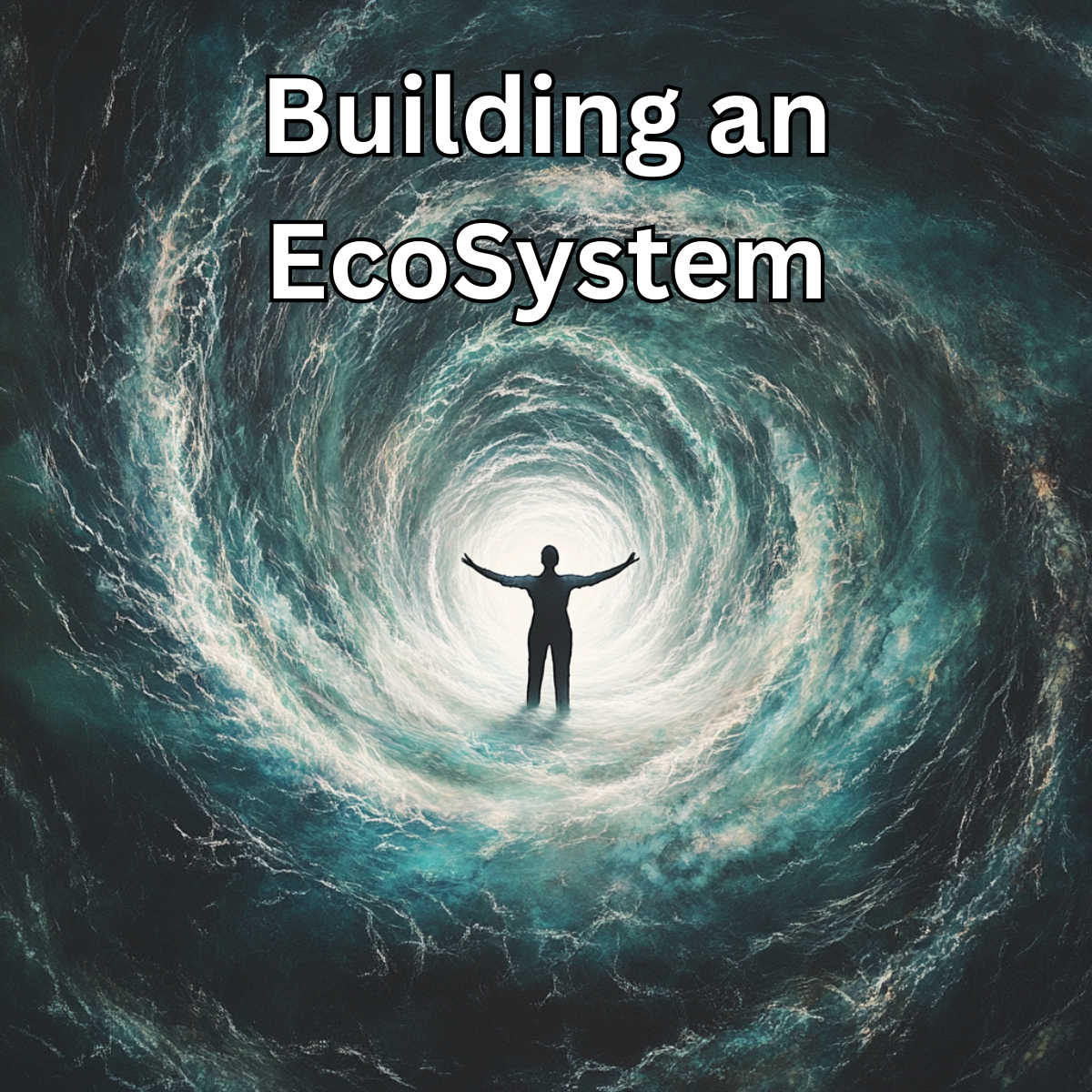
But we know a good ecosystem when we see it. Antler is no exception. What I saw there was a thriving, healthy, and productive culture. When an ecosystem is working, you can feel it. It’s alive, moving, and pulsing with energy. All the interested parties—people, vendors, employees, owners, investors—swirl and build momentum around a central point.
There is always an epicenter. A place that is calm, stable, and kinetic—a gravitational pull that draws everyone in. It’s the eye of the hurricane, the constant source of energy being siphoned into the living, breathing system around it.
Here’s something to ponder: Could you—your company, your city, your home, your office, your cul-de-sac—become that epicenter? Could you deliberately build an ecosystem around you that radiates positive energy and attracts the right people?
I believe we all can become that epicenter. And wouldn’t that be something?
When like-minded people begin building their ecosystems adjacent to one another, we witness miraculous things. We get iconic companies that serve as the soul of new social paradigms. We get communities that become centers of innovation, fundraising, and industrial disruption. We get downtown scenes that birth entire musical genres and shift generations. We get Grateful Dead concerts and scientific research centers and industrial parks.
Yes, you can be the epicenter of your own ecosystem. You can be the calm in the storm—the place where the best people are drawn to. If more of us pursued that path, who knows what we could accomplish as a species?