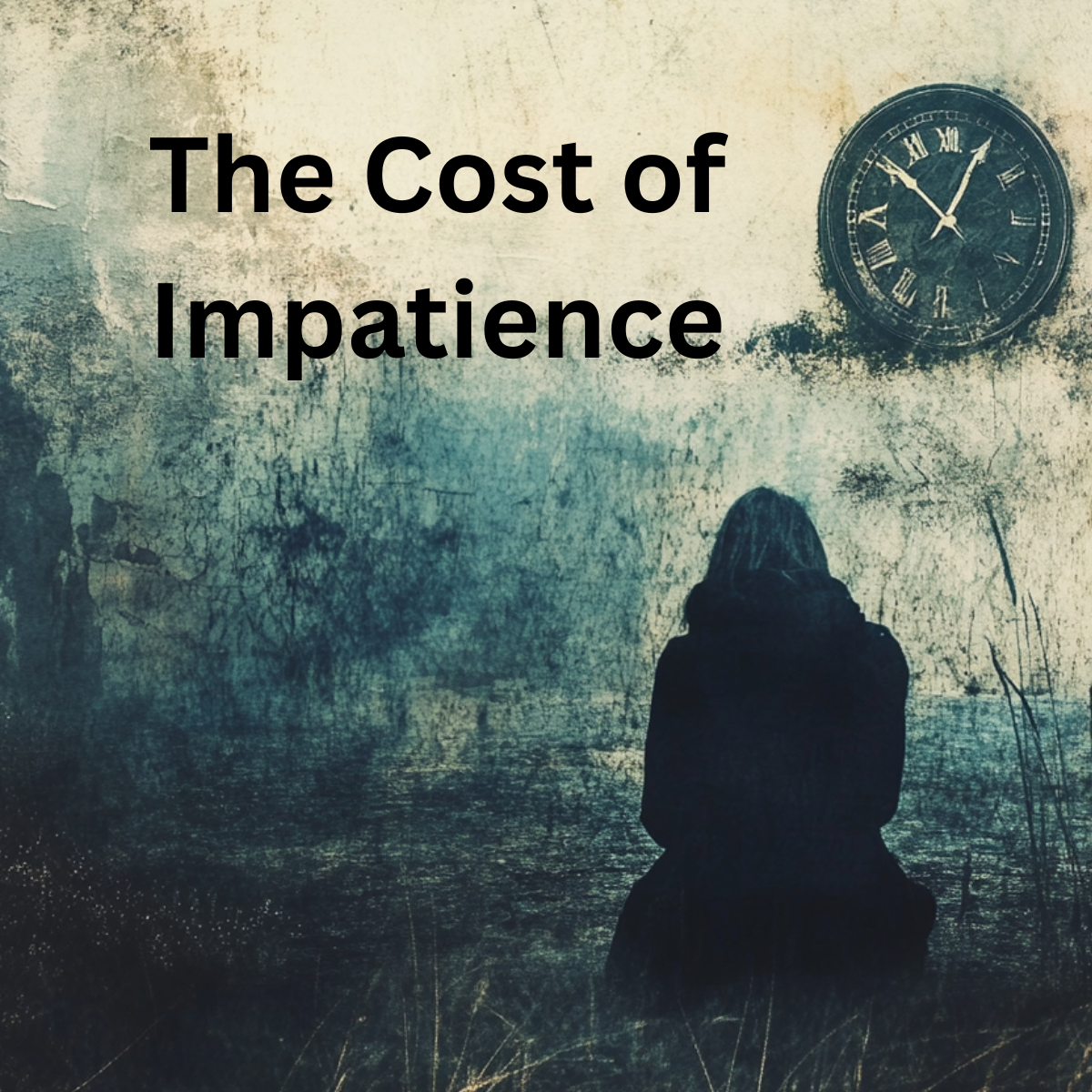
There’s a quiet urgency that often drives us—an internal pressure to move forward, to improve, to fix what feels broken. It can come from ambition, from a desire to grow, or from the discomfort of being stuck in a moment we’d rather escape. For a long time, I didn’t question this urgency. I believed it was a virtue. I saw my impatience as a necessary part of who I was—proof that I cared, that I was engaged, that I wanted more from life.
But over time, something began to shift. The constant push forward, the relentless need to accelerate every moment, started to wear thin. I began to notice the toll it was taking—not in grand, dramatic ways, but in small, persistent signs. Like subtle cracks forming in a foundation. A missed moment of gratitude here. A rushed conversation there. The feeling that nothing was ever enough, that every achievement was simply the next step in a race without a finish line.
Eventually, I came to understand that impatience wasn’t just a habit—it was a mindset. One that quietly shaped how I experienced the world, how I treated others, and how I measured my own worth. And perhaps more importantly, I realized that it had been contributing, in ways I hadn’t seen, to the low hum of anxiety that followed me through most days.
Impatience is like slow water damage inside the walls of your home. You don’t see it at first. You keep going about your business, unaware of what’s seeping in. Then one day, you notice a discoloration, a soft spot, maybe a faint smell of mold. By the time it becomes visible, the damage has been quietly accumulating for a long while.
When I finally took the time to examine where impatience had taken root in my life, I found two things. First, I had developed a restlessness that robbed me of joy. Achievements lost their weight. Small victories passed unnoticed. I was so focused on what was next that I never really arrived anywhere. Second, I saw the way my impatience had crept into my relationships. People around me felt hurried, undervalued—like pieces in a game I was trying to win.
Learning to confront this tendency wasn’t about giving up progress. It was about embracing a more grounded, intentional way of moving through the world. It was about learning to see patience not as passive resignation, but as a form of active trust. Trust in the process, in people, and in the quiet strength of time.
This is not something you fix overnight. It’s an ongoing practice—pausing, reflecting, allowing space for things to unfold. Choosing to see where you are, not just where you’re headed. And learning, gradually, to be okay with that.
So take a moment. Check your internal walls. Not with judgment, but with curiosity. Is there a slow leak somewhere? Is impatience quietly eroding something valuable in your life? If so, there’s no need to panic—just begin the repair. Slowly, patiently. That, I’ve found, is where real change begins.