Day 205 – Build Relationships Before They Are Needed

When we hear the phrase “investing in people,” most of us immediately think of employee development—things like training programs, better compensation, health benefits, or professional development plans. And rightly so. These are critical tools for building a stronger, more capable team. But there’s another side of people investment that often gets overlooked: the simple, intentional act of investing our time and presence in the right relationships.

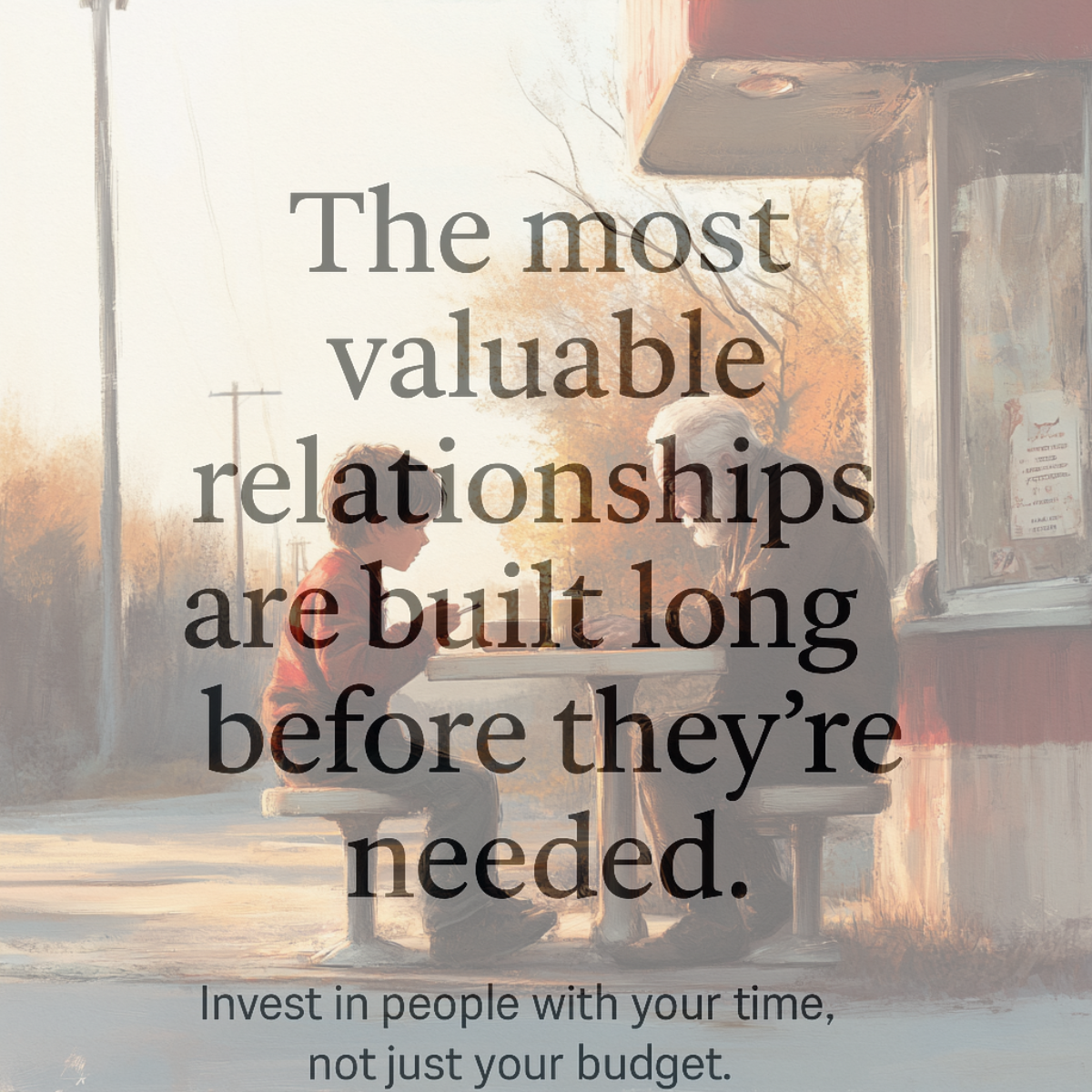
Not because there’s an immediate benefit. Not because there’s a clear return on investment on the horizon. But because healthy, trusting relationships—whether in business or in life—are built well before they’re needed.

It’s easy to miss this. Especially in fast-paced environments, where most relationships become transactional by default. We ask what someone can do for us. We evaluate people by their titles, their resources, or their relevance to our current goals. But the most valuable connections in life are rarely the most obvious in the moment.

Sometimes the most powerful investment you make is not in a direct report, a client, or a strategic partner—but in someone who’s simply adjacent to your world. Someone you take the time to check in with. Encourage. Listen to. Share a coffee or a conversation with, with no agenda other than genuine interest.

These quiet investments take time. But they build something powerful: relational equity.

And when the time comes—when a door needs to open, when guidance is needed, when trust becomes the difference between success and failure—it’s those relationships that make the difference. Not because you asked for anything, but because you invested when it mattered least and received when it mattered most.

So yes, invest in your team. Pay fairly. Offer growth. Create opportunity. But don’t forget to invest in people outside the organizational chart too. Relationships are long-term assets. And often, the ones with the highest return are the ones we nurtured without ever calculating the cost.
Subscribe
Notify of
guest
0 Comments
Inline Feedbacks
View all comments
Share the Post:

Recent Blogs

Day 332 – We Need to Talk More

A recent study indicates a decline in daily conversations, particularly among those under 25. This trend is concerning because conversation is crucial for cognitive processing, reality calibration, emotional regulation, relationship building, identity formation, and the development of collective intelligence. Consuming language through media is not a substitute for active conversational engagement.

Read More

Day 331 – Are You in Control?

Humans have a unique ability to cope with uncertainty by creating an illusion of control, often attributing cause and effect to unrelated actions. This phenomenon, explored through examples like superstitions and personal anecdotes, suggests that while we may not have complete control over our environments, our brains are wired to find patterns and connections, even if they are not always accurate. This ability to fool ourselves into believing we have more control than we do can be beneficial, but it’s important to differentiate between actual impact and coincidental association.

Read More

Day 330 – Cognitive Magic Pills

The article discusses the phenomenon of “cognitive magic pills,” which are alluring solutions to problems often peddled on social media. It uses the example of cortisol being rebranded as the “stress hormone” to illustrate how these concepts gain credibility and lead people to believe in quick fixes for complex issues. The author encourages readers to be critical of such trends and to focus on understanding their own bodies and minds rather than seeking easy solutions.

Read More

Day 329 – Art is Capturing the Form

The author explores the concept of art through the lens of form and function, using two tape measures as an analogy. They then delve into Charles Ross’s Star Axis project, which aims to capture the journey of the North Star, suggesting it as a powerful example of art capturing form and connecting humanity across time.

Read More
0
Would love your thoughts, please comment.x
()
x