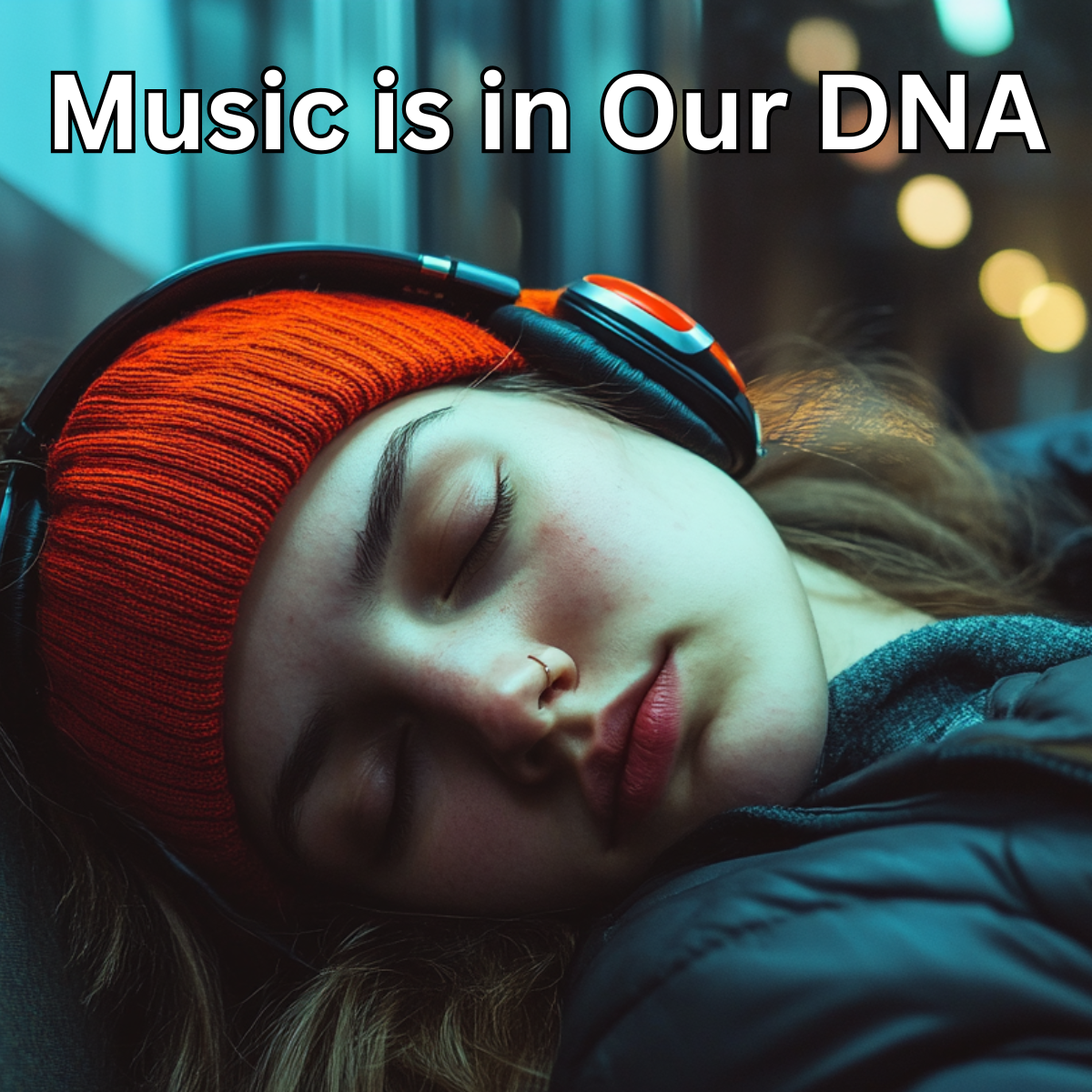
Have you ever paused to truly appreciate the profound impact music has on your life? It’s easy to overlook, yet music is so deeply woven into our everyday experiences that we often underestimate its power. Think about it: music accompanies our celebrations, consoles us in moments of sorrow, energizes us during exercise, and even aids us in concentrating on challenging tasks. This isn’t merely cultural happenstance; there’s a remarkable reason music resonates so profoundly within us—it’s deeply intertwined with our brain chemistry.
Recent studies highlight music as far more than just auditory stimulation—it’s a complex, emotional, and cognitive catalyst. Researchers Sachs et al. (2018) point out that music uniquely triggers intense, multifaceted emotions. When you find yourself moved to tears by a haunting melody or uplifted by a joyful chorus, your brain chemistry is actively being reshaped. These emotional experiences aren’t superficial; they’re reflections of deep neurological activity.
But what exactly is happening inside our brains when music touches our hearts? Advanced neuroscience offers exciting answers. Thanks to breakthroughs in technologies like brainwave spectral analysis (Kučikienė & Praninskienė, 2018), scientists now observe how music actively modulates our brain waves. Music can synchronize our neural activity, enhancing focus, relaxation, and even creativity.
Moreover, Huang & Li (2022) emphasize music’s impressive ability to enhance psychological well-being. This isn’t just theory—consider how your mood shifts when your favorite song starts playing. Music genuinely alters the balance of chemicals in your brain, increasing the production of dopamine and serotonin, neurotransmitters essential for happiness and emotional stability. This biochemical reaction is precisely why music therapy is becoming increasingly effective for addressing conditions like anxiety, depression, and stress.
Interestingly, music’s power isn’t simply cultural or psychological. Honing (2018) challenges the old view of music as merely a byproduct of language, proposing instead that musicality is an innate biological trait, deeply embedded within our evolutionary makeup. This means your connection to music is not just a learned preference—it’s a fundamental human capacity, as essential and instinctive as speech itself.
So the next time you press play, pause to appreciate the incredible symphony occurring within your own mind. Remember, music isn’t just an accessory to your life; it’s a vital force, shaping your emotions, enriching your experiences, and nurturing your mental health. Let this knowledge deepen your connection to the melodies that move you—and never underestimate the profound power and purpose of music in your life.
Sachs M, Habibi A, Damasio H. Reflections on music, affect, and sociality. Prog Brain Res. 2018;237:153-172. doi: 10.1016/bs.pbr.2018.03.009. Epub 2018 Apr 30. PMID: 29779733.
Kučikienė D, Praninskienė R. The impact of music on the bioelectrical oscillations of the brain. Acta Med Litu. 2018;25(2):101-106. doi: 10.6001/actamedica.v25i2.3763. PMID: 30210244; PMCID: PMC6130927.
Huang, Qingqing et al. “MuLan: A Joint Embedding of Music Audio and Natural Language.” International Society for Music Information Retrieval Conference (2022).