I have always battled with feelings of complacency. I cannot stand to be idle for any length of time. I am constantly restless, always feeling like I need to be doing something to improve, to make progress. Any time I take a break, relax, or take the easy path, I feel that I am being too complacent. What I have realized is that I have an unhealthy understanding of two key concepts: complacency and contentment.
Complacency is defined as a feeling of smug or uncritical satisfaction with oneself or one’s achievements, often accompanied by a lack of awareness of potential dangers or deficiencies. Contentment, on the other hand, refers to a state of happiness and satisfaction, often resulting from fulfilling an aspiration or achieving a goal. While complacency implies a passive, perhaps lazy acceptance of the status quo, contentment denotes an active appreciation and acknowledgment of genuine accomplishment.
For example, consider a person who has trained diligently to run a marathon. After months of preparation, crossing the finish line brings a deep sense of contentment. They take time afterward to enjoy and savor the achievement, reflecting proudly on their hard work and determination. This pause and appreciation do not diminish their drive; rather, it enhances their overall well-being and sense of fulfillment.
In contrast, imagine someone who constantly talks about their ambitions—perhaps writing a book or starting a business—but never takes meaningful steps toward these goals. They remain complacent, satisfied merely by dreaming or discussing these ideas without action. As the years pass, they realize they have achieved nothing significant due to their complacent attitude.
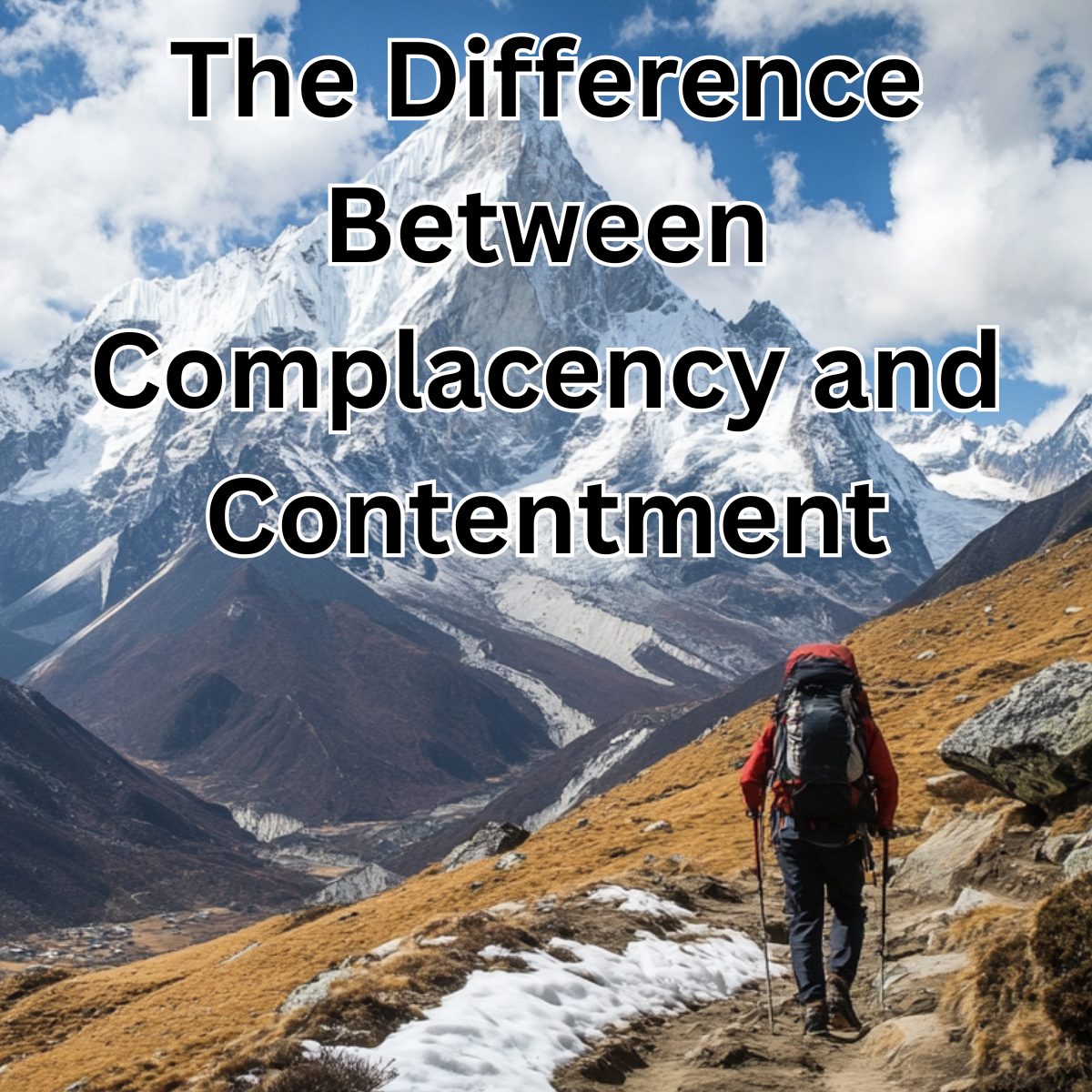
This distinction became particularly evident during my experience backpacking a few summers ago. I embarked on an epic journey up a rugged mountain into a pristine wilderness area. The struggle to ascend was intense, testing every ounce of my physical and mental stamina. Upon reaching the top, we set up camp beside a breathtaking alpine lake. That night, exhausted, nauseous, and aching, I collapsed into my sleeping bag. The following day, we did nothing but lounge in the sun, enjoying the serenity of our surroundings. Was this complacency, contentment, or simply taking a necessary break?
Reflecting on the definitions provided, this day of rest was clearly contentment. After working hard to achieve the specific and demanding goal of reaching the summit, the relaxation was a well-deserved reward rather than complacent inactivity. Complacency would have been stopping halfway up the mountain, content to never push further, accepting mediocrity without striving for greater heights.
Understanding the difference between complacency and contentment becomes simpler when you clearly define and grasp your goals—making them reasonable yet ambitious enough to stretch your capabilities. On the mountain, the goal was straightforward: reach the top. Life, however, rarely offers such clarity. Setting achievable yet challenging goals helps define moments where you can rightfully pause, reflect, and enjoy your accomplishments. Previously, I viewed realistic targets as signs of complacency; now, I realize they are benchmarks signaling when it is acceptable—even essential—to appreciate how far you’ve come.
Ultimately, mental well-being significantly benefits from recognizing and permitting oneself to feel content. Constant dissatisfaction or relentless self-criticism can lead to burnout, anxiety, and a perpetual sense of inadequacy. Learning to distinguish complacency from genuine contentment is crucial. It allows you to pursue ambitious goals without sacrificing peace of mind, ensuring you maintain balance, resilience, and emotional health throughout your journey.