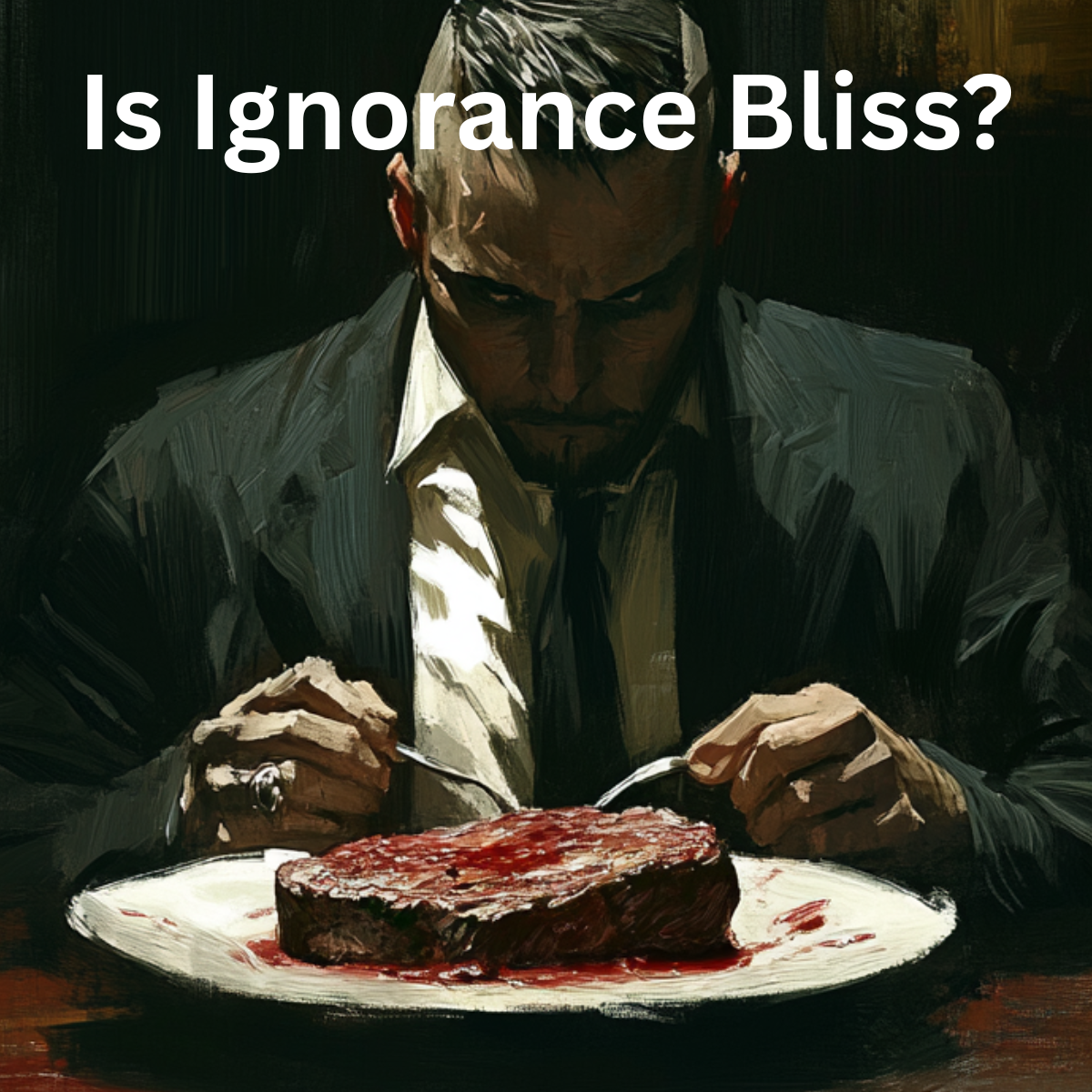
One of my favorite scenes in The Matrix is when Cypher is setting up a deal with the machines. He asks to be plugged back into the Matrix, this time as a wealthy, important person—with no memory or knowledge of the truth he now knows. As he slices into a juicy steak, he says, “I know this steak isn’t real. I know that when I put it in my mouth, the Matrix is telling my brain that it is juicy and delicious. After nine years, you know what I realize? Ignorance is bliss.”
It’s a powerful scene that raises a timeless question: is it better to live in a comforting lie than to face a difficult truth?
The Philosophy of “Ignorance is Bliss”
The phrase “ignorance is bliss” originated with the English poet Thomas Gray in his 1742 poem Ode on a Distant Prospect of Eton College. The full line reads: “Where ignorance is bliss, ’tis folly to be wise.” Gray was reflecting on the carefree nature of youth, untouched by the harsh realities of adult life. Over time, the phrase has taken on broader philosophical weight, asking whether ignorance can serve as a form of protection from pain or whether truth, no matter how harsh, is always better.
This concept has roots in classic philosophical thought. Socrates famously claimed that “the unexamined life is not worth living,” suggesting that awareness—even painful awareness—is essential to a meaningful existence. Yet, many thinkers, from Nietzsche to modern psychologists, have acknowledged the heavy burden that knowledge can sometimes bring.
Why Do We Avoid the Truth?
So why do we, as humans, often cower from the truth? Why do we avoid confrontation, even when it’s necessary?
At the core, it’s about fear—fear of discomfort, loss, change, or emotional pain. Facing the truth often forces us to accept that our current beliefs, habits, or relationships may be flawed or even harmful. The human brain is wired to seek safety and minimize threats, and sometimes, truth itself can feel like a threat to our identity or sense of control.
Confrontation, whether with others or ourselves, can feel like stepping off a cliff. We worry we won’t like what we find or that we’ll be forced to make difficult decisions. In many cases, we construct comfortable illusions and stay within them, not because we’re foolish, but because we’re afraid.
Is It Better to Know the Truth?
Sometimes, when you finally confront an issue, the outcome isn’t what you hoped for. The truth may be disappointing, even devastating. You may find yourself wishing you had never asked, never pried, never looked.
But is that the right conclusion? Should we choose happiness in ignorance over growth in truth?
The answer, ultimately, is no. Because only by uncovering truth and seeing reality clearly can we truly move forward. Reality is the soil in which growth takes root. Illusions may comfort us for a time, but they stunt us. They keep us stagnant, fragile, and unprepared for life’s inevitable challenges.
The shock of truth can be painful. But just like pruning a plant can be temporarily harsh, it’s necessary for healthy, beautiful growth. By confronting reality, by choosing truth—even when it hurts—we create space for transformation.
Do you want to be strong, wise, and ready for what life brings next season? Then confront reality. Truth is the fire that purifies, the chisel that sculpts, the storm that clears the sky.
It’s tempting to retreat into comfort and illusion. But don’t forget: it’s in the struggle for truth that we find meaning, and it’s through truth that we find real, lasting peace—not the fleeting comfort of ignorance, but the kind of peace that can weather any storm.
So ask the hard questions. Open your eyes. Choose truth. And grow.