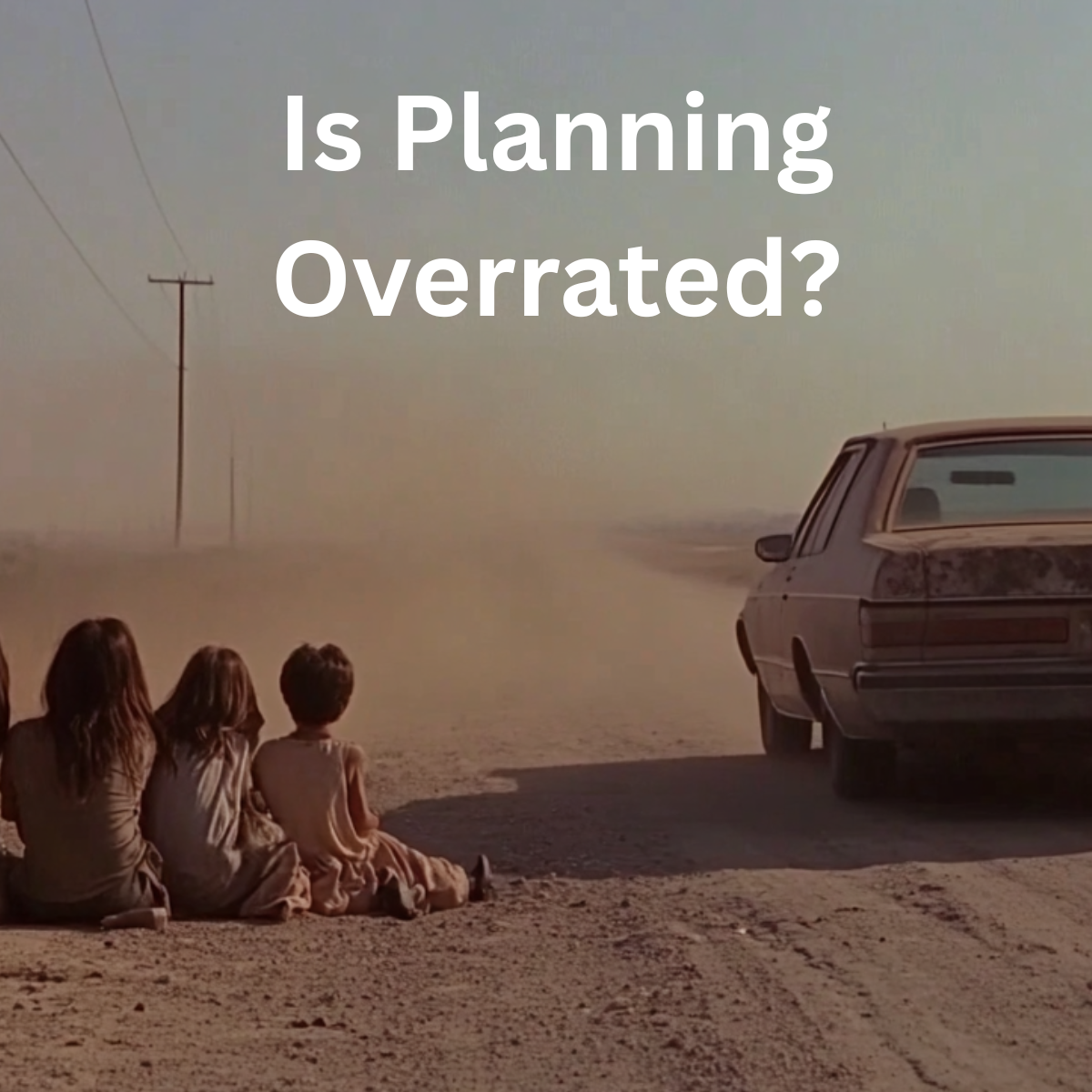
When I was a young kid, I remember sitting in the back seat of my parents’ massive Mercury Marquis Colony Park Station Wagon. Fake wood paneling on the sides. The third row faced backward, which was the best seat in the house—if you didn’t mind staring at the grill of an 18-wheeler for three hours. We’d take off on one of my parents’ unplanned adventures. I use the word “take off” deliberately, because that’s what it felt like—a launch. We’d toss some clothes into the back, slam the tailgate shut, and head down the driveway. The only instruction I can remember was that we were going south this time. Where were we going? No idea. Maybe the beach. Maybe a random mountain town. Maybe just until the station wagon ran out of gas.
Sounds like insanity to some—and, well, maybe it was. Hotels were full. Waiting lists were long. Attractions were closed. The radio didn’t always work. But here’s the thing: those trips were the most memorable. Something unexpected always happened. We’d stumble on a festival in a town we didn’t know existed. We’d meet strange and wonderful characters. We’d get stuck and unstuck in the most curious of places. And those were the stories we told for years afterward.
Fast forward to my business life. I’ve written hundreds of well-thought-out plans—strategic plans, sales plans, product roadmaps, personal development plans. Some succeeded. Many failed. But the most exciting and worthwhile opportunities? They were completely unplanned. Happenstance. I just happened to meet someone at an event. Or I got invited to a meeting I wasn’t even supposed to be in. Or I took a phone call I almost ignored. And suddenly, I’m launching a new company, starting a new career adventure, or building a life-changing relationship. My best ideas have always surfaced when I was on the road toward some distant goal—and stumbled onto a better one along the way.
Which makes me ask the question: is creating plans overrated? Not a single one of my 5-year or 10-year plans has fully come to fruition. Not one. I might’ve knocked out one or two items, but the bulk of those plans were disrupted. Life stepped in. Opportunities I couldn’t predict emerged. Circumstances changed. And just like those family road trips, I ended up somewhere I hadn’t even imagined. So if I’m going to get disrupted anyway, why spend all that time creating some perfectly engineered plan?
Okay. Deep breath. I grudgingly accept that some planning is probably a good thing. I get it. I really don’t want to admit this—because the unplanned is always more exciting. But alas, even my parents had a loose idea that we were heading south. Without at least that much direction, we probably would’ve driven in circles until we ran out of gas. So yes. Some planning. Fine. I accept it. Moving on.
But here’s my beef: I’ve spent way too much time in planning. I’ve read too many self-help books about OKRs, SMART goals, KPIs, metrics, milestones—blah, blah, blah. All of them with that famous phrase: “If you fail to plan, you plan to fail.” Yada yada yada. It’s not that this is wrong—it’s just overdone. At some point, all this focus on perfect planning becomes a clever way to avoid taking action. And that, my friends, is the real danger.
The best plan I’ve ever made was simply to get started. That’s it. Plan to start right now. Get out the door. Start the journey. Stop planning the fabulous adventure—and get on the adventure already. Plans are good enough to give you a rough direction, to orient yourself. But don’t let the planning phase keep you stuck in the garage. You should check in with your plan now and then, not get trapped in perfecting it. Plans are meant to be broken—because they will be. Anyone who claims to have a perfect plan is either naïve, a liar, or both.
Here’s my advice: spend an hour making a plan for the future. Write it down. Be intentional about it. Then spend about one minute each day reviewing it—just enough to make sure you’re headed roughly in the right direction. Anything more than that, and you’re procrastinating. You’re avoiding the real work. You’re avoiding the path.
In the end, I hope you leave some room for spontaneity on your adventure—just like my parents did in that old 1970 Mercury Marquis Colony Park Station Wagon. Life is not a spreadsheet. It’s a road trip. Throw your bags in the back, head down the driveway, and embrace the joy of not knowing exactly where you’ll end up. Those are the stories you’ll remember.