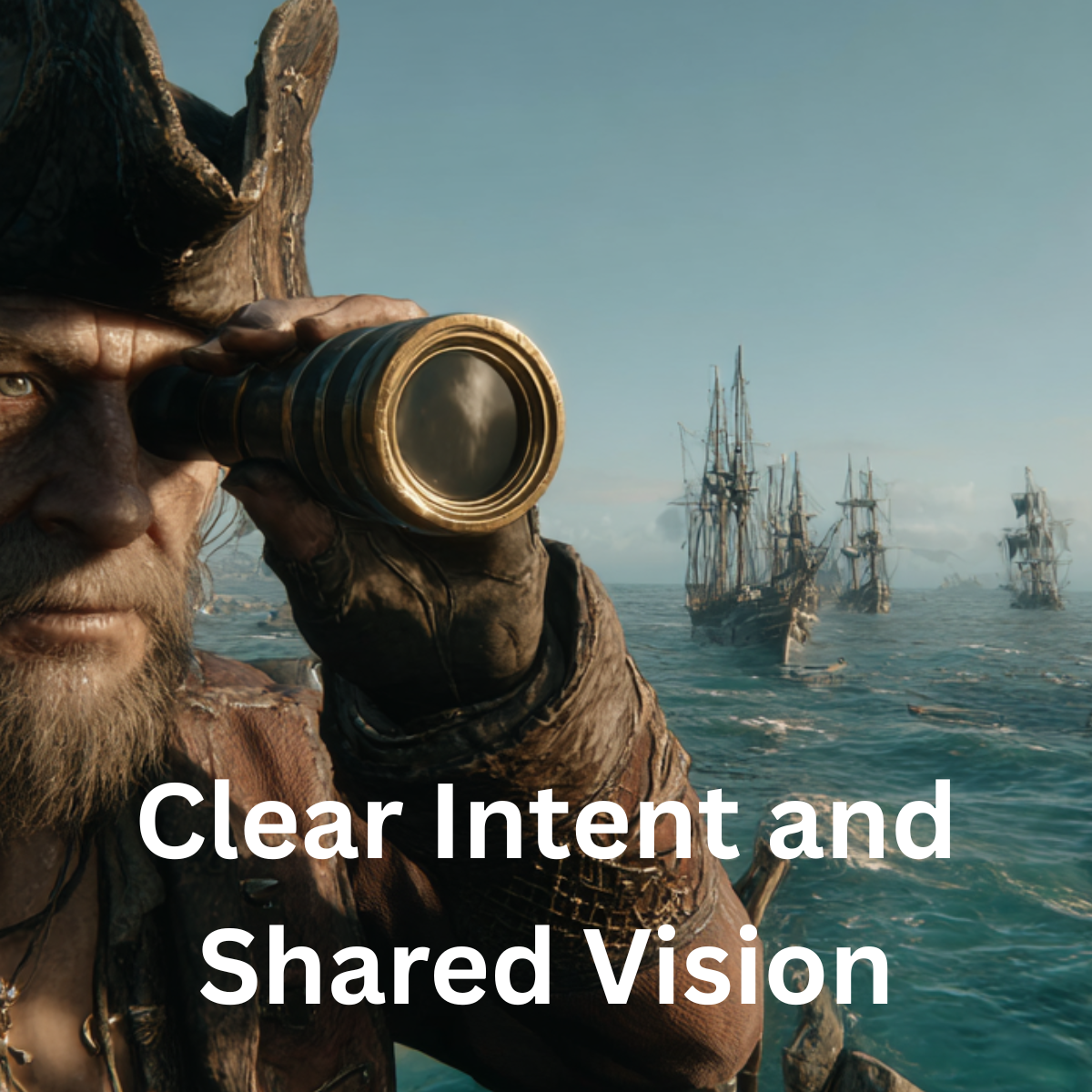
This is the first of a series I am writing on how potential lessons from the Golden Age of Piracy can help us in our own adventures. As I am currently out on an adventure of my own, this is a series that I wrote ahead of time and prerecorded.
When we think of pirates, we often conjure up images of chaos, reckless abandon, and disorganized bands of outlaws roaming the seas. Yet, a closer look at historical pirate crews reveals something quite different: pirates operated with extraordinary clarity of intent and a well-defined shared vision. Whether their objective was seeking treasure, intercepting lucrative trade routes, or strategically disrupting rivals, pirate crews knew precisely what they aimed to achieve.
Central to this clarity were the “Pirate Articles,” also known as pirate charters. These documents outlined the rules, objectives, responsibilities, and rewards agreed upon by every crew member. Far from being arbitrary guidelines, these charters served as powerful instruments aligning each pirate around shared expectations. Crewmembers knew exactly what they stood to gain and what was expected of them in pursuit of collective goals.
Modern agile and high-performing teams can greatly benefit from this historical precedent. In contemporary environments, it’s easy for teams to drift from their core purpose when clear objectives and shared visions are not explicitly defined. Without clarity, distractions and misaligned efforts become inevitable, diluting effectiveness and momentum.
Much like pirate charters, today’s teams benefit from creating explicit, actionable agreements—team charters—that clearly articulate the mission, roles, expectations, decision-making protocols, and success criteria. A strong team charter not only clarifies individual responsibilities but also serves as a compass to keep the team oriented and aligned, even amid turbulent change.
Practical Takeaway
Gather your team and collaboratively create a clear, actionable charter. Define your shared purpose, individual roles, decision-making processes, and goals explicitly. This simple step ensures everyone moves cohesively toward your collective objectives, harnessing the power of clarity to navigate uncertainty and achieve success—much like the focused, intentional crews of the Golden Age of Piracy.