How do you know when you have officially grown up?
This was a question that plagued me when I was a child. Adults would tell me, maybe one day when you grow up, you can do that. However, they would never tell me when that was. Was it when you were 18? When they could officially ship you off to fight in a foreign war? Was it 21? The age that you could drink officially, irresponsibly, and not get into immediate trouble about it? Was it the day you got married? The closest anyone ever got to the truth on this was my father, who told me you know you have grown up when you file your first 1040. However, is that really the case then? All I have to look forward to when I finally get to be a grown up is to pay taxes? Never mind. Where is that Peter Pan fairy? Tell him I am signing up as a lost boy.
When I got older, I realized that being grown up was never an event anyway. The reason most of the adults could not answer this question is because they were not grown up themselves yet. They were on the spectrum, so to speak. They were somewhere on their way to being grown up, but not quite there yet. So the question about being grown up was less event driven and more a gradual process. In some ancient cultures, turning young boys into men was a necessity for the survival of the tribe. They had special ceremonies, tests, or other trials that had to be performed. People died at a young age, so they had to force this along a bit. However, nowadays, that is not so imperative. Life expectancy is increasing, as well as the fact that an older adult can stay productive for far longer than ever before. So we do not need the next generation to grow up that fast. Let them be consumers and task workers for as long as possible so that we can make money off of them.
So what is our modern day terminology for this gradual process of growing up? Maturity. That is our word for it. Instead of saying, “I am grown up now,” we say, “I am learning to be more mature.” So what is the definition of maturity? I looked at a variety of definitions. There are financial definitions, sociological, and a general definition. I think the standard definition from the world of psychology is this:
Maturity refers to the stage at which an individual has reached full emotional and cognitive development, typically marked by consistent, rational decision-making, and the capacity to handle complex interpersonal and life situations.
This definition is completely unusable in my opinion. How would you really know when you have reached emotional development anyway? When I am willing to cry in a movie theater? What does that even mean? Full cognitive development? As far as I can tell, I have been in cognitive decline since the day I got my first driver’s license, so I am not sure I really buy that as a concept at all. So what is a good definition for maturity? The art and practice of growing up?
Quite simple. Here it is:
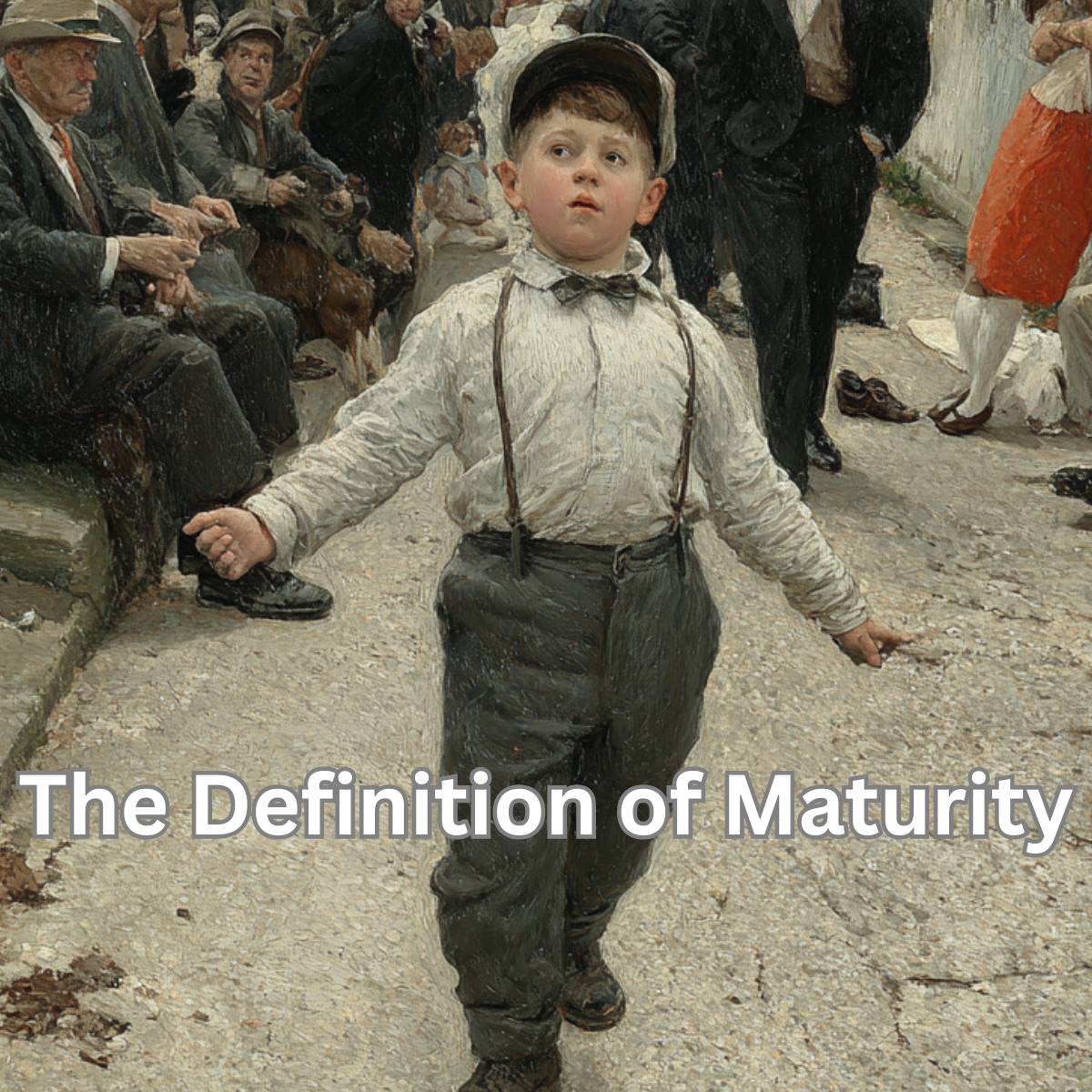
Maturity is knowing when to say no.
You are officially grown up when you can say no. You can decline that sugary snack because it is bad for you. You can take a hard pass on the bad boy or the bad girl. You can look your client right in the face and say, I understand what it is that you would like me to do for you, but that is not my focus right now. So I am going to have to politely decline. When you are able to summon up the courage to say no, you are now grown up. You are mature.
Now of course, you will immediately realize that maturity is not a permanent state. It is fluid, and you can slip in and out of it. You can say no one day and then, in a moment of weakness, say yes on another day. Learning to say no is much more than a moment in time. It is a full understanding of your purpose, mission, and a dedication to it. Saying no is not dismissing or hurting another person, but rather a stance that says you have thought through your priorities in life, and you know what fits and what does not fit. So you are using your power, your decision-making ability, to decide what you focus on because you want to achieve your objectives in life. Saying no is prioritizing what is important. Saying no is understanding what is important and why. Saying no is courage to focus on your goals and to not be apologetic about it.
So perhaps the question was never about when we grow up, but rather how often we are willing to choose maturity in the face of pressure, impulse, or fear. Growing up is not a finish line; it is a repeated decision to live with purpose. It is the quiet strength to say no when it matters most, not out of defiance, but out of clarity. And in that choice, we find a deeper kind of freedom; the freedom to be true to who we are and the life we are trying to build.