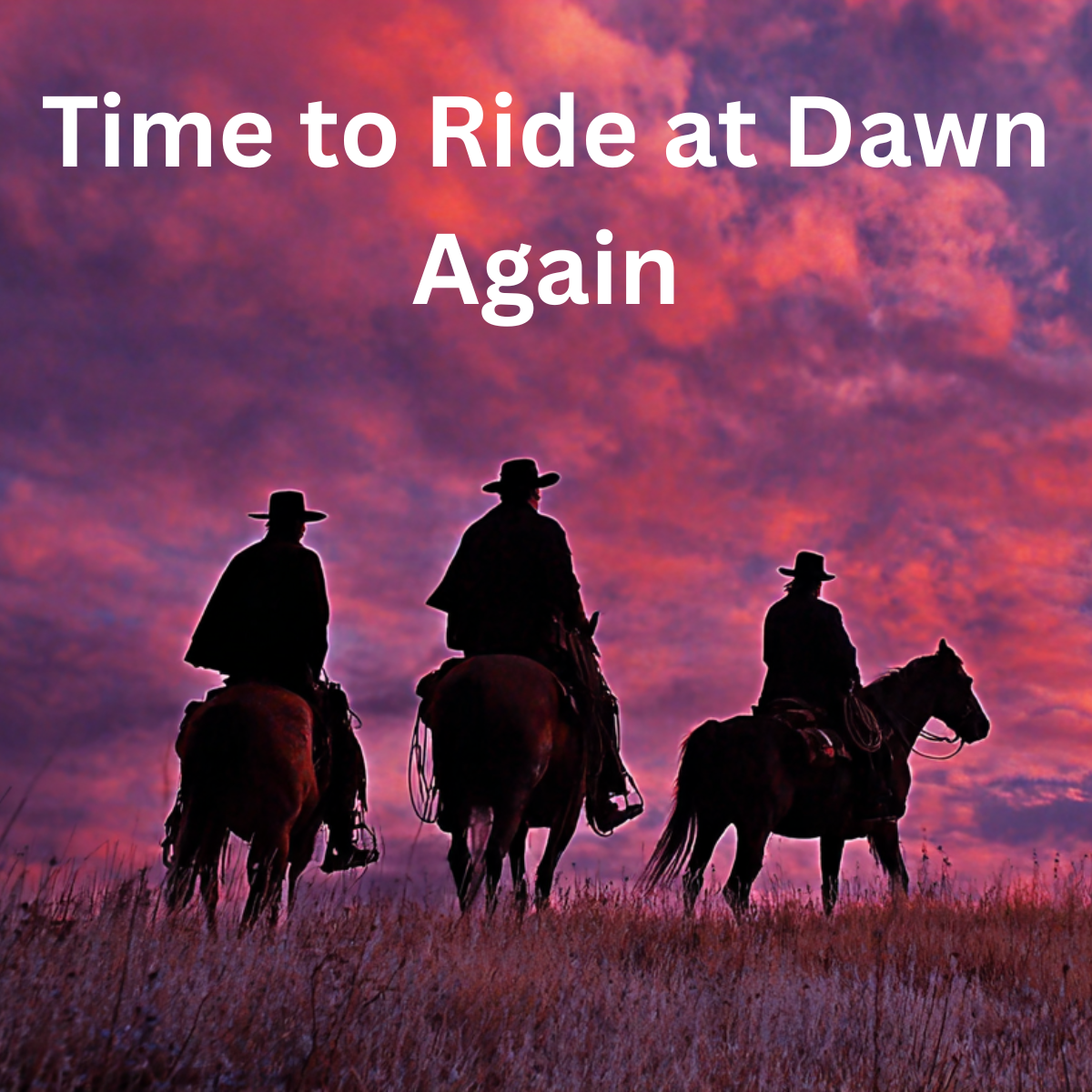
I first encountered the powerful concept of “Ride at Dawn” through Roy Spence, a renowned marketing guru who spoke at a corporate conference I attended. While his presentation on leading a principled life didn’t particularly resonate with me during the actual talk, something compelled me to research his work further when I returned to my hotel room that evening. As I delved into one of his books, I discovered the remarkable origin story of his marketing firm – how he and his associates were in a bar, wrestling with the monumental decision of whether to quit their day jobs and start their own company. The pivotal moment came as they were leaving the establishment and noticed a quote posted above the door that read, “Tomorrow, We Ride at Dawn”. This phrase struck them so profoundly that they embraced it as their rallying cry and launched their marketing firm the very next day, never looking back. The story captivated me completely, and as I contemplated my own ambitions to transform my health and build meaningful habits, I found myself standing before the hotel mirror at 2:30 AM, setting my alarm for 5 AM and declaring to my reflection, “self, tomorrow morning I Ride at Dawn”. This became the catalyst for my own 365-day commitment to rise early, run daily, and pursue the disciplined life I knew I needed to live.
Ride at Dawn matters because it names the moment when excuse and fear finally run out. It is the point where you stop circling the problem and put your boots in the stirrups. It is not a slogan, it is a decision. Every time I have taken it seriously, my life has moved. Projects moved. People moved. I moved.
I first heard the story about the words over the door. Tomorrow, we ride at dawn. A small group facing a big decision reads that line and chooses to act. No more debate. No more delay. What struck me was not the romance of it, but the clarity. There is a time for counsel and spreadsheets and risk tables; there is also a time when you must ride. That second time is rare, and I had been missing it. I was letting reasonable people talk me into respectable waiting. I was letting my own doubts whisper that another meeting would help. Ride at Dawn cut through all that. It gave me a clean edge to separate thinking from doing.
There is a forgiveness embedded in it that changed me. The phrase carries the promise of a reset. Yesterday may have been a mess; tomorrow morning is unclaimed ground. I do not have to drag my failures into the next day. I do not have to carry the old argument, the missed deadline, the clumsy pitch. At dawn, I get to start again with resolve. That is not denial; it is discipline. You acknowledge what happened, you learn what you can, and then you release it so you can act.
People often warn you when you choose to ride. They will remind you of everything that can go wrong. They will point to the clouds and the empty canteens and the rough ground ahead. They do this because they care, or because they are afraid, or because they believe that the perfect plan is coming if you wait one more day. I have listened to those voices, and sometimes they are right. There are storms you can see from a long way off. There are cliffs that you should not attempt. But there are also moments when the warnings will never stop, when the cost of waiting is a kind of slow surrender. In those moments, despite the danger and the consternation, you ride.
Startups make this visible. There are mornings in a young company when confidence is thin and cash is thinner. Advisors pull you in opposite directions. Competitors move faster than your slide deck. Your team wants certainty, and all you have is a good guess and a stubborn willingness to test it. This is where Ride at Dawn shows its value. You ship the feature even though it might break; you call the customer you have been avoiding; you cut the work that does not serve the core; you raise the price and stand behind it; you tell the investor no because the strings will strangle the mission. You do not do these things recklessly. You do them early, with a clear mind, before fear can find its voice.
The morning helps. There is quiet in the first light that makes room for courage. The world has not yet arrived with its noise and its demands. Your mind has not yet tangled itself. In that space you can put first things first. You can write the email you owe, build the version that matters, or make the decision that has been stalking you. You move something essential before the day can take it from you.
Why did this idea impact me so much
- It gave me permission to begin again. I used to carry yesterday forward for far too long. Ride at Dawn taught me to close the book each night and open a blank page in the morning.
- It replaced anxiety with action. Worry multiplies in stillness. Motion reduces it. When I choose to ride, the fear does not vanish, but it shrinks to its proper size.
- It created a simple filter. When I face a decision, I ask, is this a moment to seek counsel or a moment to ride. The question itself brings honesty.
- It turned intention into ritual. I no longer wait for inspiration. I begin at first light, I do one meaningful thing, and I let the day catch me already in motion.
This is not hero talk. It is not about swagger or bravado. It is about honoring the commitments that define you. You will have days when the risk is real and the outcome is uncertain. You will have friends who urge you to slow down and enemies who hope you will stop. You will have good reasons to delay. And yet, there are times when you must ride. Not because you are fearless, but because the work deserves your courage.
So set your saddle the night before. Name the one thing that will move the mission. Forgive the weight of yesterday. Then meet the day at the line where the dark gives way, and ride.