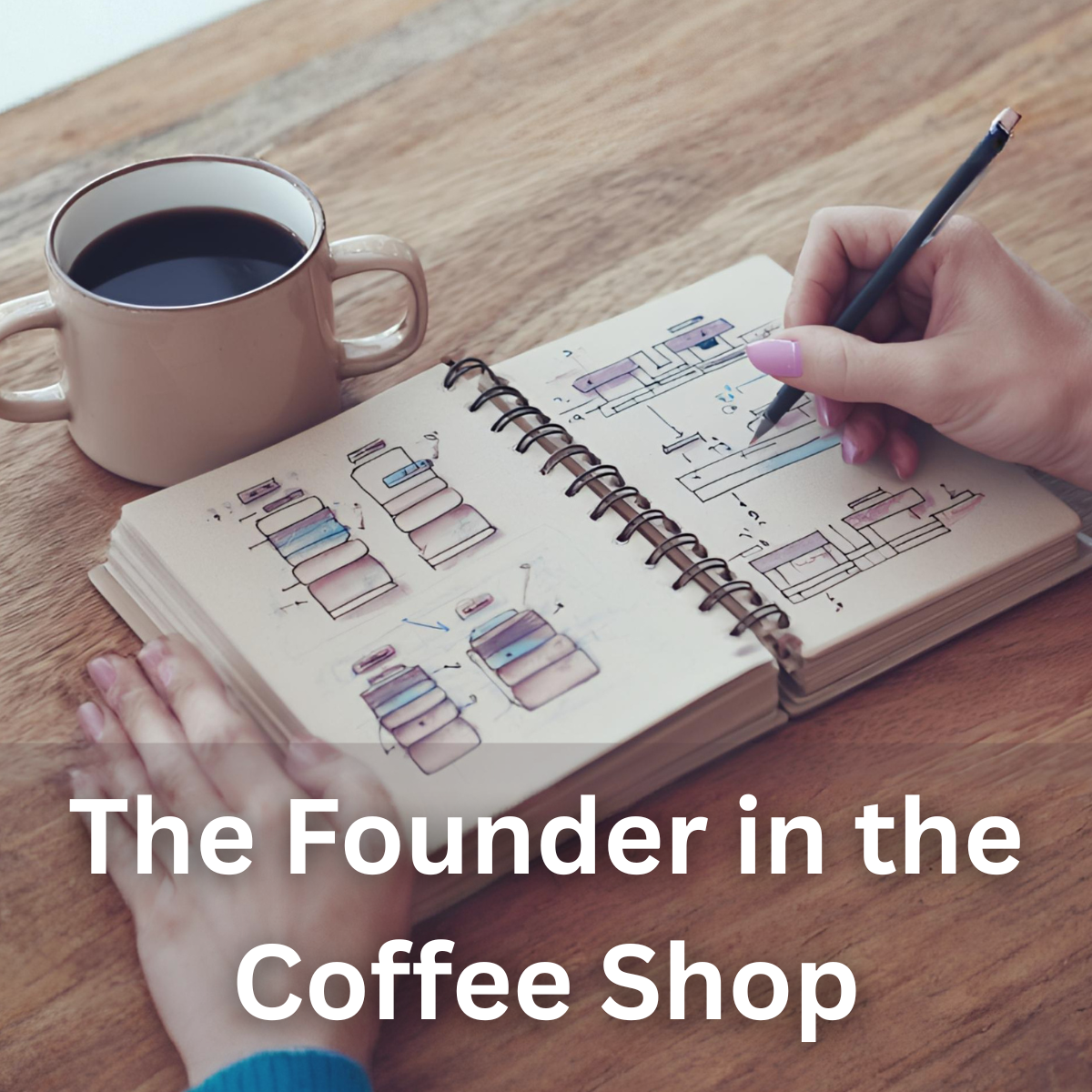
I was sitting in a coffee shop last Tuesday, watching a founder sketch wireframes on a napkin. The product was clever. The execution was thoughtful. The scope was reasonable.
And that was the problem.
He had built something he could defend. Something he could ship. Something that would not embarrass him if it failed. But he had not built something that could change the game. He had optimized for survival, and in doing so, capped the ceiling before laying the foundation.
I recognized the pattern because I have lived it. For years, I built things that made sense. Things that fit the budget. Things that could be explained quickly. Things that felt responsible. I told myself I was being pragmatic. And I was. But I was also thinking too small.
Thinking small is not a flaw. It is a survival instinct. When something you built collapses, when money runs out, or when people get let down, your brain learns to protect you. It aims for what is achievable instead of what is transformative. It optimizes for the next safe step rather than the distant summit.
That instinct has value. It keeps you grounded. It keeps you honest about constraints. But it also traps you in a smaller game. It leads to products that serve narrow audiences, solve modest problems, and generate modest returns. It keeps you safe.
And safety, when you are trying to build something that matters, is often the enemy of significance.
The shift that changes everything is not about working harder or dreaming bigger. It is about asking a different question.
Not: What can I build with what I have?
But: What would this need to be if it were worth a billion dollars someday, and what problem would it have to solve to get there?
That question is uncomfortable because it removes the safety net. It assumes success and demands justification. It forces you to stop optimizing for what you can defend and start optimizing for what is actually required.
When you ask it, everything changes. The product changes. The audience changes. The strategy changes. The risk changes. You are no longer asking what is safe. You are asking what is necessary.
I watched a team confront this last year. They had built a product that worked. Customers were happy. Revenue was growing. But the growth was linear, predictable, and safe. And the founder knew that safety was not enough.
We asked the uncomfortable question. If this company were worth a billion dollars in 10 years, what would it need to be worth? Not what it could be. What it would have to be.
The answers were painful. The product they had built was not the product they needed. The audience they served was not the audience that could carry them to scale. They had optimized for what was achievable, and in doing so, built something that could never become what it needed to be.
This is where most teams stop. They see the gap between what they have and what would be required, and it feels impossible. They retreat into realism. They tell themselves incremental progress is enough.
And incremental progress is progress. But it rarely changes the game.
The teams that break through do not retreat. They sit with the discomfort. They accept longer timelines, higher risk, and more visible failure. They let go of the safe version of the product and start building the version that matters.
This does not mean ignoring reality or pretending constraints do not exist. It means starting with the end in mind and working backward. It means asking what would need to be true for this to matter at scale, and then building toward that truth, even when the path is not clear.
Over time, I have learned that the difference between small outcomes and transformative ones usually is not talent or effort. It is the size of the question you are willing to ask.
Small questions lead to small answers. The uncomfortable question leads to something that matters.
The founder in the coffee shop is still building. But he is building differently now. He is solving the problem that justifies the scale, not the one that fits neatly inside today’s constraints. He is no longer optimizing for safety. He is optimizing for what is required.
That shift is not easy. It is not comfortable. It is not safe. Btw, I didn’t actually see a founder doing this; that founder was me.
But it is the only one that carries you from what you can build today to what you might become tomorrow.
So if you find yourself building something that feels safe, something you can defend, stop. Ask the uncomfortable question. Ask what this would need to be if it were worth a billion dollars. Ask who it would need to serve and what problem it would need to solve.
Then start building toward that truth.
Not because it is easy.
Not because it is safe.
But because it is the only question that leads to something that lasts.