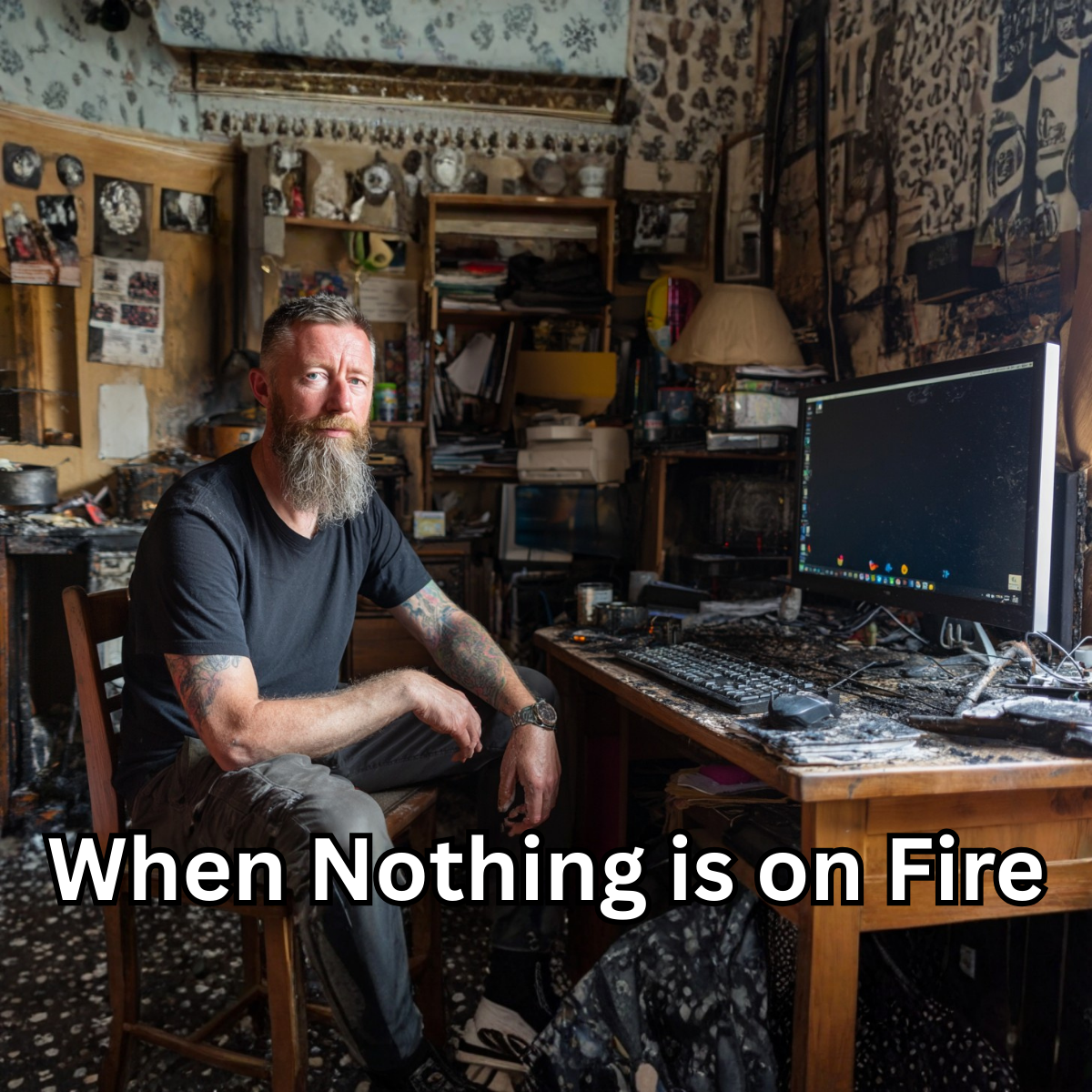
This morning, I woke up and was ready for the day. I went for a run and then settled into my routine, and opened my email, only to realize something horrifying. No urgent messages were waiting for me. No fires to put out, no crises demanding my attention. Instead, I found myself staring at a long to-do list, feeling a strange mood wash over me. It was unsettling to have nothing screaming at me, and in that moment, I felt stuck. This feeling of paralysis seemed like failure, but deep down, I knew it was something else entirely.
It is counterintuitive to think that calm can feel worse than chaos. We often assume that a quiet moment should feel productive, that we should be grateful for the absence of urgency. Yet, here I was, confronted with too many important tasks and nothing demanding my immediate attention. This paralysis was not laziness or a lack of discipline; it was simply a shift in my environment. Urgency used to choose for me, guiding my actions, but now, with that urgency absent, I was left to navigate my choices alone.
When urgency disappears, it acts like a forcing function, collapsing choice into action. Without it, my brain lost its shortcut to productivity, and importance became abstract. I realized that this paralysis felt like a personal failure, but it was actually a structural gap in my approach. I was not experiencing a breakdown; I was in a transition. Calm reveals responsibility; it does not remove it.
In these quiet moments, there is an emotional risk in making a choice. Choosing means committing, and starting means owning the outcome. Without chaos to hide behind, the weight of my decisions felt heavier. It is normal to hesitate when the work matters, and feeling this way is a sign that what I am doing is meaningful.
Instead of succumbing to despair, I decided to shift my perspective. Rather than asking myself what is most important, I began to ask what the smallest intentional start could be. Motion creates clarity, and taking action, no matter how small, beats overthinking. I opened a document and wrote the first rough paragraph of a project I had been avoiding. I named the unknowns, acknowledging the uncertainty without letting it paralyze me. I was not fixing my paralysis; I was replacing urgency with intention.
As I sit here at my desk, nothing urgent has changed. But something else has—the meaning of this moment has shifted. When nothing is urgent, and I feel stuck, it is not a failure; it is the moment I am being asked to choose intentionally. This quieter work may not seem as urgent, but it is the kind that builds something lasting. I reaffirm my commitment to move forward, to embrace the stillness, and to begin now.