I sat at my desk staring at the problem in front of me. We needed to build new features into our software, but I had no clear picture of how they would work. The challenge was not the effort. I have worked through hard problems before. This one felt different. It was not panic. It was friction. The kind that slows your thinking and makes every decision feel heavier than it should. I could feel myself starting to circle the problem rather than solve it. That is when I decided to stop forcing clarity and change the rules.
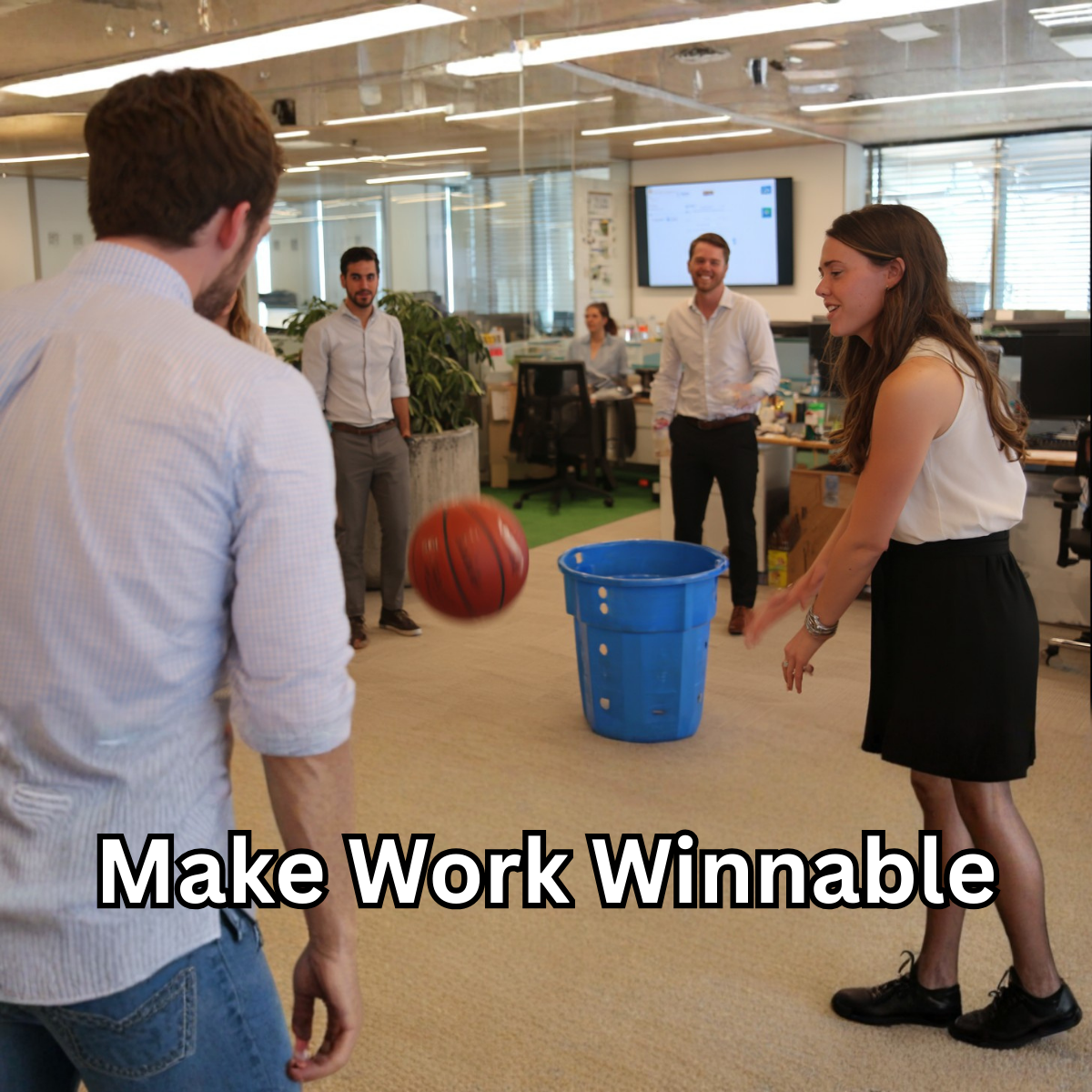
I turned the work into a game. I broke the problem into six stages. I gave myself two days. Winning meant finishing each stage, not solving everything at once. I was not lowering the bar. I was creating forward motion. The moment I set the stage, something shifted. The weight lifted. I had a path.
Once the game started, everything changed. My pace increased. Decisions that felt murky an hour earlier became obvious. I worked fast. I slept little. But it was not burnout. It was momentum. Each time I completed a stage, I felt a small surge. Not relief. Energy. I moved to the next stage faster than I expected. By the end of the second day, I stood at the sixth stage. The pinnacle. I had done it. The problem was not fully solved, but I had clarity. I had progress. And I was not exhausted. I was energized.
I sat back and thought about why it worked. Games give you clear goals. They give you immediate feedback. They show you progress. They deliver small wins. Real work rarely does any of that. Real work is ambiguous. Timelines stretch. Success criteria shift. You can work hard for weeks and still feel like you are standing still. The brain does not struggle with effort. It struggles with invisible progress. When you cannot see movement, even simple work feels impossible. When progress is visible, hard work becomes fuel.
I realized that many problems feel overwhelming, not because they are difficult, but because they lack structure. The problem I faced was the same before and after I turned it into a game. What changed was not my motivation. It was the interface. I gave myself a way to see progress. That changed everything. This applies beyond software. Leadership. Strategy. Long-term projects. Any work that feels heavy can be made lighter by making progress visible. You do not need to change the work. You need to change how you see it.
I will carry this forward. When work feels heavy, I will ask myself if the problem is the difficulty or the lack of visible progress. Most of the time, it is the second. When that happens, I will break the work into stages. I will set a time box. I will define what winning looks like at each step. I will turn the work into something I can see myself completing. Not because I need tricks to stay motivated. Because my brain works better when it can see the path.
If you are staring at something that feels too big, try this. Write down six things you could finish. Not six perfect outcomes. Six steps. Give yourself a deadline. Start the first one. When you finish it, notice how you feel. Then start the next. You are not changing the work. You are making it winnable. That is enough.