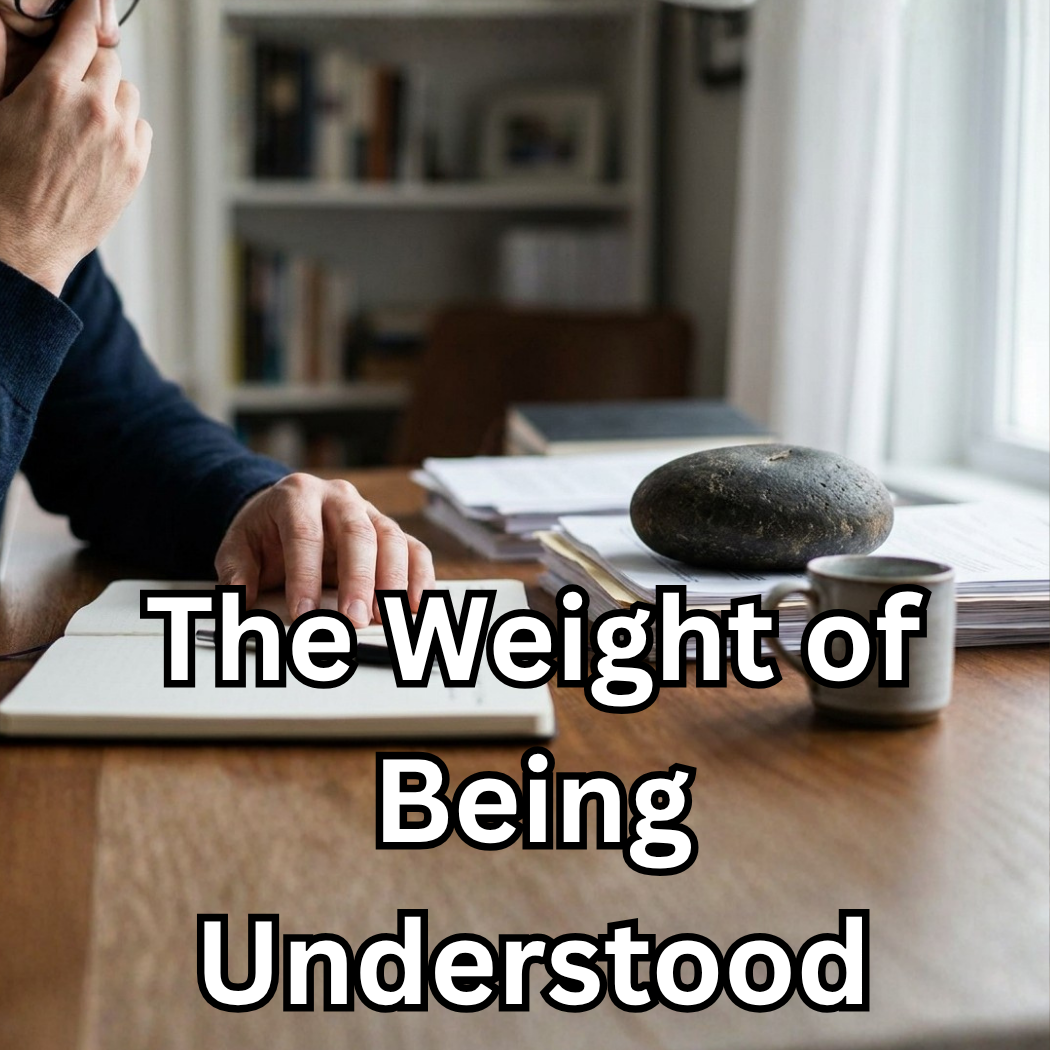
I was sitting at my desk last Tuesday when I noticed the tension in my shoulders. I had just finished revising an email for the third time, trying to make sure it would land the right way. That is when I realized something. I was not just writing an email. I was trying to control how someone would receive it, interpret it, remember it. I was managing a narrative, and it was wearing me out.
Controlling the narrative feels necessary. You want to be understood accurately. You want your intentions to come through clearly. But you are dealing with other people’s perceptions, and those you cannot fully control. So you end up monitoring, adjusting, anticipating. You are managing a brand in real time, except the brand is you, and the work never stops.
This creates a specific kind of stress. It is not dramatic. It is quiet and constant. You start filtering everything you say and do through the question of how it will be received. That filtering disconnects you from just speaking or acting naturally. You become hyper-aware, and that awareness becomes a burden.
The stress comes from three places. First, the work is never finished. Even if you shape the message perfectly once, new situations and new people keep showing up. There is no moment when you can say it is done. Second, you start thinking constantly about how things will sound or how they will be taken. That constant filtering pulls you away from being present. Third, you end up assuming responsibility for how others interpret you. And that is where it breaks down, because you can influence perception, but you cannot own it.
Controlling the narrative has a negative connotation. It sounds like you are hiding something or being manipulative. But that is not usually the case. Everyone does this, regardless of what they are engaged in. You could be the purest person on the planet with nothing to hide, and you would still be trying to manage how you are understood. People just inherently want to be seen clearly.
So controlling the narrative is not wrong. But it does have to be sized appropriately. The level of effort can easily be reduced by remembering to focus on your own intent and clarity, and then giving up on trying to manage how everyone reacts or interprets what you are projecting. People feel less stress when they stop chasing perception moment to moment and learn to trust that consistency builds the narrative over time.
“You can influence perception, but you cannot own it.”
Instead of controlling the narrative, it becomes more like establishing a signal and letting it repeat. You say what you mean. You act with consistency. You let the pattern speak for itself. You stop revising the email three times. You stop monitoring every reaction. You trust that if you are clear and consistent, the people who need to understand you will.
The next time you catch yourself managing how something will be received, pause. Ask whether you are being clear or whether you are trying to control the outcome. If you are being clear, let it go. Send the email. Have the conversation. Trust the signal. The narrative will build itself if you give it time.