I remember years ago sitting across from a doctor who looked me square in the eyes and said, “no you wont.” I had just told him I was going to lose some weight. He did not argue, he did not lecture. He just said it plainly, like he had seen this before.
Standing in the checkout line at CVS, that moment came back to me. I had a small guilty pleasure in my hand. Sugar. I knew I should not be buying it. I even said it to myself, this is a problem. Then I followed it with something else. No worries, I will stop this when I get back on track next month.
I have said some version of that sentence more times than I want to admit.
What I noticed in that moment was not the candy. It was the pattern. I was taking something I knew I should deal with now and quietly moving it into the future. Not tomorrow, not later today, but some cleaner version of time where everything would be easier.
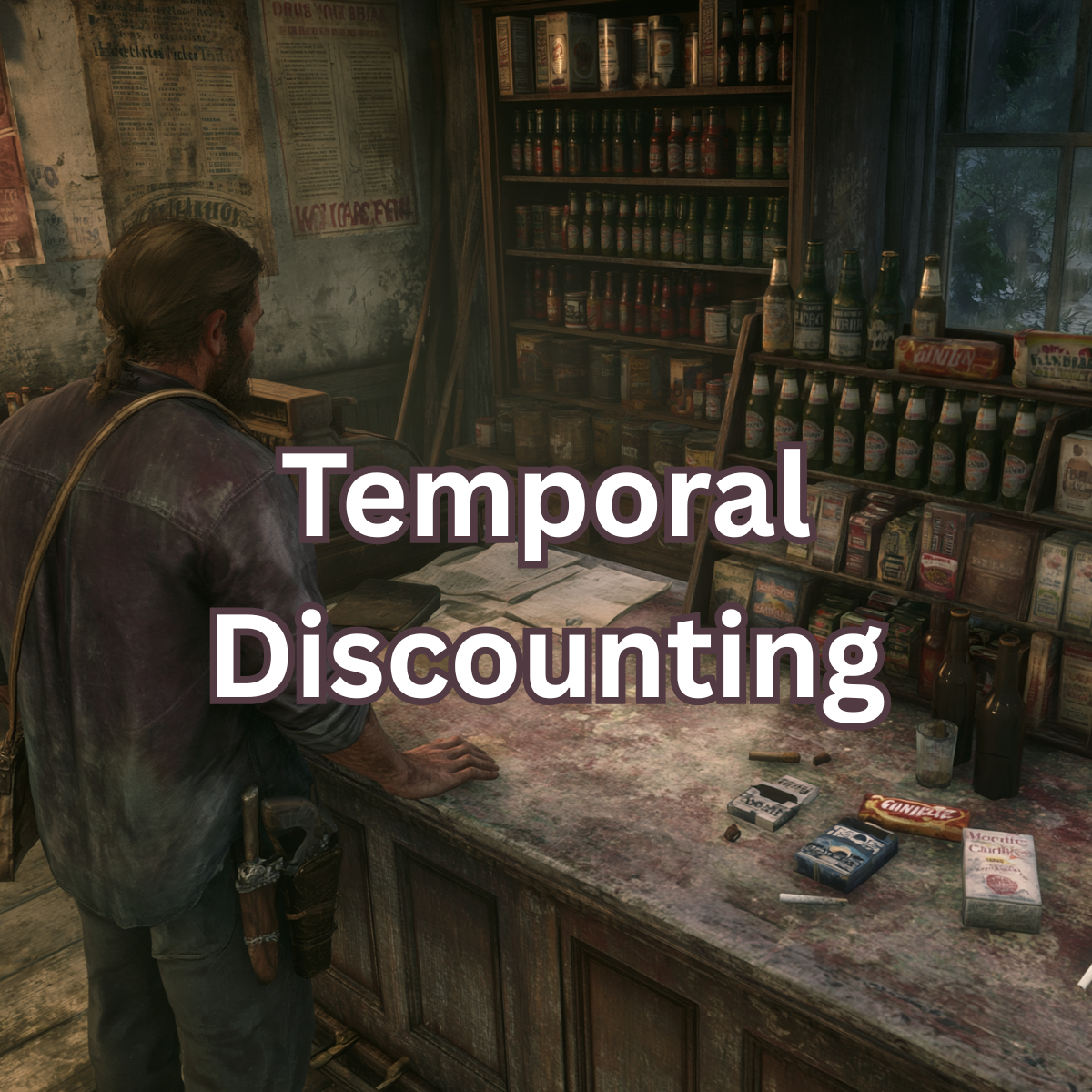
There is a name for this. Present bias. Temporal discounting. The words do not matter as much as the behavior. The immediate reward carries more weight than the future consequence, so the mind creates an escape. It says, I know this is wrong, but I will fix it later.
It feels responsible. It feels like a plan. But it is not.
The version that hits closest for me is something like future self outsourcing. I am handing the responsibility to someone I have not met yet. A version of me who is more disciplined, more motivated, more ready. That person will handle it. Not me, not right now.
The sentence always sounds reasonable.
“I will get back on track next month.”
It has a calm confidence to it. It sounds like control. But if I am honest, it is not control at all. It is a quiet agreement to ignore what I already know.
The doctor knew this. That is what I think now when I replay that moment. He was not predicting failure. He was recognizing the pattern. He had probably heard the same sentence a thousand times, just with different words.
I think the deeper issue is not the behavior itself. It is the habit of creating a future version of myself who will pay for what I choose today. That future version feels real enough to borrow from, but distant enough that I do not have to face him.
So the debt builds. One small decision at a time.
In that CVS line, I could feel it happening in real time. The mind had already solved the problem. Not by changing the behavior, but by moving the responsibility. It gave me permission to continue because I had promised to correct it later.
That is the trick. The promise replaces the action.
“The moment I say I will fix it later, I have already decided not to fix it now.”
What I am learning is that this does not get solved with a better plan or a better future date. It gets solved in a much smaller way. Right at the point where the decision is made.
Not next month. Not Monday. Not after things calm down.
Right there.
The next step is not dramatic. It is not a reset. It is simply noticing the sentence when it shows up and not accepting it. Not arguing with it. Just not letting it make the decision.
Standing there, holding the thing I already know I should not have, and choosing differently without pushing it into the future.
That is the only place this gets resolved.