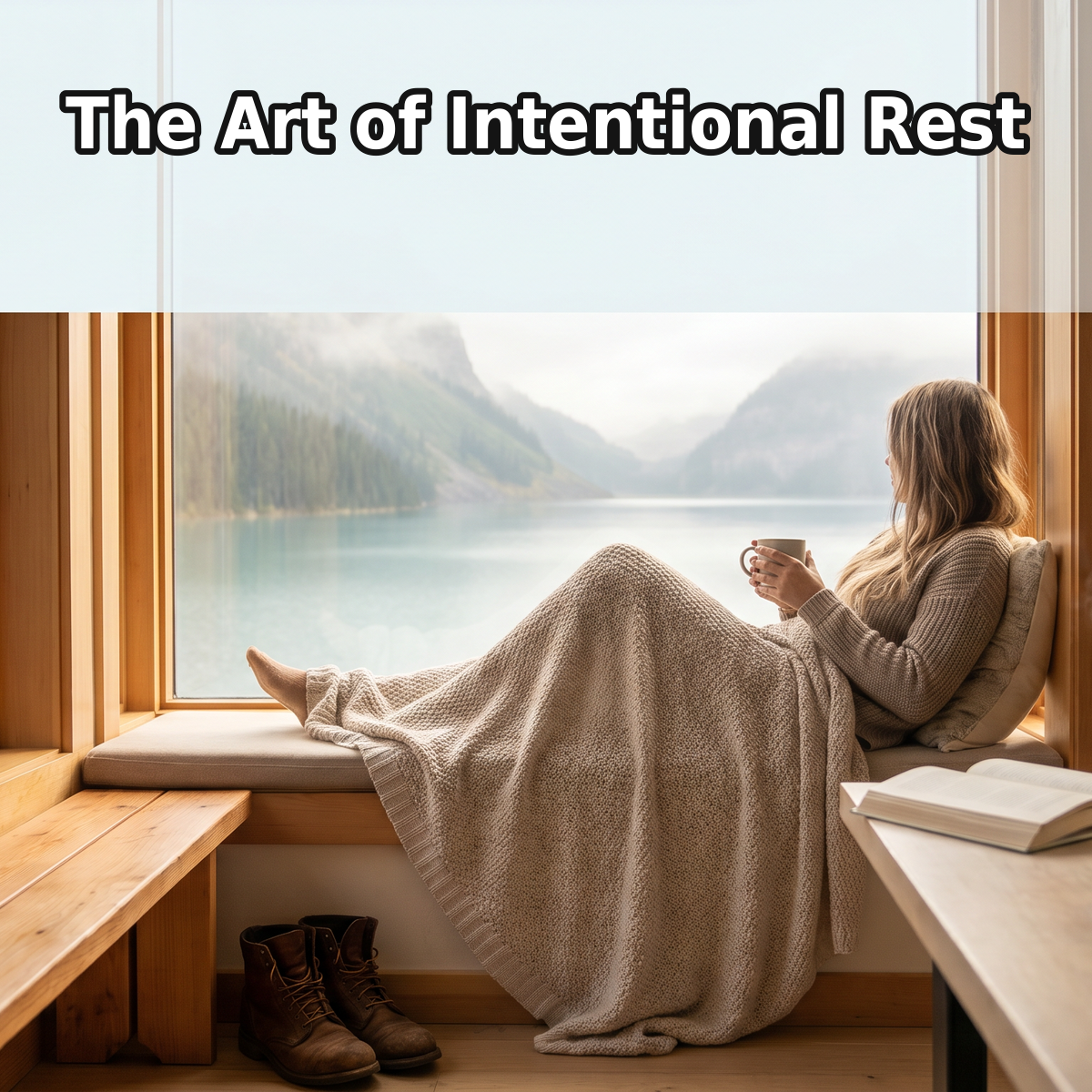
I have noticed how easy it is to confuse stopping with resting. I can sit down, turn on a screen, scroll through my phone, and still feel like my mind never actually left the noise. Taking a mental break from the stresses of the world requires deliberate and concentrated effort. You simply cannot accidentally rest.
That is the hard part to admit. Most of us know how to distract ourselves, but that is not the same thing. The mind does not reliably shut off on its own, and when life stays loud for too long, it begins to feel normal to carry that tension everywhere, into work, into sleep, into thought, into the small spaces where quiet should still be possible.
Rest has to be chosen
I have come to a realization that rest is not passive in the way we often imagine it to be. It is not what happens when I finally collapse at the end of the day. It is not the automatic result of stepping away from work. It is a practice, and like any practice, it asks for intention.
That matters because the body and mind do not always follow the same schedule I want them to follow. I can be physically still and mentally racing. I can be off the clock and still carrying the whole day with me. I can tell myself I am taking a break while I keep feeding the same inner agitation through more stimulation, more noise, more motion.
This is why real recovery takes effort. It asks me to do something that feels simple, but is not simple at all. I have to pause on purpose. I have to let the mind come down. I have to stop mistaking activity for relief.
When I fight tired, everything gets worse
There is also a cost to ignoring fatigue. When I fight tired, I do not become stronger or sharper. I usually become less patient, less clear, and less able to do even basic things well. The cycle tightens quickly. Performance drops. Sleep suffers. Good habits start to slide. Then I feel the effects of that slide and try to push harder, which only deepens the problem.
That pattern is familiar to a lot of us because it feels productive right up until it does not. There is a certain pride in pushing through, in refusing to stop, in believing that rest can wait until everything else is done. But that way of living has a quiet dishonesty in it. It assumes I can keep withdrawing from myself without ever needing to restore what has been spent.
I cannot do that for long. None of us can.
The pause button is not a reflex. It is a skill. It has to be practiced before pressure arrives, otherwise pressure will decide everything for me. If I want to be able to stop, calm down, and assess clearly when stress is high, then I need to rehearse that kind of stopping when the stakes are low enough to learn from it.
Stress narrows everything
When stress stays high, life gets smaller. Attention contracts. Thought becomes immediate and narrow. The mind begins to operate at the level of pure management, just trying to handle what is in front of it, and in that state clarity thins out. Creativity fades. Inspiration dries up. It is hard to see beyond the next task when my whole system is stuck in reaction.
This leads me down the track of considering how often people call themselves lazy, blocked, or unmotivated when what they really are is overloaded. They do not need more pressure. They need room. They need some signal, however modest, that it is safe to unwind.
That is where real rest starts to look more concrete. Not glamorous. Not dramatic. Just concrete. A walk. A few quiet breaths. Meditation. Writing. Mindfulness. Some small transition that tells the body the day is changing and the guard can come down. These things may not look impressive from the outside, but they do something that scrolling and television often do not. They help me actually release resistance instead of covering it up for a little while.
“You cannot accidentally rest.”
I keep coming back to that because it is both simple and demanding. If I want recovery, I have to participate in it. I cannot wait for peace to happen to me while I keep feeding the very habits that keep me stirred up. I need a deliberate way to step out of the current.
So the next time the day feels crowded and my mind feels full, I do not need a grand solution. I just need one intentional act of rest. One walk. One page of writing. One quiet minute of breathing before I move into the next thing. Sometimes that is enough to remember that rest is not weakness. It is a choice, and I have to make it on purpose.