We often find ourselves either the victims or the perpetrators of the false choice, attempting to coerce others into selecting one option over another. This tactic is almost invariably a rhetorical maneuver, designed to dramatically underscore why our preferred option is the superior one. The reality, however, is that such choices are almost always illusory. The concept of the "false choice" or "forced choice" is a significant theme in the work of Jacques Lacan, who deeply intertwined it with his ideas of "alienation" and "separation." He posited that individuals are fundamentally alienated from their true selves through language and the demands of society, culture, and even parents. In this process, a person is presented with what appears to be a choice, yet, in reality, it offers no genuine alternative for their subjective freedom.
Lacan famously illustrates this with the "either/or" proposition, specifically the choice between "your money or your life." He argues this is not a true choice because, despite presenting two options, both lead to a loss for the subject. Choosing "your money" means losing your money. Choosing "your life" still means losing your money (to save your life). The "choice" is structured such that one cannot escape a fundamental loss or compromise of their being or possessions. This scenario highlights how what seems like a decision-making moment is, in fact, a situation where the person is forced to concede something essential, regardless of the path taken.
I found myself in precisely such a situation today. Someone, in offering me an opportunity, clearly wanted me to choose a particular path. They presented two alternatives, one of which seemed utterly impossible. After a moment’s thought, I declared, "I want both." The person stared at me in astonishment. "Both? You cannot have both!" "Then neither," I replied. You see, we are constantly thrust into false choice scenarios, and I’ve learned that the best answer is always "and," not "or."
Worse, however, is when we inflict this upon ourselves. Pay close attention to your own language over the next few weeks. Do you do this? Most of us do. When we’re trying to win an argument or persuade someone to make a decision, we often resort to this technique: presenting a false choice. I caught myself doing it with one of my children a while ago: "You can do this or throw your life away. Pick one." That was overly dramatic, and the choice was entirely false. They could easily pick a third, fourth, or many other options that didn’t involve either of my proposals. Why do we do this?
It’s a form of manipulation. Humans are clever; they quickly realize that the most effective way to control someone is to narrow their options. We are so adept at this that we almost all do it subconsciously, as we are all, in some way, attempting to control each other. I believe we recognize this, which is why you hear people say, "Well, you can choose between A and B, but I’m okay with whatever you want to do." As if that somehow alleviates the guilt of presenting another person with a false choice.
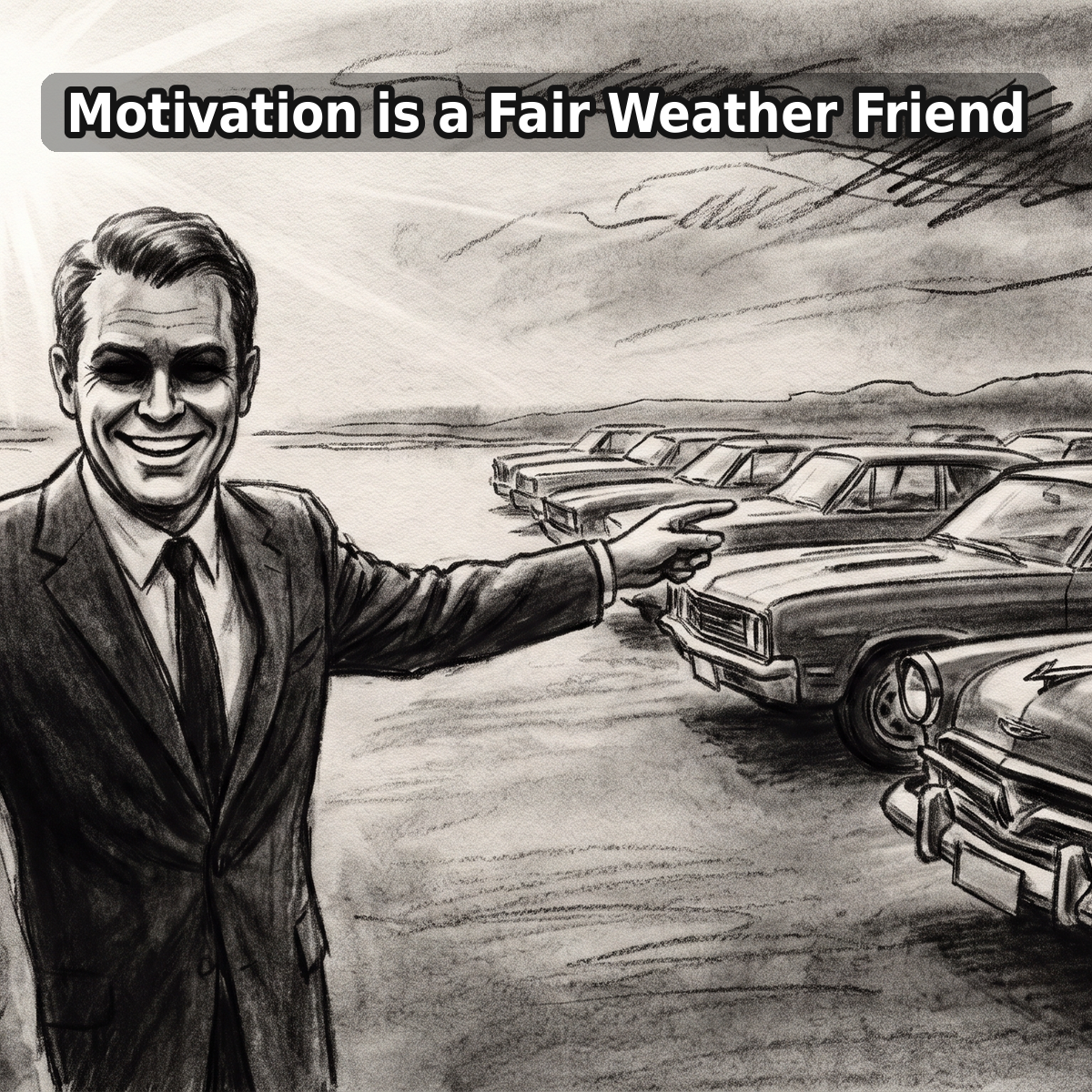
I bring this up because recognizing when this is happening is incredibly helpful. It allows you to avoid the false dilemma and prevent unnecessarily falling into a forced dichotomy where, either way, you lose control of the situation—much like when you walk into a car dealership to buy a vehicle!