When the system you created to manage your workload becomes the work that you do, you have a problem – unless you can seriously monetize it. I am going to go out on a limb and say that the system that now takes a majority of your time to keep going is probably not going to be that valuable to others. I am sitting here at my desk, going through, for the 1,000th time, my task management system.
I have an answer for everything. I have the perfect task management system—unfailable perfection. I am very proud of what I have built. Nothing slips through the cracks, and I only touch incoming items once. David Allen would be proud of my process. I have taken his GTD process to the next level with the latest enhancements in automation, AI, and visualized workflows.
I have a great dashboard view into all the work that I am doing, or need to be doing, or should be doing, or perhaps will eventually be done. If I am going to be honest, that do someday section is growing every day. I will probably close my eyes one day, hit delete on that container, and say goodbye to all my good intentions.
However, I have to be even more honest and admit that my perfect system has to be rebuilt every few days. I fall behind, and things get out of order. My zero-inbox religious creed all too often becomes a sin of omission. My sins stack up and start to increment exponentially, and then I wake up with the resolve to clean my sins and process through everything and rebuild back to perfection.
However, when I take on new work, I get really busy. I have too many phone calls going on, and task management work becomes a low priority. Honestly, working IN the system was not as exciting as working ON the system when I built the holy grail of task management consoles. Kid you not, my tasks management system is an interconnected working of at least 8 tools, utilities, and SAAS applications. This is my getting things done stack and I am awesome at this.
What I should do is quit my day job and start recording videos on how to create the perfect task management system. Then, I could spread my religion to others, who could also fall under the hypnotic spell of doing anything and everything EXCEPT the work that they are actually supposed to be doing. I could get a bunch of people to sign up for my course, pay me a recurring fee, and they could join me in the ultimate diversionary tactic of avoiding work.
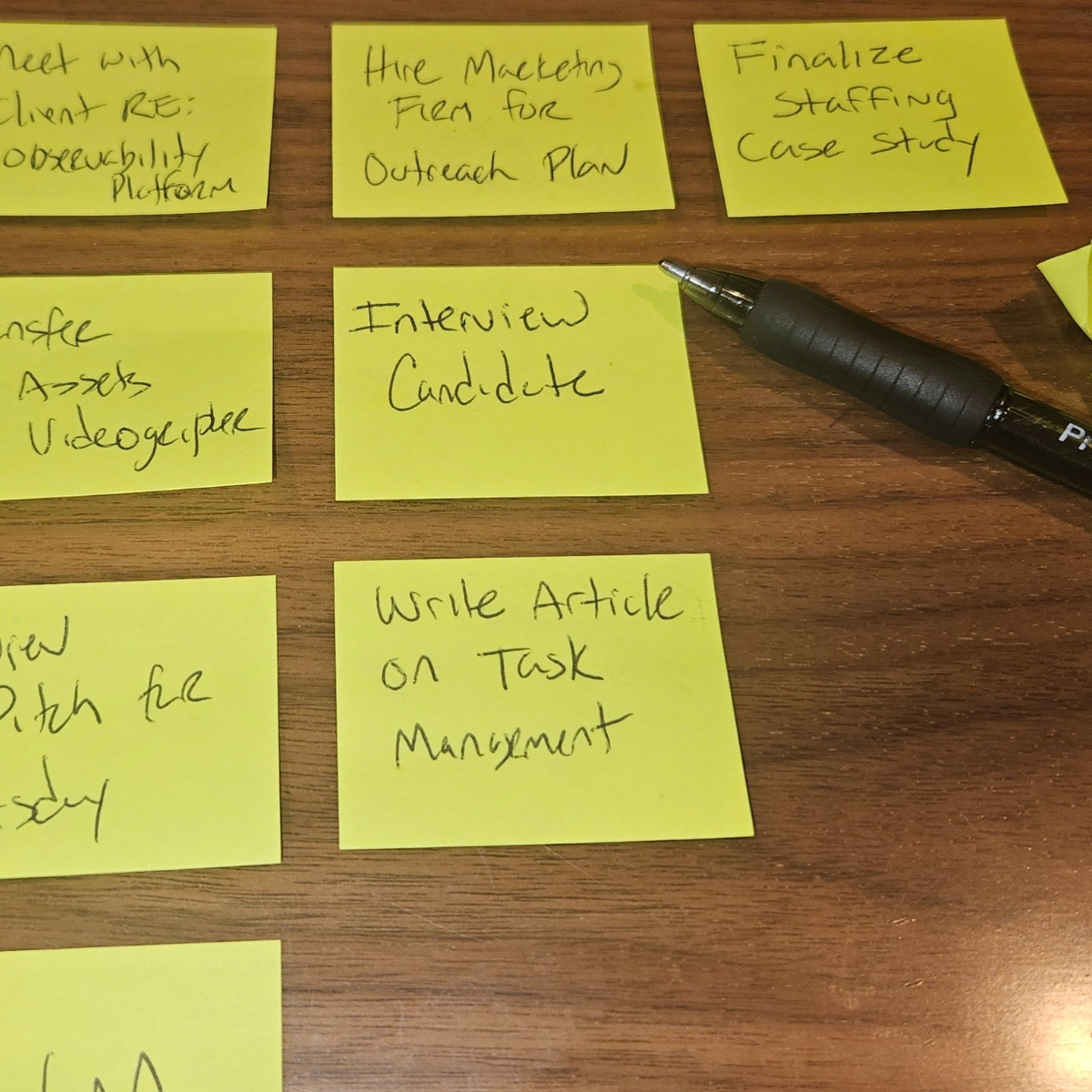
When the system becomes the work, it is time to reevaluate it. So that is what I have done today. I trashed the whole process, and now I have created a new system. I have sticky notes from 3M on my desk. When I am done with the task, I get the rewarding feeling of crumbling one of them up. I am not allowed to start the day with more than 10.
I have only completed one task so far today, at least one more than I did yesterday. Thus, the new “system” is already 100% an improvement on the perfect one.