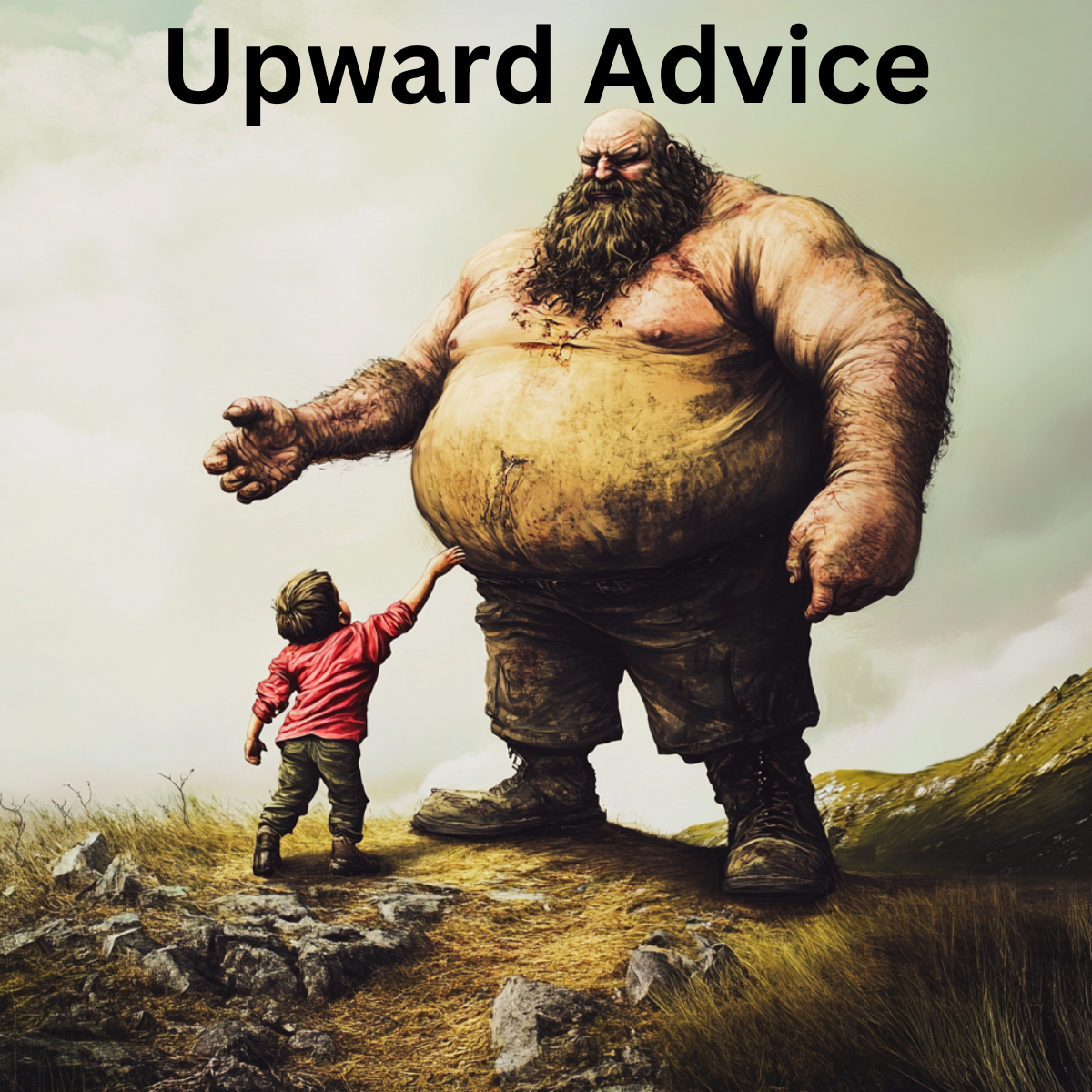
When I was younger, I had this deep-seated fear of looking like I didn’t know something. I wanted to impress people—especially those who were older, more accomplished, and in positions of authority. I thought that if I could just act like I already knew what they knew, they would respect me.
Looking back, I realize now that they saw right through it. They didn’t find me impressive; they found me foolish. They weren’t upset with me, just perplexed—why wouldn’t I just ask? Why wouldn’t I take the opportunity to learn?
I have since come to a simple but powerful conclusion: Asking for advice is always a good idea. Always. It costs nothing, builds relationships, and accelerates growth. However, I also believe that not all advice is equal. I call it Upward Advice—the intentional act of seeking guidance from those who are ahead of you, in skill, experience, or accomplishment.
Here’s why this matters:
1. Upward Advice Drives Growth
When you seek guidance from those who have already traveled the road ahead, you gain access to hard-earned wisdom without having to make all the mistakes yourself. Their insights, shaped by experience, help you skip unnecessary struggles and level up faster.
2. You Level Up by Proximity
There’s a well-known idea that you become the average of the five people you spend the most time with. The same applies to advice. If you’re learning from those who are above your current level, you will naturally begin to think, operate, and perform at a higher standard.
3. Successful People Like Helping Those Who Aspire to Improve
Here’s something I didn’t understand when I was younger: Many accomplished people want to help others who are willing to learn. Offering guidance is not just a way for them to give back—it also reinforces their own knowledge. The key is to be respectful, show genuine curiosity, and apply what you learn. When they see you take action on their advice, they’ll be more likely to invest in you further.
4. Avoid the Echo Chamber of Lateral or Downward Advice
If you only seek advice from peers—people at your level or below—you may get encouragement, but not necessarily the kind of perspective that challenges you to grow. Peers often validate what you already believe, while those ahead of you push you to think differently.
5. Not All Upward Advice Is Equal
Just because someone is successful doesn’t mean their advice is right for you. Some people succeed despite their methods, not because of them. Others may be out of touch with current realities. So, while you should aim upward, you also need to filter what you hear and adapt it to your own path.
6. The Best Thinkers Synthesize Advice, Not Just Follow It
The strongest leaders and entrepreneurs don’t just collect advice—they compare perspectives, analyze them, and make their own decisions. Advice is a tool for expanding your thinking, not a replacement for it.
7. Upward Advice Is a Powerful Networking Strategy
If you want to build relationships with high achievers, asking for advice is a great place to start. It’s often easier to get a few minutes of someone’s time for guidance than to ask for a favor outright. And if they see that you’re serious about growth—if you listen, apply, and improve—they may open even bigger doors for you later.
Final Thought
If you consistently seek guidance from those ahead of you, you will grow faster. But don’t close yourself off to unexpected sources of wisdom either. Some of the best insights come from places you weren’t even looking. The key is to stay open, keep learning, and never let the fear of looking uninformed hold you back.
The smartest people I know are not the ones who pretend they already have all the answers. They’re the ones who are always seeking better questions.