Years ago, my wife and I got the bright idea to buy a tree to provide some privacy to a spot in our backyard. This introduced me to the art and science of selling trees. I started to suspect I was in trouble when we showed up at the nursery and a gentleman appeared in a golf cart, offering to give us a tour of the property. As we drove around, this salesperson expertly ascertained our needs and what the tree would solve for. He was no longer selling us a tree—he was presenting a solution to a major gap in our lives. We didn’t know, until that moment, that a tree could be the very thing that brought all things together and answered so many of our woes.
I really knew I was in trouble when, after selecting our tree and marking it as ours with a cute ribbon, we were ushered into the financing office. I suddenly felt like I was in a car dealership. I got handed off to the finance person, and my heart sank through the floor when he asked how much money I wanted to put down and what I hoped my monthly payment would be.
“Payment per month?” I asked. “How much is this tree going to cost me?”
The finance man looked over at our salesperson with a knowing expression. He reached into his desk drawer and brought out a well-worn laminated presentation titled, The Inherent Value of a Healthy Mature Tree.
As it turned out, a tree can cost about as much as a new car—at least if you want one grown to full height, instantly providing the privacy and shade you’re looking for. After some haggling, we made the purchase. My first tree. We felt like proud new parents. We were given detailed instructions on how to prepare for its arrival. Just like bringing home a child, we had to get everything set up in advance.
That preparation turned out to be a significant effort. After estimating the tree’s size in 20 years, we picked the spot and had someone dig a hole large enough to support its root structure. Everything had to be just right so the tree could take hold and survive.
Early on, we had a bit of a scare. The tree showed signs of stress. Leaves turned yellow. Branches began to shed. Many leaves curled and browned. Thankfully, with expert guidance—paid for through a warranty plan—a team revived the tree and showed us what we had done wrong. That was ten years ago. Today, the tree stands as a major fixture in our backyard. I had all but forgotten about it. This species is hardy and withstands most forms of abuse. All was right with the world—until this morning.
Easter morning.
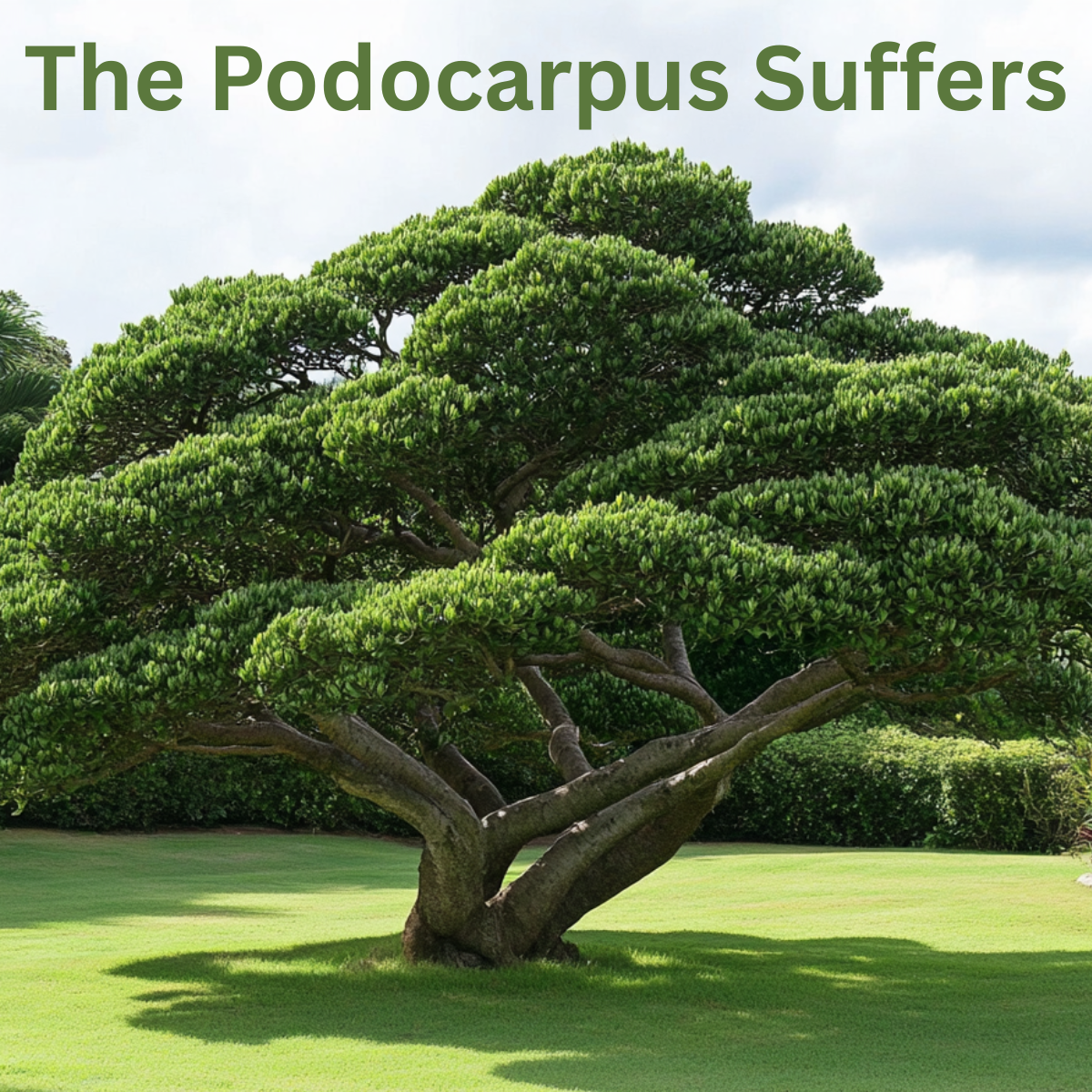
Sitting outside in the soft glow of spring light, I watched the birds dance through the trees in our backyard. Then I noticed my Podocarpus. It was looking sparse. “Leggy,” as they say. The middle of the tree was thin and bare. The top, in contrast, had surged upward with long, leafy branches. This tree, once full and beautiful year-round, now looked unbalanced. My peaceful morning turned into concern.
My Podocarpus was suffering. Something wasn’t right.
I began to investigate—soil, watering, nutrients, sunlight. All the essentials checked out. I’d been fertilizing on schedule with the right mix. The drip system was still working. The soil was slightly damp, as it should be. The sun exposure was ideal.
I was perplexed.
How could I enjoy Easter morning, surrounded by family, knowing the centerpiece of our backyard—the tree I had invested in so deeply—was in peril?
Then it dawned on me.
Pruning.
I had never pruned the tree. Upon further research, I learned that this particular species thrives when pruned before the spring growth spurt. Without it, the tree grows upward too quickly, diverting all its energy to the top, leaving the middle sparse and undernourished. My tree was out of balance, no longer healthy. It needed pruning. I had to cut it back to allow it to grow stronger, fuller, and more prepared for the future.
And that’s when the lesson came.
On a morning filled with thoughts of renewal, resurrection, and rebirth, I realized that sometimes, growth requires pruning. Not just for trees—but for people too.
I am much like my Podocarpus.
Over the past year, I’ve been quietly complaining to God—if He was even listening—about my own lack of growth. I had experienced vibrant, exponential seasons in my personal development. But lately, I’ve felt stagnant, aimless, even frustrated.
It was time to prune.
Turns out, God heard me. And He’s been doing what any good gardener does—trimming back the overgrowth. Removing the parts that were overextended and stealing resources. Cutting away what wasn’t fruitful. Not as punishment, but as preparation. He was realigning me, guiding me back toward what really matters.
Now, this winter season of my life makes sense. I’ve awakened into a new spring. A time to flourish again.
If your life feels overgrown, or you sense you’re not as full and thriving as you once were, consider the possibility that you may be in a pruning season. Don’t resist it. Welcome it. Let go of what no longer serves your growth. Trust the process. The branches may look bare for a time, but soon, if you are faithful, new life will emerge.
Just like my tree, you too can come back stronger, rooted, balanced—and ready for the next season.