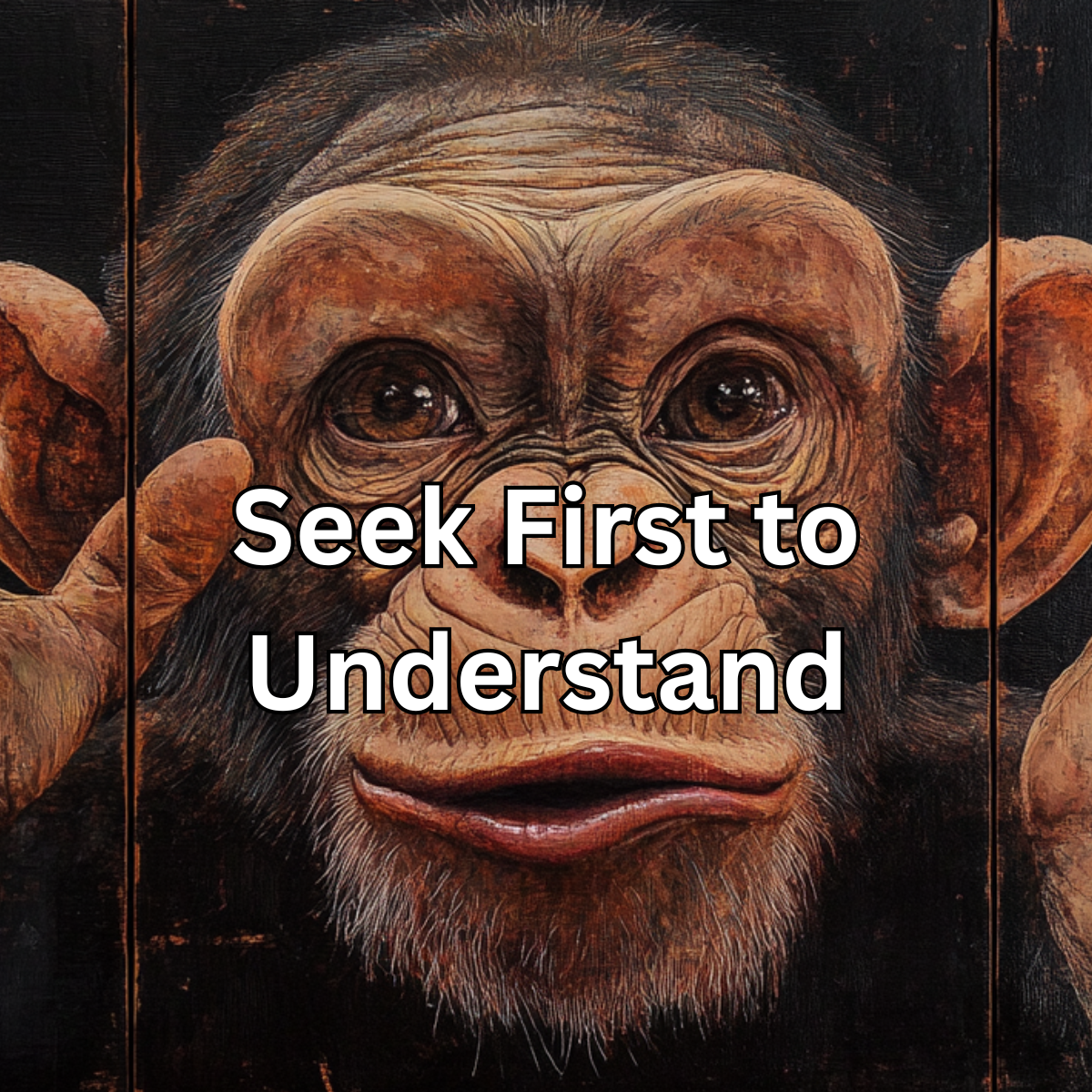
There’s a phrase I often repeat to myself, especially in moments of tension or disagreement: “Seek first to understand, not to be understood.”
It’s a line made famous by Stephen Covey in The 7 Habits of Highly Effective People, but its wisdom goes much deeper than productivity or personal effectiveness. It’s a life philosophy. A mindset shift. A relational tool. And in many ways, a form of humility in action.
The Natural Instinct to Defend
When we feel misunderstood, the most natural human response is to double down. We raise our voice, repeat ourselves, sharpen our language. We want to be heard. We want to be right. We want the other person to get it. The more passionate we are about our ideas or values, the more we feel the need to explain, justify, or convince.
But here’s the problem: when both people in a conversation are trying to be understood, no one is really listening. It becomes a battle of broadcasts, not a true exchange.
The Transformational Shift
“Seek first to understand” flips the script. It asks you to pause your instinct to explain and instead lean into curiosity.
- What’s really going on here?
- Why do they feel this way?
- What’s behind the words they’re using?
When we approach someone with the intent to understand—not to judge, fix, or rebut—we create a safe space. And that space invites honesty. It allows defenses to lower. People sense when they’re truly being listened to. And ironically, when they feel understood, they often become more willing to understand you in return.
Understanding breeds understanding.
Listening is Not Waiting to Talk
True understanding takes work. It means more than hearing words—it requires attention, empathy, and sometimes the courage to withhold judgment.
Too often, we confuse listening with waiting for our turn to speak. We rehearse our responses while the other person is still talking. We nod politely but are already preparing our counterpoint. That’s not listening. That’s posturing.
To understand, we must surrender the need to win.
Why This Matters—Everywhere
This idea matters in every area of life:
- In marriage, where so many conflicts arise not from malice but from miscommunication.
- In parenting, where children often act out when they don’t feel seen or heard.
- In leadership, where trust is earned not by barking orders but by listening to the people you serve.
- In friendships, where loyalty is built not on agreement but on presence.
- In debates, where real progress only happens when we stop caricaturing the other side.
Even in casual, everyday interactions, this principle—seeking first to understand—softens our posture. It cultivates grace. And it reminds us that connection is more valuable than being right.
The Deep Power of Humility
At its core, “seek first to understand” is a statement of humility. It acknowledges that we might not have the full picture. That we might be wrong. That other people’s experiences are just as valid as ours.
Humility is not weakness—it’s strength wrapped in gentleness. And it is the foundation of all great relationships.
Final Thought
Imagine a world where more people practiced this. Where leaders listened before they legislated. Where spouses paused before they criticized. Where friends stayed curious instead of jumping to conclusions.
It wouldn’t just make the world more peaceful—it would make it more human.
So next time you’re tempted to interrupt, to defend, to explain—pause. Breathe.
And repeat the phrase:
“Seek first to understand, not to be understood.”
You’ll be surprised what opens up when you do.