I watched someone receive feedback on work they had poured themselves into. The response was not what they hoped for. Not rejection exactly, but not approval either. A revision needed. A problem to solve. And in that moment, I saw something shift in their face. Not disappointment. Something deeper. A kind of collapse, as if the feedback had rewritten who they were.
That is the moment I want to talk about.
Because what happened next was the real story. They did not separate the work from themselves. They did not say, “This piece needs adjustment.” They said, “I got it wrong. I am wrong.” The failure became an identity. The event became a definition.
When the Event Becomes the Identity
This happens quietly in all of us. We make a mistake and tell ourselves a story about what it means. We miss a deadline and decide we are unreliable. We stumble on a project and conclude we are not capable. We receive criticism and translate it into proof of our inadequacy. The mistake is real. The conclusion is not.
Here is what I know. Failure is an event. It is not a person. It is something that happened, not something that you are.
The confusion runs deep because we have been taught to tie our worth to our outcomes. Do well, and you are good. Do poorly, and you are bad. Win, and you matter. Lose, and you do not. We internalize this so completely that we stop seeing the difference between a failed attempt and a failed self. We treat them as the same thing.
But they are not.
A failed project is data. It is information. It tells you something did not work the way you planned. That is useful. That is actionable. What it does not tell you is who you are. What it does not mean is that you are incapable of doing better. What it does not prove is that you should stop trying.
The Difference Between Reflection and Condemnation
I have stood in that place many times. I have done work I was not proud of. I have made decisions that cost me. I have started things and abandoned them. I have promised and failed to deliver. And each time, I faced the same choice. I could let the failure define me, or I could let it teach me.
The people who move forward are not the ones who never fail. They are the ones who refuse to become their failures.
This requires a small but crucial shift in how you talk to yourself. When something goes wrong, name it clearly. Say what happened. Be honest about it. But do not let the description of the event become a description of you. Do not say, “I am a failure.” Say, “I failed at this.” Do not say, “I am incapable.” Say, “I did not have the skill for this yet.” Do not say, “I am unreliable.” Say, “I missed this deadline.”
The difference sounds small. It is not.
One version closes the door. The other leaves it open. One version is a verdict. The other is a moment. One version becomes your story. The other becomes a chapter you learn from and move past.
“Failure is an event. It is not a person. It is something that happened, not something that you are.”
The work here is not about pretending the failure did not happen. It is not about toxic positivity or false confidence. It is about accuracy. It is about seeing what actually occurred instead of letting shame rewrite the story into something larger and darker than it was.
When you separate yourself from what went wrong, something shifts. The failure stops being a referendum on your worth and becomes a problem to solve. You can look at it without flinching. You can ask what happened. You can ask what you would do differently. You can ask what you learned. These are the questions that lead somewhere. The other questions, the ones that assume you are fundamentally broken, lead nowhere.
The Authority to Name You
A failed attempt does not have the authority to name you. It may reveal weakness, timing, poor preparation, wrong assumptions, or circumstances outside your control. But it cannot define who you are. That authority belongs to you alone.
I think about the person I mentioned at the start. They had a choice in that moment. They could have said, “This feedback is about the work, not about me. Now, what do I do with it?” Instead, they collapsed the two. And that collapse cost them more than the revision ever would have.
Do not do that.
The next time you fail at something, sit with it for a moment. Feel what you feel. But then separate. Name the failure. Describe what happened. Be specific. Be honest .Then ask yourself one question. What is the one small thing I can do differently next time?
That question assumes you will have a next time. It assumes you are still in the game. It assumes the failure was not a final verdict but a data point.
That assumption is the truth.
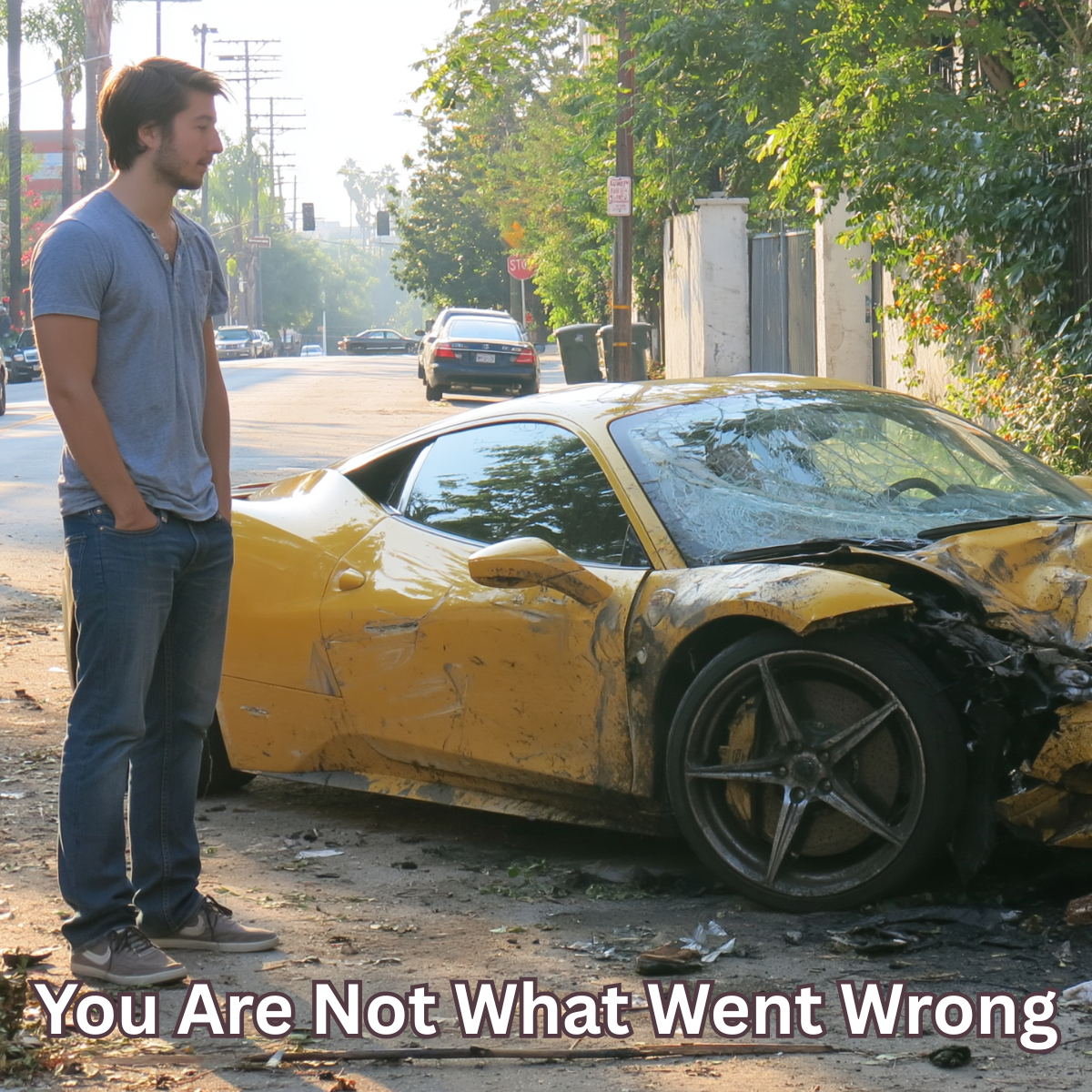
You are not what went wrong. You are what you do after it goes wrong. You are the person who looks at the failure, learns from it, and tries again. That is who you are. Not the mistake. The response.