I sat at my desk, staring at the screen, knowing I needed to stop. My eyes were tired. My thinking had gone flat. But I kept working anyway. Not because the work demanded it. Because stopping felt like failure.
This is the trap I fall into again and again. The break feels like betrayal. Like I am letting someone down. Like I am proving I do not care enough. So I push through, and the work gets worse, and I tell myself that at least I tried.
The problem is not the break. The problem is how I think about it. I treat rest as the opposite of work, when it is actually part of it. A break is not an escape. It is preparation. It is the pause that makes the next push possible.
Give the Break a Job
Guilt shows up when the break feels vague. When it looks like avoidance instead of intention. So I started defining what the break is for. Not just “I need a break,” but “I am stepping away so I can return with better focus.” That shift changes everything. The break is no longer a failure. It is a decision.
I also learned to make the break bounded. Twenty minutes. A walk around the block. Done for the night, restart at 8:30 tomorrow. A clear container tells my brain this is not abandonment. This is planned recovery. The guilt fades when the break has edges.
Rest Is Not Quitting
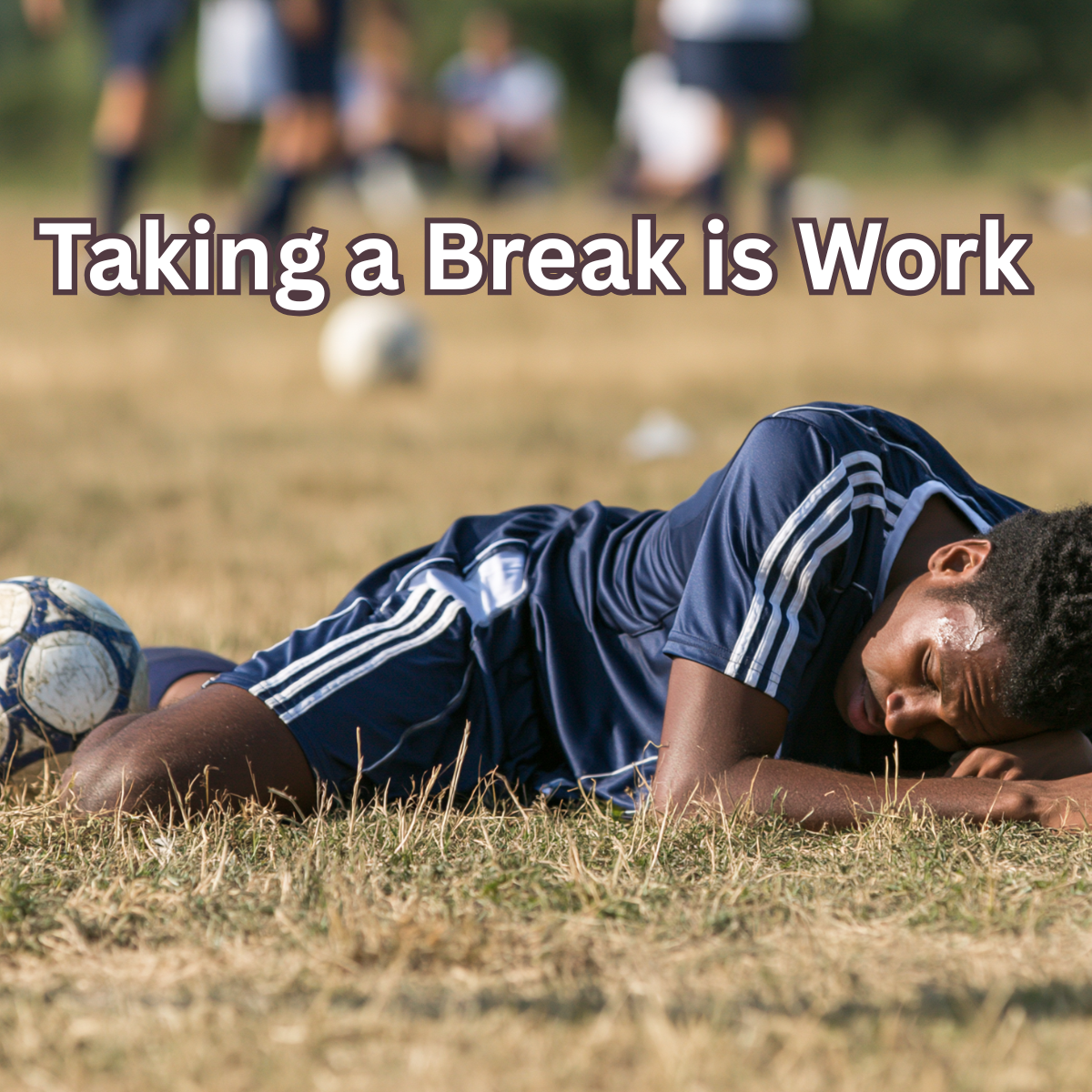
A break is not the same as quitting. It is a pause inside commitment. Athletes rest between sets. Musicians pause between rehearsals. Builders stop to sharpen tools. None of that means they are less serious. It means they understand that quality requires recovery.
Sometimes the guilt is covering something else. Fear of falling behind. Fear of being judged. Fear that momentum will disappear if I stop. Naming the real fear makes it easier to answer it. If I am afraid I will not start again, the solution is not more pressure. The solution is a restart plan.
Rest Before You Break
Many people only allow rest after they are depleted. That trains the body to associate rest with collapse. A better standard is this: rest before your quality drops. That is not laziness. That is maintenance. And maintenance is what keeps valuable things from breaking.
I practice saying this to myself now: I am not taking a break because I do not care. I am taking a break because I do.
“A break is not a moral failure. It is maintenance.”
That one matters. Because guilt often comes from caring deeply. But care without recovery eventually turns into resentment, burnout, or sloppy work. The break is not the problem. The refusal to take it is.
So the next time you feel the guilt rising, stop. Name what the break is for. Give it a clear boundary. Remind yourself that rest is not the opposite of commitment. It is part of it. Then step away. Not because you are giving up. Because you are protecting what you are building.