I was sitting with my mother in law today, listening to her remember a time when the U.S. government was trying to eradicate French speakers from the parish communities in Louisiana. She came more from the Creole side, from French immigrant descendants, but around her there was also a large band of French Canadians, the Acadians, or Cajuns. As I listened, I kept coming back to one clear thought: some people lose almost everything and still refuse to lose themselves.
The story itself is hard. These people had gone to French Canada, in the Nova Scotia region, and when France lost that area to the British before the Seven Years War, their loyalty was questioned. In 1755, they were chased out in what became known as the Grand Derangement.
That kind of loss can do more than take land or property. It can damage identity. It can turn memory into grief and grief into bitterness. But that is not what happened here.
Losing Everything Is Not the Same as Losing Yourself
What fascinates me about the Acadians, and later the Cajuns, is not only that they suffered loss. History is full of people who suffered loss. What stands out is that they refused to disappear.
They stayed together as a people. They came together again in Louisiana. They maintained their culture. At the same time, they absorbed some of the French and Creole culture around them. Out of that came a surprising blend of influences from a wide variety of people, and many would argue they became stronger because of it.
That matters.
A lot of us assume that if life breaks apart, then the self must break apart with it. We think that if we lose the place, the plan, the security, the status, or the old story we told about our lives, then we have somehow lost who we are. But that is not always true. Sometimes what is stripped away is only the outer frame. The deeper structure remains.
Rebuilding Without Becoming Hard
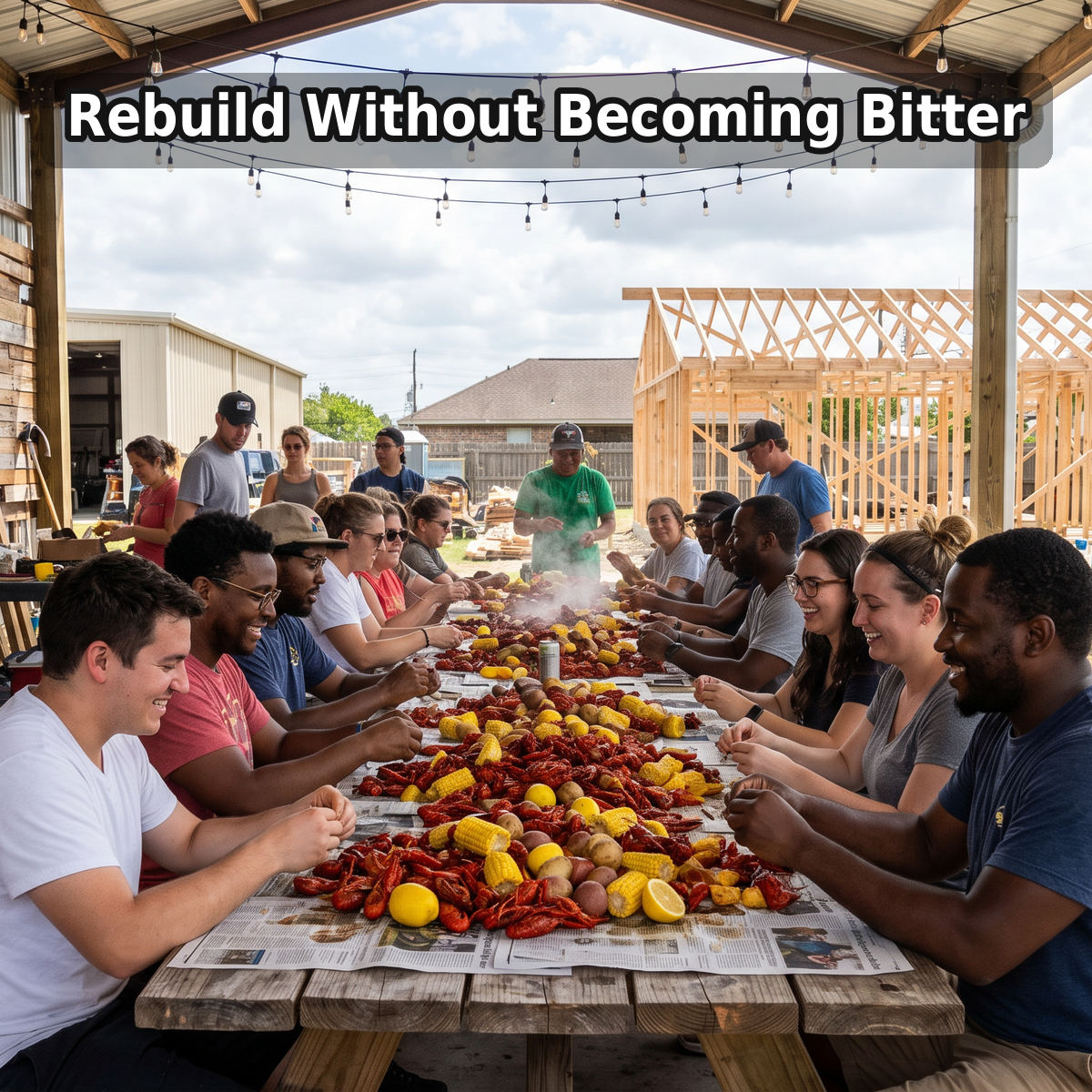
There is another lesson here, and I think it may be the more difficult one. These people did not only survive. They rebuilt without becoming bitter.
That is rare.
It is one thing to endure hardship. It is another thing to endure it without letting it poison your inner life. Pain has a way of trying to become a permanent interpreter. It wants to explain everything after that. It wants to tell you that loss is the final truth, that trust is weakness, that memory should only serve anger. If we are not careful, bitterness begins to feel like wisdom.
But the Cajun story pushes against that conclusion. They did not vanish. They did not remain frozen in injury. They held on to who they were, and they adapted enough to keep living as a people. They did not rebuild by denying what happened. They rebuilt by refusing to let what happened become their whole identity.
"They proved that you can lose everything, without losing who you are."
There is real strength in that kind of identification. Not the strength that performs for others, but the kind that keeps a people, or a person, from collapsing inward. It is a quiet strength. Strong enough to preserve what matters. Open enough to grow.
A Lesson for Those of Us Who Have Lost
I think there is a lesson here for those of us who have lost something and are still trying to understand what remains. Maybe it was a relationship. Maybe it was a career. Maybe it was a dream you built carefully and then watched come apart in your hands. The temptation is to let the wound define the rest of the story.
We do not have to do that.
We can lose much and still keep hold of the core. We can carry memory without being ruled by resentment. We can rebuild in a way that does not flatten us into angry people who only know how to look backward. This emphasizes the importance of protecting character while rebuilding circumstance. Both matter. One matters more.
So I keep thinking about that moment today, sitting with my mother in law and hearing history pass through a living voice. The next step seems simple to me: name what you have lost, then name what in you still remains, and begin there.