Day 285 – Childhood Dreams

I have been reflecting on Paul Allen this week and he just passed away. If you do not know, he was the co-founder of Microsoft. Many would say that without him there just would have never been a Microsoft and our digital age would have been a lot slower in its coming. I saw this image and it really impacted me:
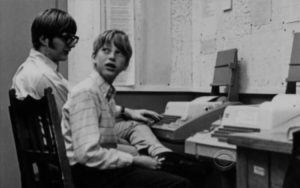
A young Bill Gates, 15, sitting next to his friend Paul Allen, 17. The older geek helping the new geek in his fascination with learning basic computing systems. You can read a lot more about their childhood dreams and ambitions, some of them are funny but most of them are eerie – meaning they came true. Here we have two young friends geeking out on new technology with an aspiration to do amazing things. They did not know what that would be – but you can tell that they thought it would be cool.

In just 5 years from this picture, in 1975 – the duo would form Microsoft. Bill is now worth nearly 100B dollars and Paul died with 20B in assets after giving most of it away. He decided to stop the empire building at an earlier age and went on to other things. The point I want to make is this —–

Did they have a childhood dream that became true, or did they just have a 10 year dream that came true? The distinction is important for you and I. I do not care what age you are – you might have at least 10 years left. Do you have a dream that where you can create something awesome in 10 years?

If teenage college drop out geeks like these two can create the world’s most successful software company in 10 years, then you can certainly create your dream in the time that you have left. So no more excuses. Either start working on your childhood dream or a new dream – does not matter – start making progress today!

Write it down on your 365 list and spend your time on something really important.

Guy Reams (285)
365 Member
Subscribe
Notify of
guest
0 Comments
Inline Feedbacks
View all comments
Share the Post:

Recent Blogs

Day 310 – I Actually Love Opera

The author explores the reasons why people might hesitate to reveal certain aspects of themselves, using their love for opera as an example. They differentiate between privacy and concealment, arguing that while privacy is a healthy boundary, concealment stems from a fear of judgment and can be a burden. The piece concludes by advocating for the freedom found in being less concerned with labels and more comfortable with revealing one’s true complexity.

Read More

Day 309 – The Price Tag of Automation

The author recounts his frustrating experience with home automation after Google abandoned its Nest architecture, leading him to build his own system. He highlights the significant time and effort required for maintenance and the eventual abandonment of his automation efforts due to the high ‘economic life’ cost. However, with the advent of AI, the cost and effort of automation have decreased, making it more feasible and renewing his interest in deploying future automations.

Read More

Day 308 – Speed is The Champion

This article explores the concept that speed often leads to success in various fields, from business to technology and sports. It argues that systems capable of rapid action, feedback, and adjustment tend to outperform those focused on avoiding errors. The author highlights the importance of fast feedback loops, citing John Boyd’s OODA loop and its application in AI systems. The piece also discusses the speed-accuracy tradeoff, noting that while speed can lead to more mistakes, these are often recoverable, and the compounding effect of rapid learning ultimately drives better results.

Read More

Day 307 – Iterative Could be Insufficient

This article explores the contrast between iterative and linear thinking, highlighting their respective strengths and weaknesses. It argues that while iterative thinking is beneficial in many fields, it can sometimes be an excuse for insufficient upfront planning, and proposes a hybrid approach for more robust decision-making.

Read More
0
Would love your thoughts, please comment.x
()
x