Since I am now running a startup, I am faced with many fun realities that surface nearly every day. My own weaknesses and fears and shortcomings are magnified. I do not have anyone else to blame. When I worked for a larger company, it was always convenient to point the finger at “them,” or at some broken process out of my control. When you are in a small environment, you have no such luxury. There is no place to hide, no one to blame, and you cannot assign causality to the system; you are the one who created it. This is just the beginning of your problems. You get to watch your own failures on full display, and because timelines are tight, you get to see the immediate impact of any poor decision you made. You also carry the knowledge that while you are up late every night, up early every morning, and working all weekend, everyone else is doing what I did for most of my career: complaining and pointing fingers at the bozo running the circus.
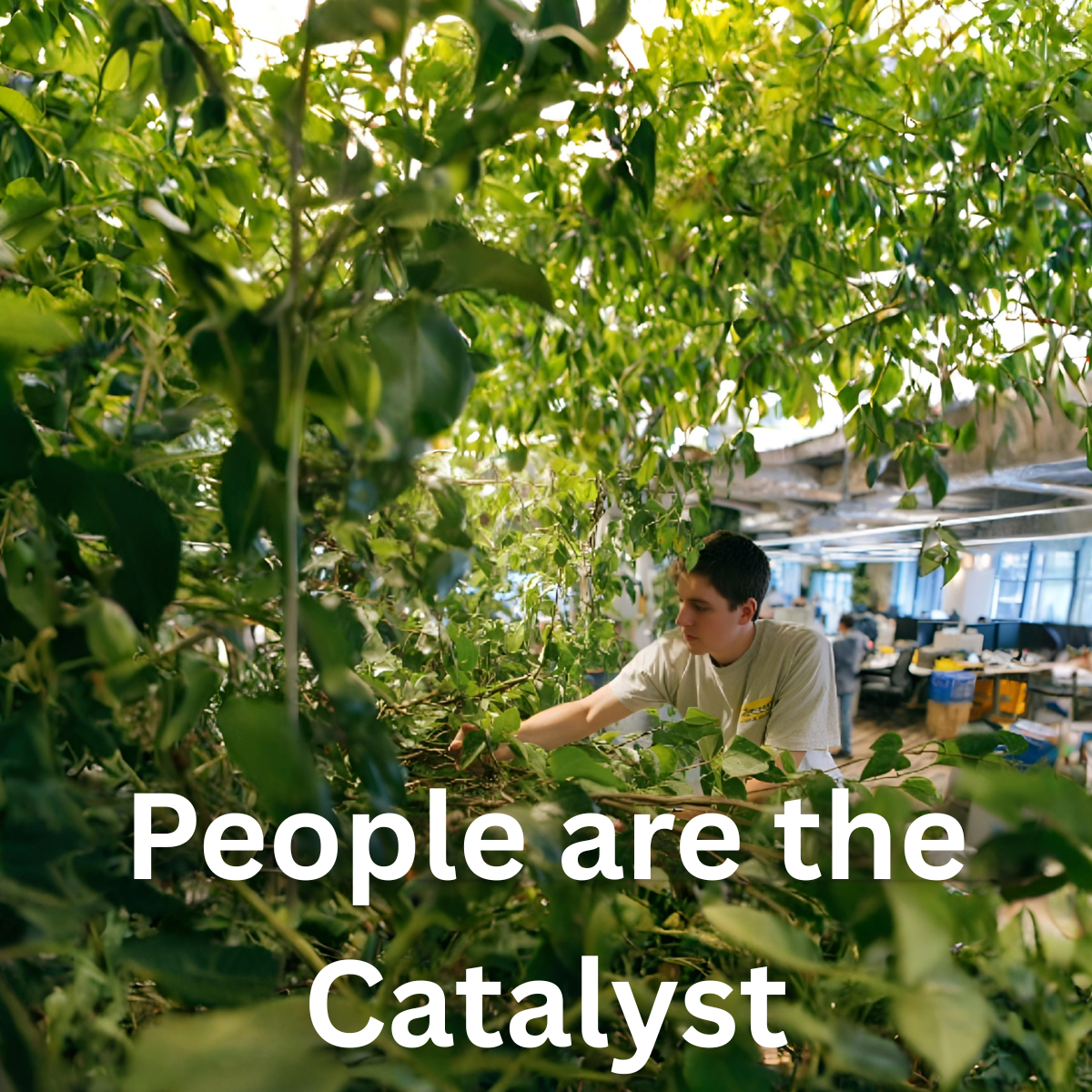
Having said this, the other difficult reality is that once you understand the impact of your weaknesses, you cannot easily fix them by yourself. You cannot brush them under the carpet, and try as you might, you cannot work all night and fix the problem you created. Organizations gravitate toward complexity. That is what any organic thing does. As it grows, it sprawls out, extends branches, and starts to spread. You can prune and cut back and try to simplify, but in a few weeks ten new branches will sprout from the very place you pruned. As a consequence, you learn quickly that the only way to improve an organic system built by humans is with more humans.
I met a young man in an interview today who suggested that because I was running an AI company, I should be using AI tools to automate more so I could employ fewer humans. This is true, but here is the problem. Using AI simply means the organic growth accelerates. So it is not fewer humans; it is actually more humans, because as AI helps you gain traction and get through the easy stuff faster, the need expands to have more people in the mix managing, orchestrating, planting, and solving the myriad problems that your tool sprawl has now created for you.
Here is the silver lining, however. People are the catalyst for growth. You will always hire people who cause problems. They will create culture clashes, stir up conflict, spark office politics, and make demands. Then you will hire people who find new ways to solve challenges, discover new patches of dirt to plant in, and help this organic thing thrive. Put a bunch of people in the garden together, and suddenly your little plot is bursting with bounty in the spring as new growth takes shape. This is the marvel, and that is when you realize you are not really in control anymore. The thing you created is now a living creature all by itself, with its own pulse, its own personality, and its own soul. The people you bring in start to force change, and often that change is good, and hopefully you are not too stubborn to get in the way. You created this mess, and your weaknesses magnified the problems; now you get to watch as the organic creature you made starts to heal itself and grow in ways you never thought possible.
So never forget, when you bring that young bright eyed kid into the office for an interview, you may be looking at the next catalyst for positive change. The only way to fix an organic creation such as a startup environment is to introduce new people.