There is an ethic in the small start up environment that says I prefer doers to talkers. This makes sense from a practical standpoint. Start up environments are full of talk, but at some point you need to put in the work, and that requires people to be engaged. This is where you run into a challenging dilemma. I am familiar with this on many levels. Raising children, starting companies, taking over existing companies, and turning around failing businesses have all given me many opportunities to remember the following consideration.
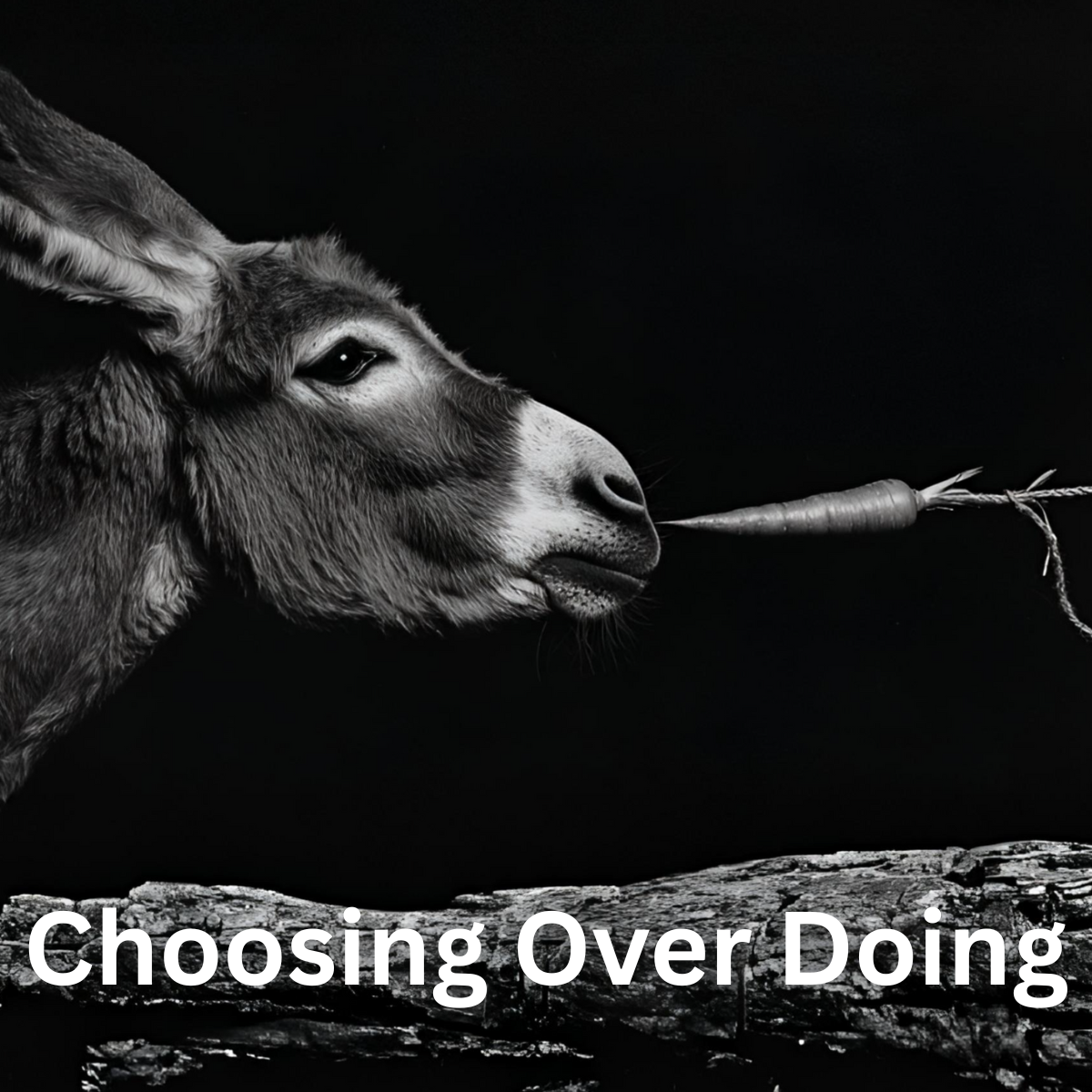
Although you want doers, what you really want is people who will choose on their own to do the important things without your prodding. Early in my career I knew a sales manager who walked around the cubicle zoo carrying a baseball bat. He called it his carrot and his stick. I was too young to know what that meant, but later I learned about this carrot and stick concept. The idea is that you provide instant rewards, carrots, and instant punishment, sticks, for good and bad behavior respectively. The theory is that if you want someone to perform a certain behavior, then you implement either a carrot or a stick approach, and often both. This sales manager was being funny in a twisted way. He was offering both, and he was alluding to the idea that he would use a baseball bat to encourage either behavior.
Decades later I would be the one in charge of everything and managing a large sales force. The company I worked for had a culture of carrots and sticks, the same concept but much more nuanced than the baseball bat. The other managers looked at me cross eyed when I started to remove all the silly incentive programs, gimmicks, and games that were supposed to get people to do the right things. They called it enforcing good behavior. I called it training people to stop thinking. This is where the doer mentality can run into challenges.
So I started thinking about this differently. I am not trying to get people to do the right things. That is what carrots and sticks are for. What I really want is to encourage, enable, and help people choose to do the right things. If people who work for you choose to do the right things every day, then the company starts to grow exponentially beyond your control. Forcing people to do what you want is a natural initial reaction, especially for the start up founder who has a lot on the line, but helping people learn to choose the right thing is powerful.
This is powerful because you are no longer the barrier to progress. When people are dependent on you to say when and by how much, they will not move fast enough because they are waiting for your nod. Rather, you want people making these decisions for themselves and choosing what to work on and when. They are going to make mistakes; they will choose wrong occasionally, but this is a cost you have to bake into your planning. You cannot build an organizational plan on perfection at the start, and you also cannot build the company around everyone acting and behaving as you would. First, that is incredibly arrogant. Second, not everyone has your experience, knowledge, and understanding. That is why you are the founder and why you are taking most of the risk.
When people, in any circumstance, choose to do the right things on their own and with little guidance, then you have turned the corner to a living, breathing entity that will survive because it is resilient and adaptable. Yes, we want doers, but more importantly we want people who are not afraid to choose for themselves.