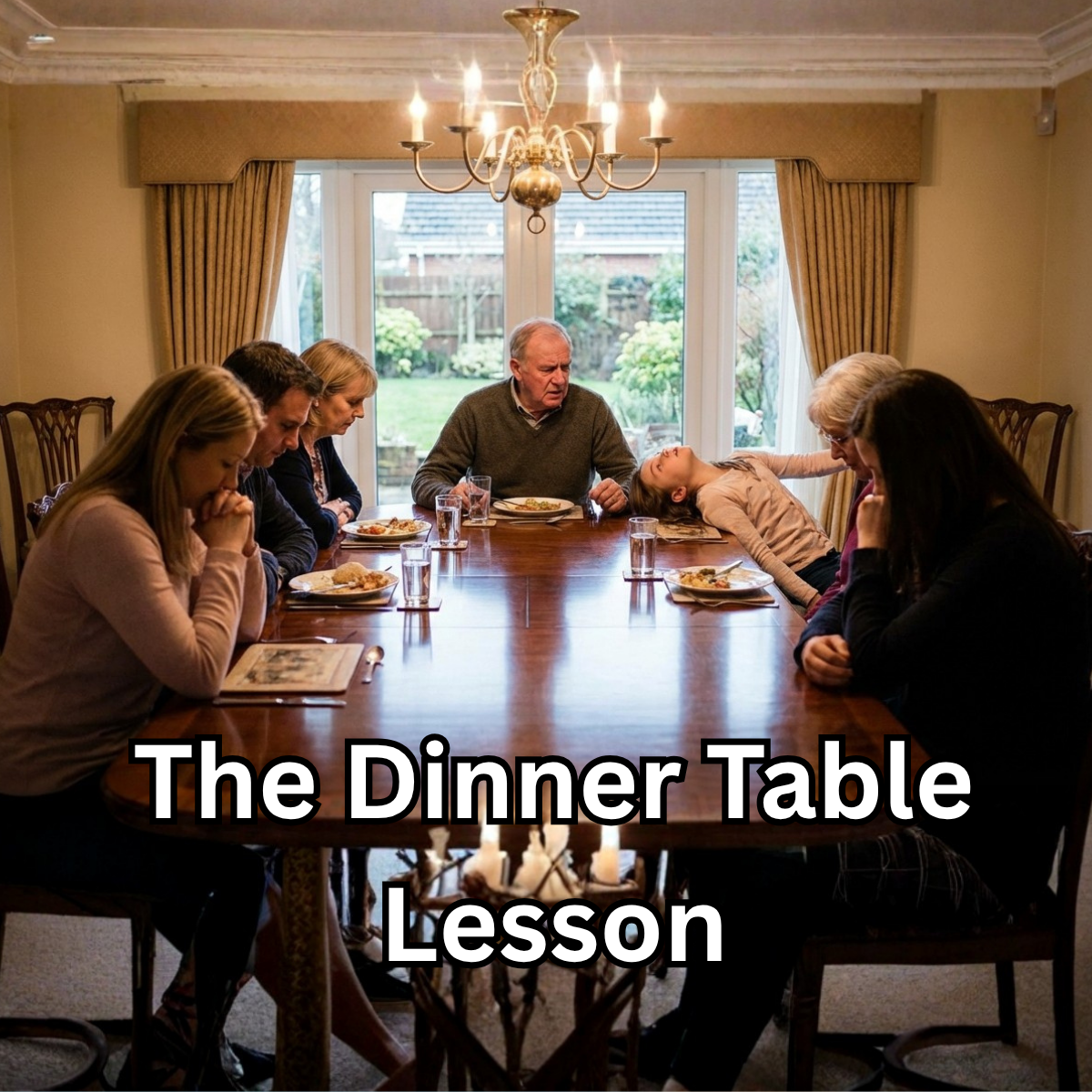
I was young when my sister decided to test the limits of acceptable behavior at my grandparents’ dinner table. Right in the middle of the blessing, she turned around and laid on her back in her chair. The room went still.
What followed was not a quick scolding. It was a full debate between grandfather and granddaughter about why any of this mattered. Why did we need to sit up straight? Why did manners matter at all? The debate went nowhere, and my sister ended up listening to my grandfather recite passages from Emily Post’s book on etiquette as punishment.
I sat stone still through the whole thing. Hands in my lap. Napkin on my right pant leg. Butter transferred to my side dish with careful precision. I knew how this would end. I had learned the lesson she was still fighting.
That memory came back to me recently, and it got me thinking. Why is etiquette still important? What does it actually do?
What Etiquette Really Is
Etiquette is the set of social norms and behaviors people use to show respect, consideration, and good judgment in different situations. It covers how you speak to others, how you behave at meals, in meetings, online, as a guest, or in public. It is less about fancy rules and more about helping people interact smoothly.
It shows respect. Good etiquette tells others, “I see you and I care how my behavior affects you.” It reduces friction. Shared manners make social and professional situations less awkward and more predictable. It builds trust. People tend to feel safer and more comfortable around someone who is thoughtful and respectful. It improves communication. Polite behavior helps ideas be heard without unnecessary conflict. It reflects character. Etiquette often reveals self-control, humility, and awareness of others.
At its core, etiquette is not about being stiff or formal. It is about making other people feel comfortable, valued, and respected.
The Real Work
My grandfather was not trying to turn us into robots. He was teaching us something deeper. He was teaching us that how we treat people matters. That small gestures carry weight. That the way we show up in a room says something about what we believe.
Civility and courtesy are vital in our interactions, regardless of the broader tensions that surround us. On a personal level, human connections tell a different story than the noise we see everywhere else. When individuals share a space, the dynamic shifts. Suddenly, it is just two people, each with their own experiences.
The common ground we share with those we perceive as different is often more extensive than we want to admit. The solution might be simple. The key to navigating our differences lies in embracing the elemental power of basic courtesies, remembering to say “Please” and “Thank you.” These words, simple yet profound, could be the stepping stones toward building a more understanding and respectful society.
“The key to navigating our differences lies in embracing the elemental power of basic courtesies.”
One Small Step
The next time you sit down at a table, in a meeting, or in front of a screen, pause. Notice how you are showing up. Notice whether your behavior makes the people around you feel seen or ignored. Notice whether you are making the moment easier or harder.
Etiquette is not a performance. It is a practice. It is the discipline of treating people like they matter, even when no one is watching. Especially when no one is watching.