I value loyalty. I always have. It is one of those principles I hold close, sometimes too close. I tend to stay loyal even when the situation has shifted, even when the evidence is staring me in the face. This puts me in a difficult spot more often than I would like to admit. I am loyal to people, to ideas, to plans that no longer serve me well. So I have been thinking about how to frame this in a way that helps me move forward.
Loyalty is a good thing. It builds trust. It creates stability. It shows commitment. But there is a version of loyalty that does not serve us, and I think I have been practicing it for too long. The mistake is staying loyal to potential after reality has made itself clear.
The Trap of Potential
Potential is seductive. It is the promise of what could be. It is the vision we hold in our minds of how things might turn out if everything goes right. We invest in that vision. We commit to it. We stay loyal to it. And when the reality does not match the potential, we tell ourselves to keep believing. We tell ourselves that if we just hold on a little longer, the potential will materialize.
But potential is not reality. Potential is hope. And hope is important, but it cannot replace what is actually happening. When reality shows you that the potential you were loyal to is not going to happen, at least not right now, staying loyal to that potential becomes a burden. It keeps you stuck. It keeps you waiting for something that is not coming.
I have done this with people. I have stayed loyal to the person I thought they could become, even when they showed me clearly who they were. I have done this with projects. I have stayed loyal to the vision of what the project could be, even when the results told me it was not working. I have done this with plans. I have stayed loyal to the plan I made, even when circumstances changed and the plan no longer made sense.
Loyalty to What Is
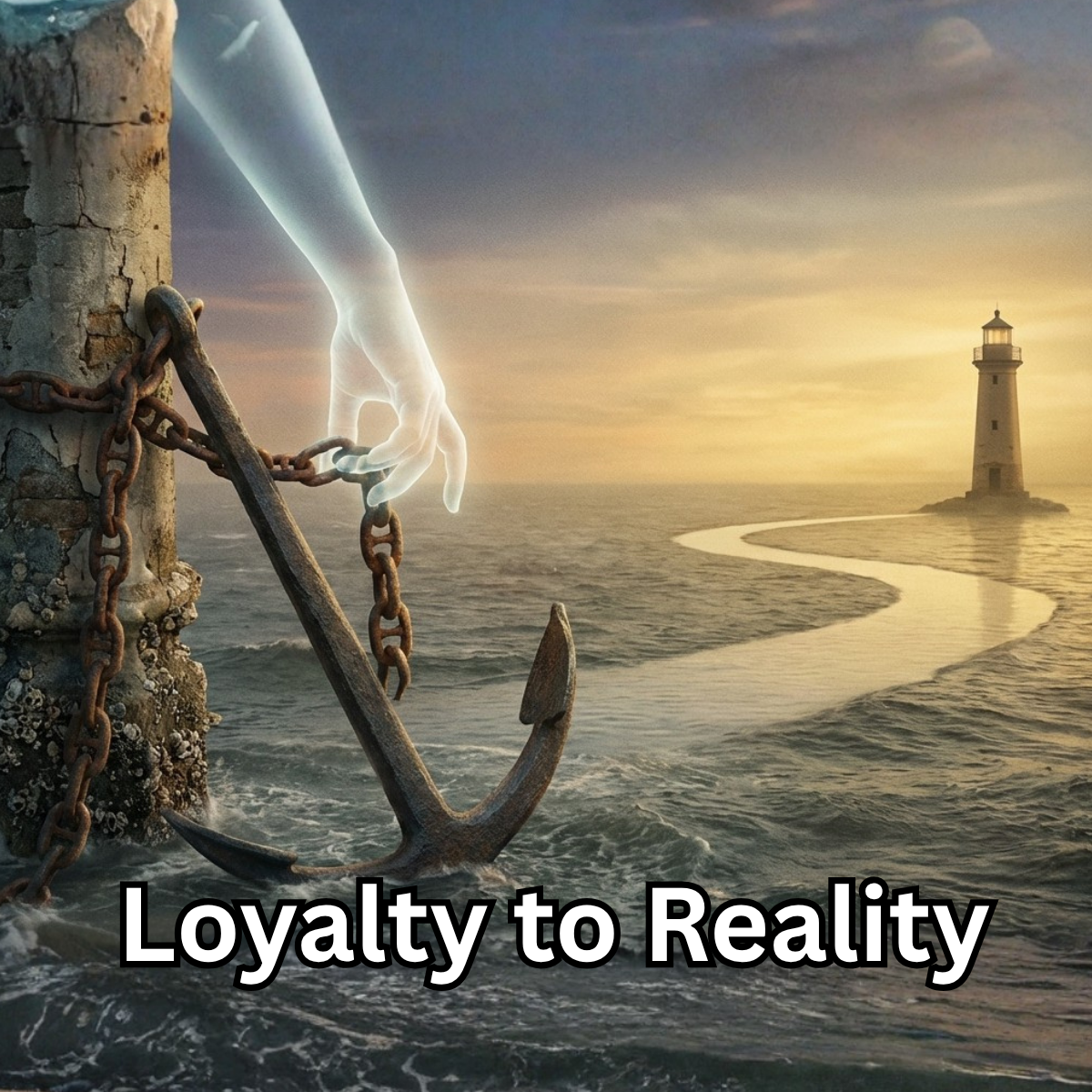
The shift I am working on is this. I want to be loyal to reality, not to potential. I want to be loyal to what is actually happening, not to what I hoped would happen. This does not mean I give up on people or ideas or plans. It means I adjust my loyalty to match the truth of the situation.
If someone shows me who they are, I can be loyal to that person, not to the version of them I imagined. If a project is not working, I can be loyal to the effort I put in and the lessons I learned, not to the outcome I wanted. If a plan needs to change, I can be loyal to the goal and adjust the path, not stay locked into a route that no longer works.
This is harder than it sounds. It requires letting go of the story I told myself. It requires admitting that what I hoped for is not what I got. It requires accepting reality as it is, not as I wish it were.
“Staying loyal to potential after reality has made itself clear is not helpful to you.”
The Next Step
So here is what I am doing. When I feel that pull of loyalty, I am going to ask myself one question. Am I being loyal to what is, or am I being loyal to what I hoped would be? If the answer is the latter, I am going to take a step back. I am going to look at the situation as it actually is. I am going to adjust my loyalty to match reality. Loyalty is still a value I hold. But I am learning to direct it toward what is real, not what is possible.