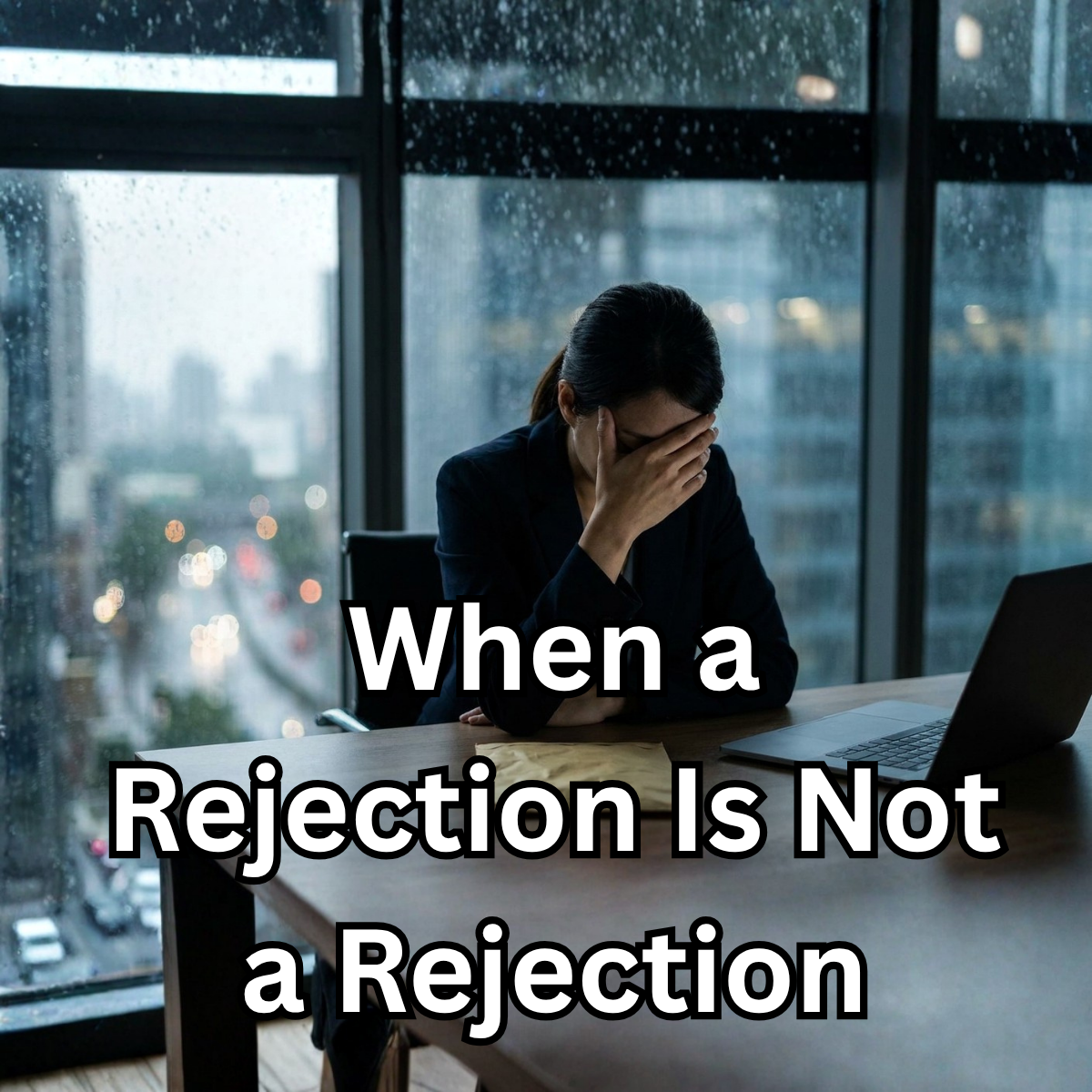
When I first went into business for myself, I landed a new client that gave me some business. We became friends and I would take him to lunch now and then. One day, I got a note from him that my contract was cancelled and that they were choosing another vendor. My soul was crushed. I went into a tailspin. What did I do wrong? What was happening here? I read and re-read his message to me. It was rather formal, not characteristic. I finally decided to challenge this. I scheduled a meeting with him, and I came prepared. I sat across from him and I told him that he was making a mistake and that I had prepared him a business case for why my service was far superior to what they had selected. After listening he said, good. I am glad to hear it. I was just checking to see if you took our business seriously. I will restore your contract. What are you doing for lunch?
That was my first lesson in the artful playbook of pushing back on a rejection. Never accept all rejections by turning tail and running away. Whoever said that was wrong. Rejections are not always what they seem. Often times they are invitations to deal with the real problem that is not being addressed.
The people who push through rejection successfully are not forceful. They are perceptive. They test whether the no is real or reflexive. They adjust tone instead of increasing pressure. They stay in control of the process, not the outcome.
Before pushing back, ask yourself a few questions. Did they understand the value? If not, clarify. Do not accept the rejection yet. Did they give a specific reason? If vague, explore. If specific, respect or address directly. Is there emotional friction? If yes, slow down. Do not push harder. Is there future potential? If yes, shift from closing to continuing the conversation.
Bad pushback sounds like this. I understand, but this really would help you. Good pushback sounds like this. Totally fair. Out of curiosity, what is the biggest factor behind that? That small shift turns resistance into information.
“The strongest closers often look like they are not pushing at all.”
The strongest closers often look like they are not pushing at all. They do not chase every no. But they also do not take every no at face value. They earn the right to push by first demonstrating they are listening.
You do not push back against rejection. You probe it. If it is real, respect it. If it is shallow, explore it. If it is emotional, diffuse it. That is how you find the correct path. Not by force, but by reading the signal underneath the words.
The next time you receive a rejection, pause before you respond. Read it twice. Ask yourself if the no is final or if it is an invitation to address something deeper. Then decide whether to walk away or to step closer with a question. That one choice will teach you more about the relationship than any pitch ever could.