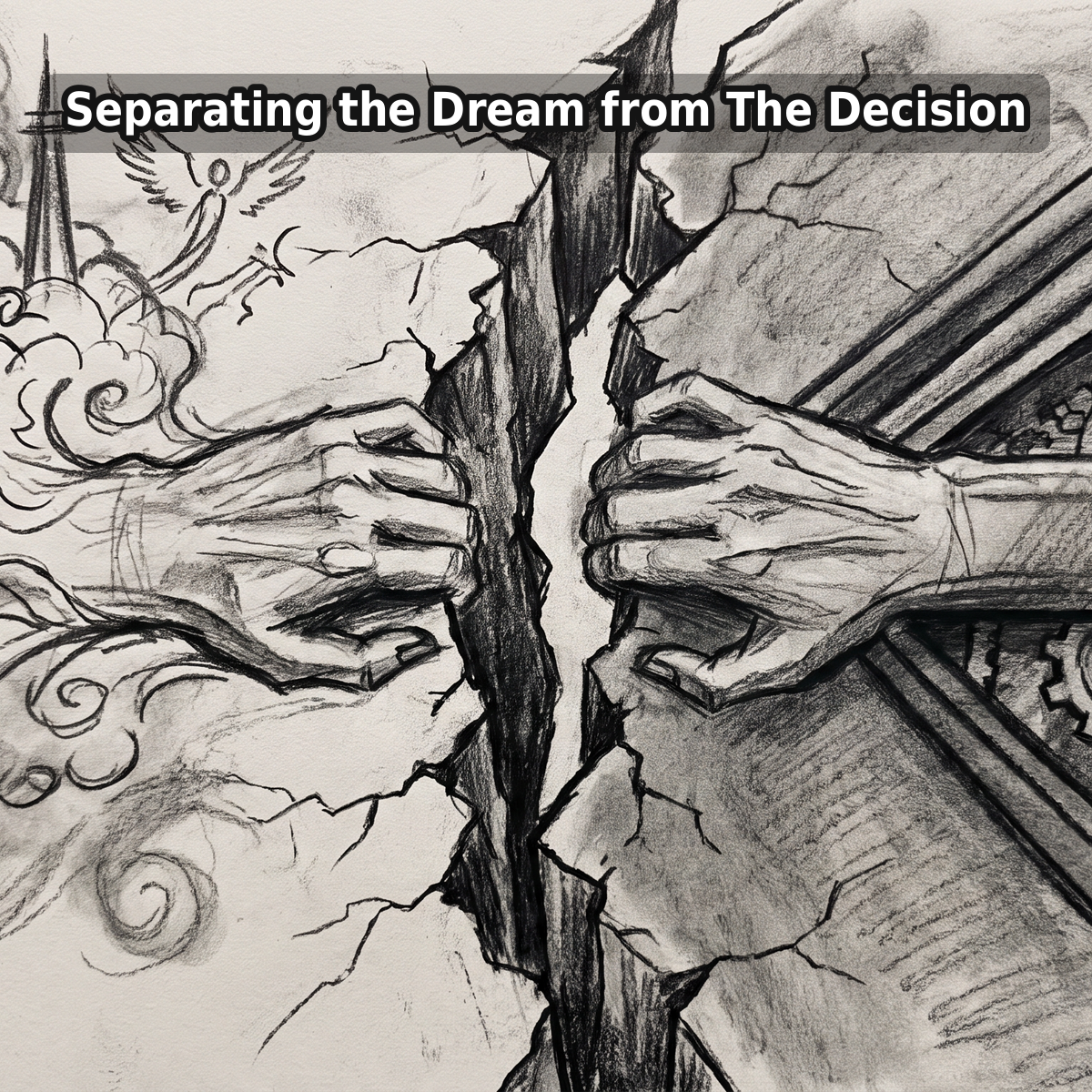
The story goes in the Greek mythos that the general Mardonius, on the field of a great battle, buried his treasure so that it would not be found by the enemy. Many adventurers, including Polycrates, would later seek this treasure. When asking the Oracle at Delphi where it was, the oracle responded: “Turn every stone.”
Since that time, this saying has evolved into an English-language idiom: leave no stone unturned—a phrase offered as guidance to those seeking a solution to a problem. The idea is that you should put in a complete and thoroughly exhausting effort before giving up.
But is that actually a good idea?
Perhaps the Oracle was right. But notice: the Oracle gave no guidance on whether the treasure was actually worth the time and energy it would take to look under every stone on the field of Plataea.
Should we have this mentality today? Instead of looking under every stone, perhaps we should look under the most likely stones—and if that doesn’t work, re-evaluate whether the pursuit remains worth the effort.
Modern decision-making should be probabilistic, not exhaustive. Advances in data science over the last decade have given us the ability to recognize patterns and predict outcomes. Essentially, we can now look under 20% of the stones and still get 80% of the value. So maybe this idiom is outdated. Maybe this is not an ethic we should subscribe to.
We go through life rarely evaluating opportunity cost. We think we’re on a noble pursuit that only costs our time and energy—but we forget how precious those resources are. If we spend all our time on one field, turning over every stone, we might never make it to the adjacent field where the real treasure lies.
This is one of the fundamental differences between people who succeed and those who don’t. Some spend far too much time chasing something that isn’t worth the opportunity cost. Learning to discern this is a form of modern intelligence. Ignoring it is often the result of youthful inexperience and a refusal to listen to those who’ve gone before.
If you spend too much time turning over every stone—chasing every little opportunity—you’re not being diligent. You’re being obsessive.
This is something I often see in salespeople. Some intuitively understand this. They only spend time on opportunities that have the potential to generate meaningful returns. Others, however, confuse busyness with diligence. They read and respond to every email, make every call, chase every lead. But that’s not diligence—it’s obsession.
Why do you read and respond to every email? Did someone lie to you and say responsiveness is the key to success? It’s not. Responding to the right things—the ones with the most value—is the key to success. Don’t confuse the two, or you’ll become a really effective task master (or mistress), doomed to spend your working life behind a keyboard doing busywork.
It’s ironic that we cling to the “no stone unturned” mentality in an age where search has become the primary driver of the economy. The ability to filter is now more important than the ability to collect. It’s not about searching harder or faster—it’s about searching smarter.
This is the foundation of modern search algorithms, AI models, and decision-making. We develop a hypothesis, test high-value targets, and pivot based on feedback.
Maybe it’s time to change the idiom.
Here’s my proposal:
“Turn the stones most likely to reveal value—and know when to walk to a better field.”