
The 365 Commitment is a simple formula that I use to keep my life on track.  This has ended up being a daily writing that I produce each day during my latest personal transformation. 

You can read the daily blog or sign up for the daily update. This blog is about motivation, inspiration and encouragement to make and keep life changing commitments.

Sign Up to Read The 365 Commitment Formula

Recent Blogs:

Day 321 – No Drilling Through Bulkheads

This article introduces the “Watertight Ship Principle,” advocating for strict adherence to boundaries within systems to prevent future complications. It uses examples from laundry, corporate finances, and even an ant infestation to illustrate how small exceptions or shortcuts can lead to significant problems, especially in the age of AI where systems can be built rapidly.

Read More

Day 320 – Beware, Modern Traveler

This article explores the human tendency to label and categorize the unknown, from ancient explanations like the incubus to modern diagnoses and algorithms. It highlights the danger of mistaking a label for reality and the importance of maintaining curiosity even when confronted with seemingly certain explanations.

Read More

Day 319 – Autonomous is Constrained

The author recounts their experience building an autonomous agent named Tyler, initially hoping it would handle various tasks. They discovered that true autonomy for an agent is not about unlimited freedom but rather about defined responsibilities and a constrained operating envelope, similar to managing an employee. The author concludes that a series of smaller, specialized bots with clear responsibilities is more effective than a single, all-encompassing autonomous agent.

Read More

Day 318 – Quiet the Inner Monologue

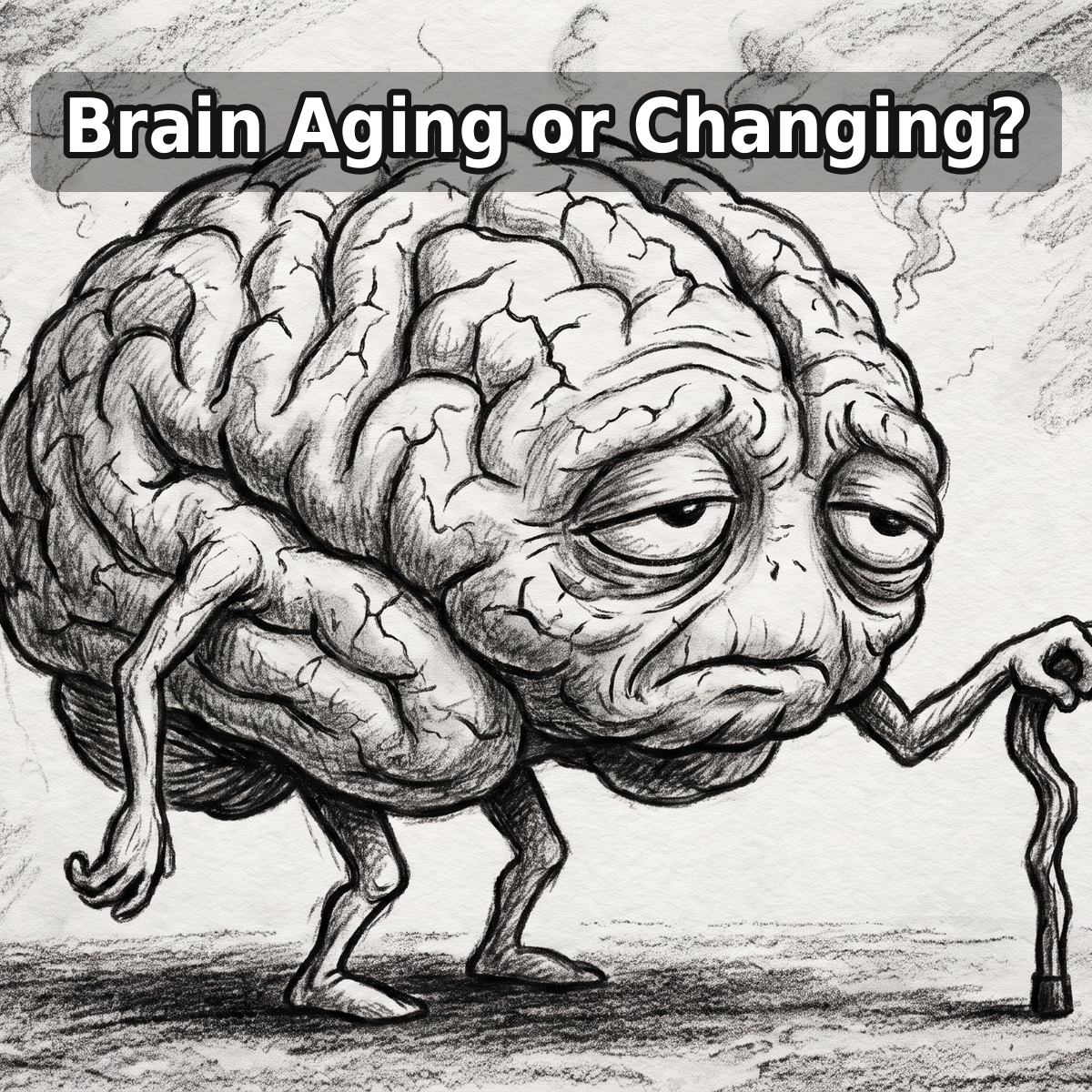
Researchers discovered that temporarily shutting down the prefrontal cortex in mice allowed them to adopt better, unlearned paths in a maze. This suggests that our active brain can sometimes hinder us from adopting new and improved methods, favoring learned ones instead. The findings imply that quieting our inner monologue might help us find better solutions.

Read More

Day 317 – Work is a Human Problem

Studs Terkel’s 1974 book ‘Working’ explored what people truly seek in their jobs beyond financial compensation, revealing a human desire for meaning, dignity, and recognition. This perspective is increasingly relevant today with the rise of AI and automation, prompting us to reconsider the inherent value of human work.

Read More

Day 316 – Name the Feeling

Many people struggle to identify specific emotions, often lumping them into a general ‘not feeling good’ category. This article highlights research suggesting that developing ’emotional granularity’—the ability to precisely name feelings—is a learnable skill that can lead to better emotional management and personal growth.

Read More

Join the Weekly 365 Newsletter to gain inspiration to make and keep your commitments!

Join The 365 Commitment

Subscribe and receive a copy of the daily blog in your inbox.

    We won't send you spam. Unsubscribe at any time.

    More Blogs

    Day 309 – The Price Tag of Automation

    The author recounts his frustrating experience with home automation after Google abandoned its Nest architecture, leading him to build his own system. He highlights the significant time and effort required for maintenance and the eventual abandonment of his automation efforts due to the high ‘economic life’ cost. However, with the advent of AI, the cost and effort of automation have decreased, making it more feasible and renewing his interest in deploying future automations.

    Read More

    Day 308 – Speed is The Champion

    This article explores the concept that speed often leads to success in various fields, from business to technology and sports. It argues that systems capable of rapid action, feedback, and adjustment tend to outperform those focused on avoiding errors. The author highlights the importance of fast feedback loops, citing John Boyd’s OODA loop and its application in AI systems. The piece also discusses the speed-accuracy tradeoff, noting that while speed can lead to more mistakes, these are often recoverable, and the compounding effect of rapid learning ultimately drives better results.

    Read More

    Day 307 – Iterative Could be Insufficient

    This article explores the contrast between iterative and linear thinking, highlighting their respective strengths and weaknesses. It argues that while iterative thinking is beneficial in many fields, it can sometimes be an excuse for insufficient upfront planning, and proposes a hybrid approach for more robust decision-making.

    Read More

    Day 306 – The Zeigarnik Effect

    The article explores the psychological relief gained from writing down unfinished tasks and concerns, linking it to the Zeigarnik Effect. It explains how externalizing thoughts through writing can free the mind from constantly remembering and worrying about unresolved issues, allowing for greater mental peace and the ability to conclude the day effectively.

    Read More

    Day 305 – The Treasure He Never Found

    A young man spends his life chasing riches, fame, and glory, only to find repeated failures. In his old age, surrounded by his loving family, he realizes that the true treasure he sought was not in external achievements but in the relationships and character he built along the way.

    Read More

    Day 304 – Repeat What Forms You

    This article explores Jesus’ teaching on “vain repetitions” in prayer, arguing that repetition itself is not the problem, but rather the intention behind it. It differentiates between repetition as formation, where the practice changes the individual, and repetition as transaction, where one attempts to influence God. The piece emphasizes that true spiritual repetition helps us return to core values and shapes our character, rather than being a means to earn God’s attention.

    Read More

    Day 303 – Reinforcement of Present Bias

    Present bias is the tendency to favor immediate rewards over larger, delayed benefits. This behavior can become habit-strengthened through repetition, making immediate choices feel automatic and future-oriented choices more difficult. Understanding this self-reinforcing loop is key to overcoming it.

    Read More

    Day 302 – Avoid the False Choice

    The concept of a ‘false choice’ or ‘forced choice’ is a rhetorical maneuver designed to manipulate individuals into selecting a preferred option, often leading to a loss regardless of the decision. This idea, deeply explored by Jacques Lacan, highlights how seemingly genuine choices can be illusory, forcing individuals to compromise something essential. Recognizing and avoiding these false dilemmas is crucial to maintaining control and preventing unnecessary losses.

    Read More

    Day 301 – The Thing About Bottlenecks

    A recent GitHub outage highlighted the pervasive issue of bottlenecks in software development and everyday life. This article explores how bottlenecks are dynamic, shifting targets, and that addressing one often reveals another, using examples from software and even ant colonies.

    Read More

    Join Our Newsletter