
Daily Blog
My commitment to write a daily blog since January 7th, 2018
The Latest Blog
2024
2023
2022
2021
2020
2019
2018

Join the Weekly 365 Newsletter to gain inspiration to make and keep your commitments!

Day 307 – Iterative Could be Insufficient
This article explores the contrast between iterative and linear thinking, highlighting their respective strengths and weaknesses. It argues that while iterative thinking is beneficial in many fields, it can sometimes be an excuse for insufficient upfront planning, and proposes a hybrid approach for more robust decision-making.
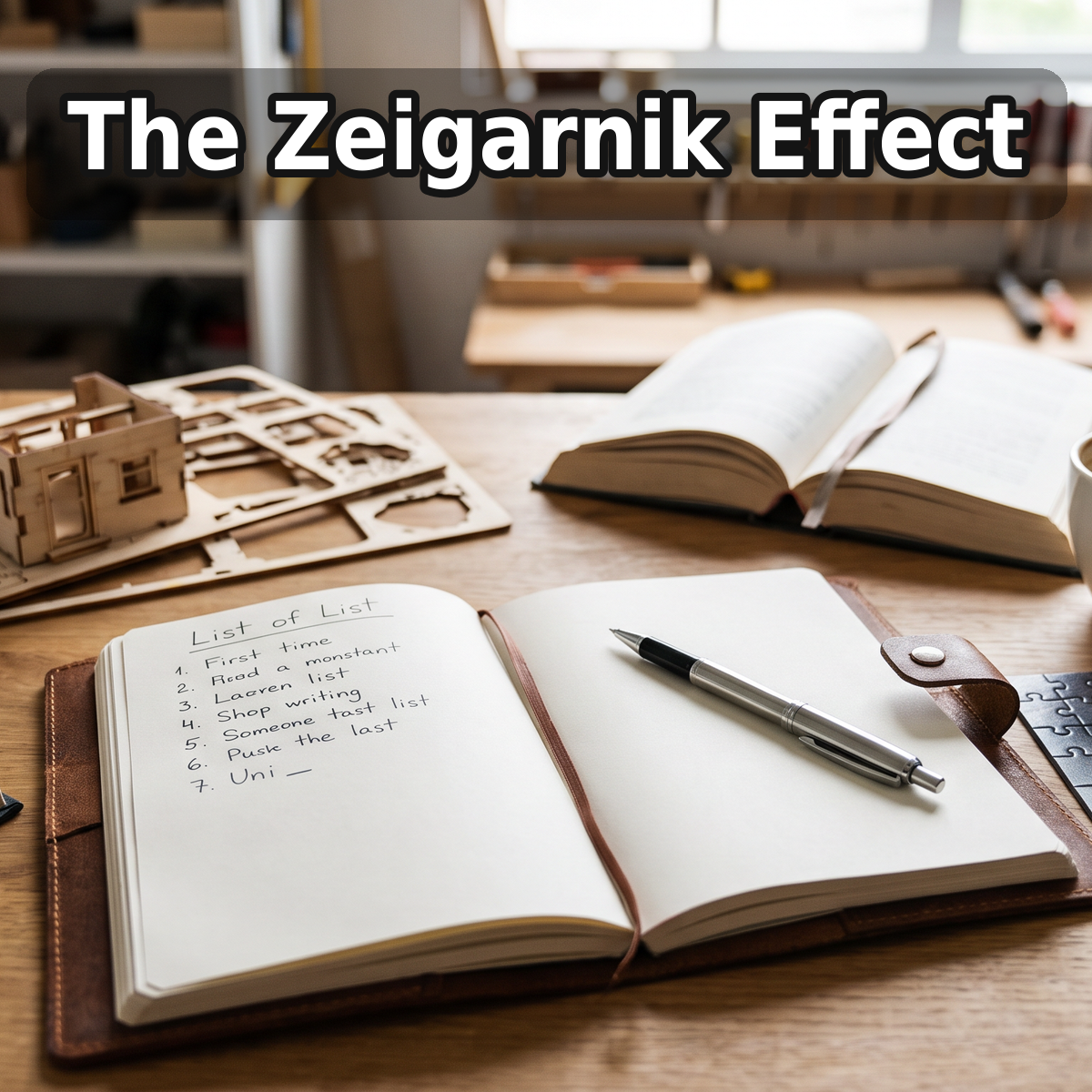
Day 306 – The Zeigarnik Effect
The article explores the psychological relief gained from writing down unfinished tasks and concerns, linking it to the Zeigarnik Effect. It explains how externalizing thoughts through writing can free the mind from constantly remembering and worrying about unresolved issues, allowing for greater mental peace and the ability to conclude the day effectively.

Day 305 – The Treasure He Never Found
A young man spends his life chasing riches, fame, and glory, only to find repeated failures. In his old age, surrounded by his loving family, he realizes that the true treasure he sought was not in external achievements but in the relationships and character he built along the way.

Day 304 – Repeat What Forms You
This article explores Jesus’ teaching on “vain repetitions” in prayer, arguing that repetition itself is not the problem, but rather the intention behind it. It differentiates between repetition as formation, where the practice changes the individual, and repetition as transaction, where one attempts to influence God. The piece emphasizes that true spiritual repetition helps us return to core values and shapes our character, rather than being a means to earn God’s attention.

Day 303 – Reinforcement of Present Bias
Present bias is the tendency to favor immediate rewards over larger, delayed benefits. This behavior can become habit-strengthened through repetition, making immediate choices feel automatic and future-oriented choices more difficult. Understanding this self-reinforcing loop is key to overcoming it.

Day 302 – Avoid the False Choice
The concept of a ‘false choice’ or ‘forced choice’ is a rhetorical maneuver designed to manipulate individuals into selecting a preferred option, often leading to a loss regardless of the decision. This idea, deeply explored by Jacques Lacan, highlights how seemingly genuine choices can be illusory, forcing individuals to compromise something essential. Recognizing and avoiding these false dilemmas is crucial to maintaining control and preventing unnecessary losses.

Day 301 – The Thing About Bottlenecks
A recent GitHub outage highlighted the pervasive issue of bottlenecks in software development and everyday life. This article explores how bottlenecks are dynamic, shifting targets, and that addressing one often reveals another, using examples from software and even ant colonies.

Day 300 – Why the King is the Last to Know
This article explores the phenomenon of leaders being the last to know about problems or impending failures within their organizations. It highlights how subordinates often filter information due to fear, leading to a distorted reality for those in charge. The author uses historical examples and personal anecdotes to illustrate this point.

Day 299 – Using a Carrot or a Stick
This article explores the effectiveness of traditional motivational methods like the “carrot and stick” approach and argues for a more nuanced strategy. It emphasizes understanding individual motivations, setting clear goals, fostering autonomy, and leading by example to genuinely inspire harder work.

Day 298 – My First Zep Song
The author recounts their first encounter with Led Zeppelin, a pivotal moment in high school when a friend handed them a cassette tape. Despite initial confusion about the band’s albums, the song “D’yer Mak’er” from *Houses of the Holy* captivated them, marking their entry into the world of rock and roll.
What People Are Saying